

Hey folks!
Thanks for being here. For Issue #127 of Better Bioeconomy, I sat down with Yoni Glickman, Managing Partner at PeakBridge, to talk about how agrifood-tech has evolved over the past few years and where the most compelling opportunities are now emerging.
Yoni is one of the rare investors who has built billion‑dollar ingredient businesses and venture portfolios from the inside out. He served as President of Frutarom’s Natural Solutions division when IFF (International Flavors & Fragrances Inc.) acquired the company for $7.1B, one of the largest deals in the history of the flavours and ingredients sector.
He also founded the FoodNext innovation lab and ran companies in water technology and sustainable materials. At PeakBridge, he now sits across both FoodSparks, the seed fund first launched in collaboration with EIT Food, and Growth Fund II, giving him a 360° view of the food landscape.
In our chat, we break down why certain agrifood bets fell short, where the real opportunities are emerging, and where AI actually creates moats. We also dig into how PeakBridge evaluates companies from seed to growth, why unit economics and total capital required matter most, and why strategic M&A remains the most likely exit path.
Let’s jump in!
When great technologies collide with hard economics
If you rewind the last five years of agrifood tech, the pattern is familiar. A big story captures attention, capital floods in, a few companies build real businesses, and most struggle to translate early promise into commercial traction. Yoni puts three themes in the overhyped bucket: vertical farming, insect protein and precision fermentation targeting commodity applications.
Vertical farming, as a category, promised local, pesticide-free greens, shorter supply chains and climate resilience. In reality, the CAPEX and energy burden of running fully controlled environments made it very hard to reach the cost and return thresholds needed for mainstream, commodity-adjacent produce.
A few narrow niches around high-value ingredients can still make sense, since controlled-environment production can work when the economics support it. Still, as a broad thesis, he thinks it is “objectively clear” that it did not work.
Insect protein followed a similar arc. Significant capital went into the sector, but genuine demand never caught up with the capacity being built. Yoni summarises that there is “no real product-market fit,” and the category has often looked like a solution looking for a problem rather than an answer to a clear customer need.
Precision fermentation, in his view, belongs in the “tool, not thesis” bucket. Fermentation has been an “incredibly interesting and relevant tool” for food and ingredients for decades. The misallocation came from using precision fermentation on bulk proteins and expecting them to compete on cost with deeply optimised dairy and commodity plant supply chains. Used for differentiated, higher-value ingredients, the tool still makes sense. But used for commodity proteins, the economics are unforgiving.
Even in AI, which he believes will quietly infuse most of the food system, Yoni is wary of discovery platforms that brand themselves as the “AI engine” for new molecules but rely on long timelines and consulting-style revenue. Discovery work can be valuable, but the combination of long development cycles and business models that do not capture enough downstream value “really don’t stack up as a venture investment.”
The quiet compounding opportunity in food waste and speciality nutrition
While capital chased the stories that made headlines, Yoni sees large, underinvested opportunities in areas that look less glamorous at first glance.
Food waste is one of them. It still shows up in many sustainability decks as an ESG talking point, yet structurally it sits at the intersection of food security, inflation and margin. A third of all food produced globally is never eaten, and a meaningful slice of that loss occurs in hospitality and foodservice, where every kilo wasted is wasted CAPEX, labour, energy, and ingredients. Treating food waste primarily as a reputational issue misses how much it matters to the P&L.
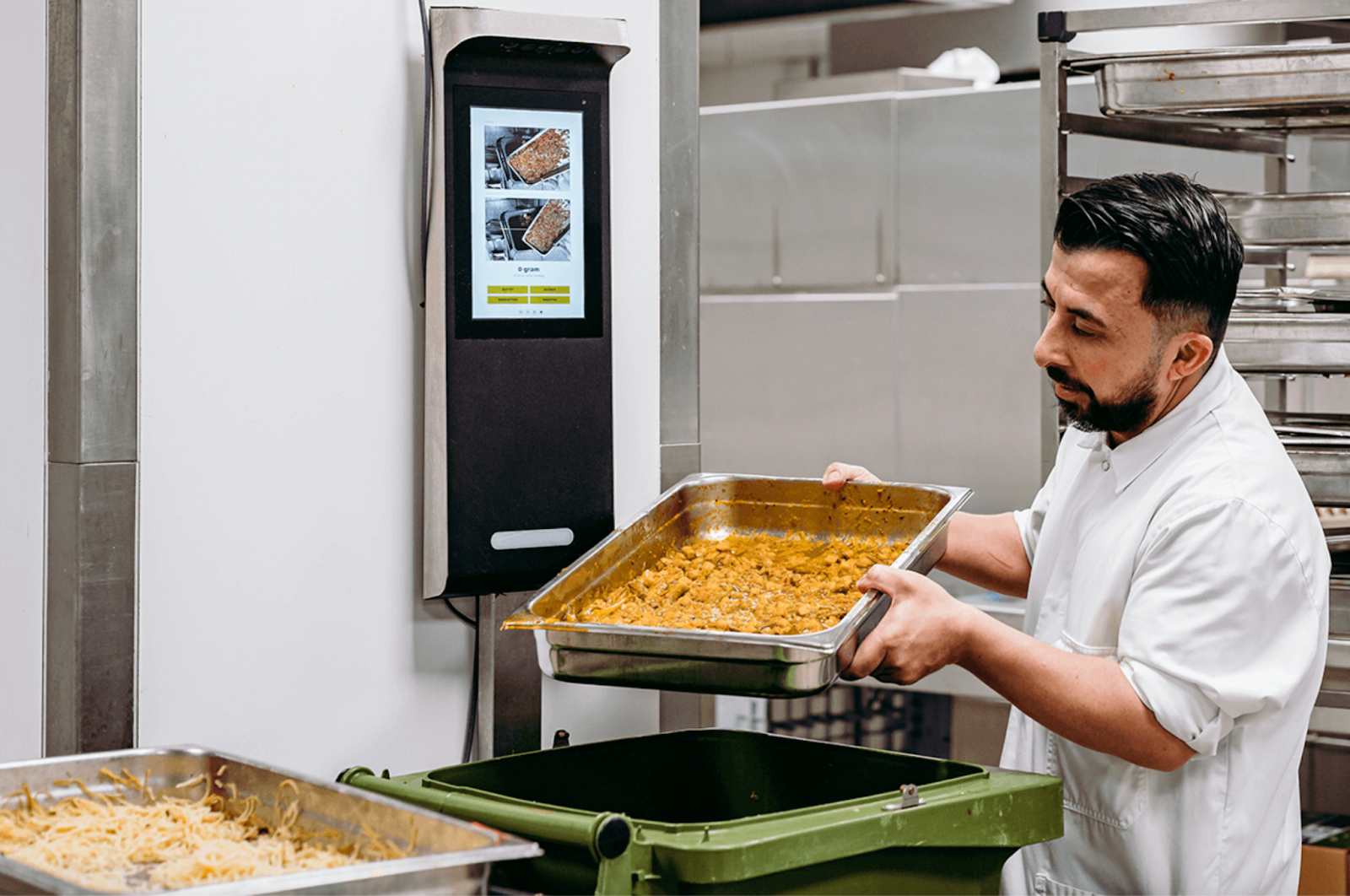
Yoni referred to Orbisk, one of PeakBridge’s portfolio companies. The company outfits professional kitchens with a fully automated food waste monitor: a smart camera and scale installed over the bin that uses AI to recognise what is being thrown away and in what quantity, then streams that data into a dashboard with clear recommendations.
Kitchens do not have to change their workflow. They simply throw food away as usual and wake up to ingredient-level insight into what they overproduce and when. For customers, the result is less waste, better purchasing and menu decisions, and savings that comfortably exceed the subscription fee.
The second gap sits in specialty ingredients and what Yoni frames as the “boring” parts of the stack. Rather than building brand-new commodity categories, he is drawn to scientifically substantiated nutrition ingredients, flavour systems, and other functional components used at low inclusion rates but with an outsized impact on performance, stability, taste, or health.
Many of these businesses rely on traditional manufacturing methods such as botanical extraction or solid-state fermentation. They are familiar to industry buyers and can produce highly differentiated ingredients without requiring exotic bioprocessing infrastructure.
How AI actually becomes a value-add in food
Today, almost every pitch deck claims some AI angle, whether in discovery, supply chain visibility, marketing or operations. For Yoni, AI in food only becomes investable when two conditions are met at the same time: the tool fits seamlessly into existing workflows, and shows measurable ROI for the customer.
Integration comes first. Food and beverage companies operate in heavily regulated environments with established hazard systems, quality routines and compliance processes. Tools that ask teams to completely re-architect how they work rarely get past the first pilot.
AI earns the right to spread when it is embedded inside how procurement, R&D, marketing or operations already function, rather than bolted on as a parallel workflow. Orbisk, as mentioned earlier, is one example of that in foodservice, where teams that throw food away as usual get waste analytics without changing their routine.
The second condition is measurable ROI. AI tools that cannot be tied to clear metrics will eventually be crowded out by projects that can. On the waste side, that might be kilos of food saved per site per year, along with the associated cost reduction. On the commercial side, it might be higher new product success rates, better campaign performance or a shorter concept-to-launch cycle.
PeakBridge’s portfolio company, Tastewise, positions itself as a generative AI (GenAI) platform that converts large, messy streams of food and beverage consumption data into targeted recommendations for product innovation, sales and marketing.
The moat is not that it uses GenAI. It is that it lets global brands like Kraft Heinz, PepsiCo and Mars test concepts against real behaviour data, craft messaging that aligns with how people actually talk about food, and do this at a speed and scale that is hard to match.
Seed vs growth: funds evolve, so does the definition of ‘investment ready’
PeakBridge runs a seed vehicle and a growth-stage vehicle across very different parts of the food system. FoodSparks is the pan-European agrifood tech seed fund managed by PeakBridge and first launched in collaboration with EIT Food. Growth Fund II is their early-growth fund, investing globally from Series A onwards. Together, these two vehicles give Yoni a clear view of how the definition of “ready” changes both across stages and over the life of a single fund.
One point he returns to is that any fund, seed or growth, progresses over time. Startups often do not realise that what an investor can do in year one of the fund is not what they can do in year four. Early in FoodSparks, with more years left until the end of the fund, they could back a strong team, a forward-looking solution for the food industry and a solid proof of concept (POC), even if product–market fit was not yet fully proven.
As the fund matures and the exit window approaches, the same seed fund has to become more conservative. In later years, FoodSparks prioritised companies that had moved beyond POC to real product–market fit and revenue, with a shorter, clearer path to follow-on rounds and potential exits.
At the growth stage, the bar rises again, and the criteria diverge by vertical. For a nutrition or health ingredient, a company that might once have been fundable at seed based on strong preclinical work in vivo or in vitro now needs full human clinical trials, double-blind, placebo-controlled, and scientifically robust.
Similarly, for cell-based or other industrial production technologies, early theoretical work in a bench scale might have been acceptable at the seed stage. But at growth, PeakBridge wants to see full-scale manufacturing with positive unit economics, not just models built on lab-scale yields. Growth vehicles have to be more de-risked by design.
Across both funds, regardless of stage, unit economics and capital efficiency are non-negotiables. First, there must be a realistic path to positive unit economics once you model scale, raw material costs, location and the actual manufacturing approach. Second, the total capital required to reach cash flow positive has to align with venture funding cycles.
How “food as medicine” becomes proven nutrition, not wellness noise

Food as medicine is having a mainstream moment, helped by the visibility of GLP-1 drugs and a renewed focus on metabolic health. PeakBridge’s interest in this space predates the current wave. Yoni has spent much of his career in “taste and health”, leading natural ingredients and health platforms at Frutarom and IFF and backing botanical and clinically validated ingredients long before public markets were comfortable with that framing.
What separates a functional ingredient that peaks as a wellness fad from one that becomes true B2B infrastructure? Yoni points to three things. First, it must address a meaningful health condition rather than a marginal benefit. Second, it must be backed by strong science, ideally including human clinical trials. Third, it must sit within a supply chain the team deeply understands, from raw materials through extraction, standardisation, formulation, and quality.
PeakBridge’s KÄÄPÄ Biotech is a good example of the kind of business that fits this pattern. KÄÄPÄ researches, cultivates and processes functional mushrooms in vertically integrated facilities, using its proprietary NordRelease process to produce standardised extracts for wellness and nutraceutical brands, supported by clinical data.
EFSA’s formal validation of NordRelease as a non-novel extraction process has helped cement its position as a leading European supplier of high-quality functional mushroom ingredients at a time when the EU market is wrestling with inconsistent imports and variable quality.
Mushrooms may be buzzy, but KÄÄPÄ’s strategy is not built on buzz. It is built on control from spore to extract, rigorous standards for bioactives and safety, and a pipeline of studies that can support health claims in a stricter regulatory environment. That is the profile PeakBridge is looking for in food-as-medicine (or ‘proven nutrition’ as Yoni prefers) more broadly.
Looking ahead, Yoni expects three areas to anchor PeakBridge’s next chapter: proven nutrition, specialty ingredients with clear use cases, and data solutions that integrate easily into food-industry workflows and deliver obvious ROI.
Regulation and CAPEX: design for the world you operate in
If there is one area where Yoni sees otherwise strong founding teams repeatedly stumble, it is regulation. The temptation is to treat it as a late-stage hurdle that can be outsourced to consultants once the product is ready. In reality, regulatory pathways for food, nutrition, and biologically derived ingredients are becoming stricter and vary widely across markets.
Yoni is still surprised by how often founders assume that “natural” automatically means compliant. From his perspective, if a team cannot explain its regulatory pathway and show that the business model remains viable under realistic timelines and scenarios, there is little point continuing the discussion on CAPEX.
Once the regulatory path is clear, the CAPEX stack comes into focus. Here, the differences between categories are large. Consumer brands in beverages or snacks can often rely heavily on co-manufacturing and focus their capital on brand, distribution and working capital.
Ingredients and industrial processes are a different story. Precision fermentation plants are expensive, and while CMOs can work for high-value, low-inclusion ingredients, it becomes much harder to justify for commodity-like products.
By contrast, some ingredient technologies can scale with inherently lower capital requirements. Solid-state fermentation and certain botanical extraction models can leverage established contract manufacturers and equipment suppliers, allowing teams to scale without committing to large facilities.
Yoni notes that several clinically validated ingredient companies have been built entirely on outsourced extraction. This is part of why PeakBridge is comfortable with specific ingredient and functional mushroom plays: not because they are simple, but because their manufacturing pathways are clearer and less capital-intensive.
Building with an M&A endgame in mind
At some point, the question is how all of this value gets realised. Inside PeakBridge, there is a strong internal consensus that most successful outcomes in agrifood will be strategic M&A rather than IPOs.
PeakBridge maps potential acquirers from the investment stage. In ingredients, that might mean global players in flavours, fragrances, nutraceuticals or speciality nutrition. In dairy or protein, it could be the major ingredient companies. On the data and AI side, it might be large tech or enterprise software firms, supply chain platforms or major CPGs looking to integrate an additional tech stack into what they already have.
Different buyers optimise for different things: some are essentially buying market share and EBITDA, others are looking for a strategic technology wedge or differentiated data asset.
The best founders Yoni works with hold two pictures at once. One is their own long-term vision for what the company could become if it stayed independent. The other is a realistic view of who might buy them, why that buyer would care and what capabilities or metrics would make them compelling.
If you found value in this newsletter, consider sharing it with a friend who might benefit from it! Or, if someone forwarded this to you, consider subscribing.
What valuable insights!
One thing I'd like to point out is that the novel food status is assessed by EU Member States, not EFSA, in novel food consultations. EFSA is only involved when a novel food dossier is assessed as the risk assessor and not the manager.