

Hey folks!
Thanks for being here. For Issue #144 of Better Bioeconomy, I sat down with Justin Ahmed, Director at Beanstalk AgTech.
Beanstalk is a Melbourne-headquartered innovation firm that operates across two arms: Beanstalk Advisory, which works with agribusinesses, governments, and development partners across the Indo-Pacific, and Beanstalk Ventures, which builds and invests in impact-focused agrifood companies. Founded in 2017, the firm now has a presence in Sydney, Perth, Brisbane, Hobart, and Singapore, and has delivered programs across Australia, Singapore, Vietnam, Indonesia, and India.
Justin leads the firm’s work translating ag tech innovation into commercial outcomes. Before Beanstalk, he was a project leader within McKinsey’s Global Agriculture practice, with prior roles at Enclude (now Palladium), the Syngenta Foundation, and CIMMYT. He has on-the-ground experience across North America, Africa, South Asia, and Australia, which gives him a sharp view of how ag tech moves between geographies.
In our conversation, we talked about why ag tech innovation rarely fails on the science, what separates Australian and Southeast Asian commercialisation pathways, where corporate-startup partnerships break down, how founders should think about non-dilutive capital, and what makes Justin both bullish and bearish on the sector right now.
Multiple valleys of death sit between ag tech science and the market
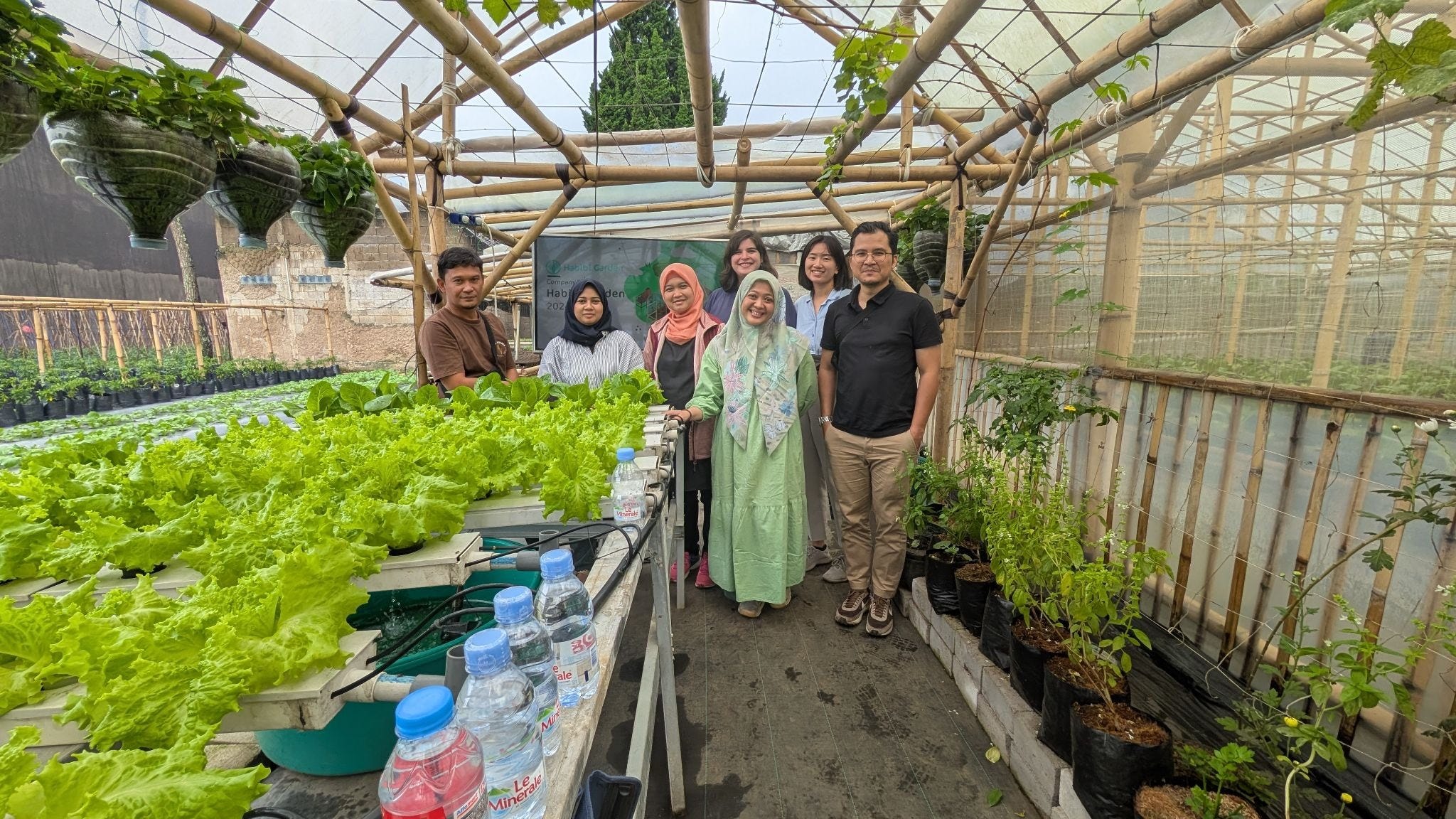
Most ag tech innovators frame their commercialisation challenge around a single valley of death, the gap between R&D and market. Justin pushes back on that framing. In his read, the gap is a sequence of separate chasms, each requiring a different kind of partner to cross.
“The biggest gaps in agrifood innovation rarely sit in one single place,” he said. “It’s a game of the weakest link. They sit between the science and the market, between pilots and procurement, between public sector ambition and private sector execution, between the capital models that already exist and what’s really fit for purpose.”
The work of bridging those gaps is the translational layer. It’s the connective tissue that turns a working technology into a working business: the partnerships, contracts, capital structures, regulatory pathways, distribution agreements, and customer relationships that move an innovation from “this works in a lab” to “this is being used and paid for at scale.” The technology, the customer, and the capital each sit on their own side. The translational layer is the infrastructure that connects them, and it’s the layer that most ag tech ecosystems leave unbuilt.
That framing is what shapes Beanstalk’s structure. The firm sits across advisory, venture building, and investment advisory because each discipline addresses a different valley. Advisory work helps governments, corporates, and donors define the right problems. Venture building converts those problems into commercially grounded companies. Investment advisory matches those companies to capital that fits their stage, risk profile, and growth pathway.
The stakes of getting this translational layer right are large, and Beanstalk has the data to show it. In the firm’s State of the Digital Agriculture Sector report covering low- and middle-income countries, the team mapped ~1,400 active digital agriculture solutions across Latin America, South Asia, Southeast Asia, and Sub-Saharan Africa, and modelled a roughly $450 billion per annum gap between a “thriving” and a “derailed” decade for the sector.
A more recent report, The Opportunity for AgriTech Investment in Southeast and South Asia, authored with Omnivore and Briter Bridges, narrows that lens to the SEASA region: agritech adoption could unlock around $90 billion per annum in Southeast Asia and around $160 billion in South Asia by 2033. The variance comes down to whether the systems around the technology, including capital, policy, partnerships, and trust, are functional enough for adoption to compound. Technology readiness is rarely the limiting factor.
What separates ag tech that scales from those that don’t
Across both Australia and Southeast Asia, Justin sees a single pattern that distinguishes the ag tech companies that reach commercial scale from the ones that stall. Founders who succeed stay extremely close to customer economics. They understand what moves the margin for their customer, even when those drivers vary widely by geography, crop, or value chain position. The practice of building a commercial model around where margin is being created looks the same everywhere, even when the inputs change.
Great technology, in his view, is the easier part. “Commercialisation is a separate skill from innovation,” Justin said. “A lot of the companies that we see that have struggled, we’d say waited too long to invest in that.” The ones that scale invest in commercial capability early, alongside the technology, rather than treating it as a problem to solve once the science works.
The market-specific differences sit on top of that common foundation, and they shape what “commercialisation” looks like in practice. Australia, in Justin’s framing, looks more like Canada or Eastern Europe than Asia. It is highly professionalised, tech-intensive, consolidated, and farmer-driven. Profit pools sit with large commercial producers. That structure means revenue realisation, customer acquisition, and after-sales support all scale on a different effort curve than they do across smallholder Asia.
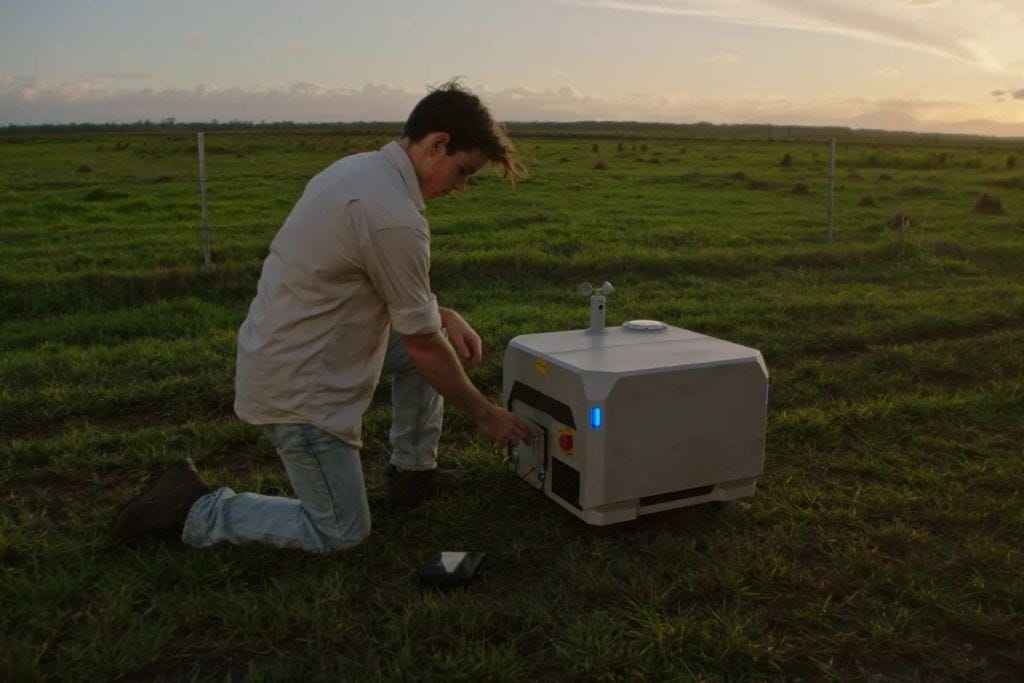
Justin pointed to SwarmFarm Robotics and DataFarming as examples of Australian startups that have grown well in that structure. Both built early credibility with rural and regional ecosystems, leaned hard on Research and Development Corporations (RDCs), agronomist groups, and grower bodies, and earned distribution leverage through those channels first.
But there’s a catch. The real unlock for Australian ag tech is almost always getting out of Australia. The domestic market is too small to support a venture-scale outcome alone. So Australian innovators end up in California, Texas, or the Canadian Great Plains, wherever there are large-scale commercial farms that resemble what they built for at home.
Beanstalk’s original thesis was that Southeast Asia could be a strategic alternative for Australian innovators, leveraging Australia’s regional positioning. The reality has been more nuanced. A solution built for 5,000-hectare Australian commercial farms doesn’t pivot easily to 1-hectare smallholders in Java. The innovators who have had real success in Southeast Asia tended to flip the question, asking “Is my value proposition actually better in this context?”, and then committing to localisation rather than treating the region as a secondary market.
Southeast Asia rewards a different posture from the Australian playbook. “It’s all about listening, iterating, adapting,” Justin said. “Not just developing the solution that solves the right technical problem, but really understanding the complex reality in which it’ll operate.” Founders who do well over-invest in literacy and market education, build trust at the pace of seasons rather than quarters, and accept that scaling deeply and slowly beats scaling shallow and fast.
The data backs this up. In a recent baseline study Beanstalk conducted with the Indonesian government, surveying ~1,300 respondents on access, use, and benefit from digital ag tech, where ~80% of active users self-reported real benefits in productivity, cost savings, and reduced operational complexity. The technology delivers when it gets through. The harder problem is building trust fast enough for adoption to take hold.
Corporates should be looking for complementarity, not capabilities that mirror their own
Beyond the farm gate, ag tech adoption blockers sit at the interface between startups and agribusinesses, and Justin’s read is that corporates and startups frequently misalign on what a partnership is even for.
The mismatch shows up in two distinct archetypes of corporate engagement. The first is corporates running venture vehicles, where the question is what they’re investing in and why. The second, and where Beanstalk does most of its work, is corporates trying to integrate new technology into their core business. That second archetype is where the bigger gap lives.
What corporates say they want is fairly consistent: proven impact, real traction, a credible business behind the science. Smart corporates do look for that, but they look for it in the form of depth of impact for a small set of core customers, rather than the broad market validation many startups try to lead with. The trap is what comes next.
Corporates often evaluate startups against capabilities that mirror their own internal capabilities, when the bigger opportunity is to find genuine complementarity. What corporates uniquely bring to a partnership is a commercial ecosystem (manufacturing assets, distribution, customer access) that can shift a promising technology from trial phase to real scale. Treating a startup as a smaller version of an internal team forecloses that pathway.
The other failure mode sits inside the corporate itself. Companies often look for “plug and play” solutions, underestimating the readiness required within their own teams to use them. A new ag tech tool requires culture and capability inside the corporate to define, deploy, and build around the technology. The right tech partner understands that the corporate’s own staff need to be taken on a journey, with support on how they use the solution, before any pilot translates into adoption.
Justin’s takeaway for both sides: corporates need to be willing to be the test bed, and startups need to design with strategic partnerships and commercial pathways in mind from day one. That maps to a thesis Beanstalk laid out in its recent report, that the ag tech most likely to succeed in the region is the one that solves corporate challenges from the outset and builds strategic partnerships into the growth pathway from day one.
Most ag tech founders pick the wrong capital and define the exit too late
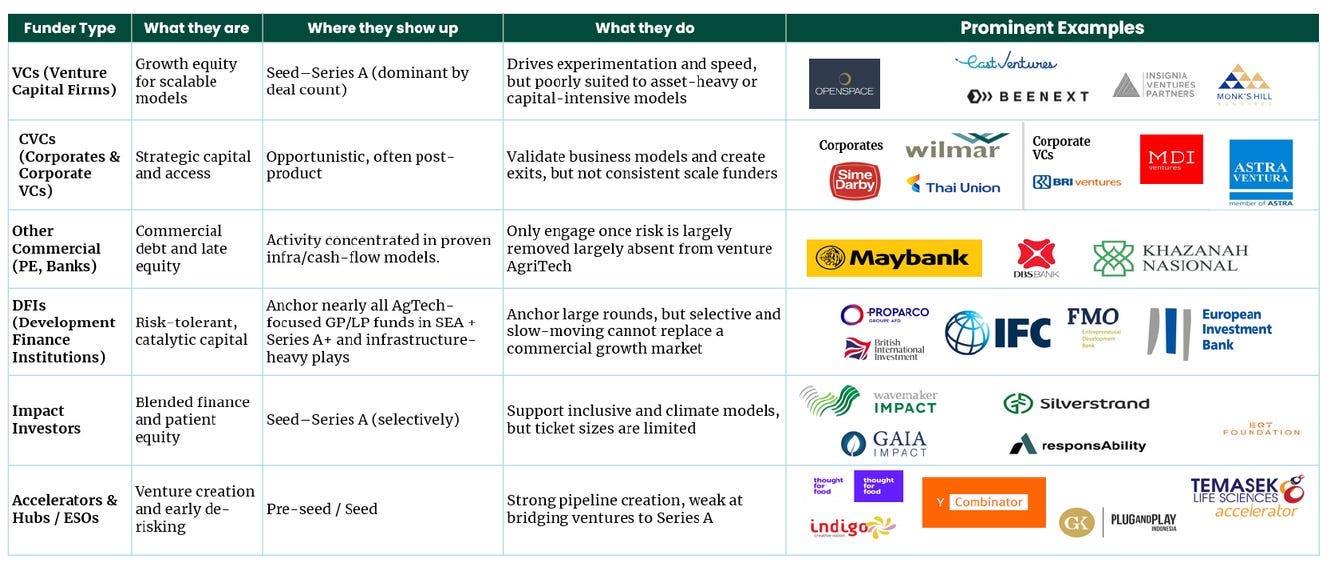
Capital strategy is another area where some of the most consequential founder mistakes happen. There is no single right capital stack for ag tech, since the right answer depends on sales cycle, development cycle, capital intensity, customer acquisition rate, and how revenue is realised. But founders who get it wrong tend to get it wrong in the same direction.
The reactions to Beanstalk’s Omnivore-commissioned report told the story. Investors found it sobering. Founders found it deflating. Justin’s reading is that both reactions reflect a misunderstanding of what the report was scoped for, which was specifically the venture capital opportunity in ag tech. That’s a narrower pipeline than the full set of viable ag tech businesses.
As he put it, perhaps 5% of agrifood businesses have the kind of profile that warrants a venture capital outcome, meaning capital-light enough, scalable enough, with valuation upside in line with where venture multiples now sit. Most ag tech sits outside that profile, and the right capital path for those companies is different instruments entirely.
That recognition shapes how Beanstalk works with the ventures it builds. Rather than running a fixed-fund model that pushes everything toward venture-style returns, the team works with founders to identify the right capital pathway and link them to capital with the structure and return expectations that match.
The discipline founders apply to picking equity investors, including finding the right partner and evaluating fit, often disappears when it comes to grants. “People take a spray-and-pray approach to getting grants and public funding,” Justin said. “And that’s really dangerous.” Every minute a founder spends on the wrong grant is wasted effort. And it’s just as easy to lock yourself into a non-dilutive relationship that drags you off your growth pathway as it is on the equity side.
The other recurring mistake is treating exit strategy as something that gets defined at Series B. Particularly in Southeast Asia, where exit pathways are thinner, and acquirer universes are smaller, Justin argued that founders need to map their likely acquirers from day one, even when an IPO is the eventual goal.
That mapping informs everything downstream: which capital to take, which partnerships to build, which milestones to optimise against, and which corporates to position as future strategic investors before they become acquirers. Capital pathway and exit pathway are the same conversation, in his view, and treating them as separate ones is what locks founders into structures they later have to unwind.
Government-led ag tech adoption programs that work are the ones built to outlast political cycles
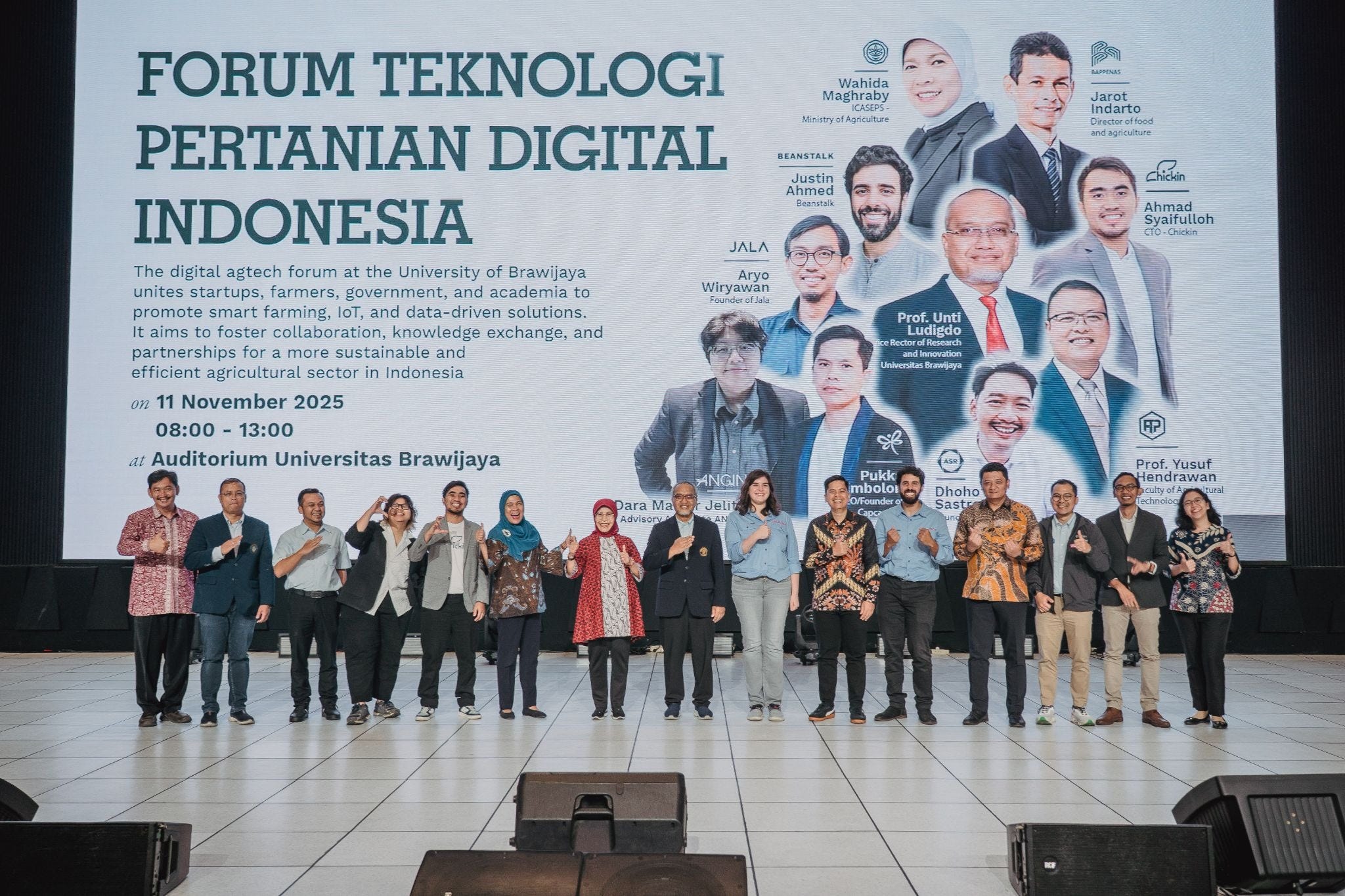
In addition to working with founders and corporates, a meaningful share of what the firm does sits with governments across the Indo-Pacific, helping them design and run ag tech adoption programs.
Government adoption programs are where Justin sees the widest variance between intent and outcome, and where political cycles make the right answer hardest to deliver. The programs that move the needle, in his view, share two things: a long enough timeline to match how agriculture works, and a shared definition of success that can survive across departments and government cycles.
The timeline piece is structural. Agriculture is a slow relationship-building environment by nature. Adoption takes years and is built on real trust. Seasonality matters. A technology has to demonstrate capability across multiple cycles before farmers commit. Programs running on a two-to-three-year horizon, or shorter, rarely deliver on that timeline.
Australia, Justin argued, is underrated on this front. The country runs a model called Cooperative Research Centres (CRCs): ten-year investments in collaborative research that pull innovation out of universities and into industry ecosystems. That timeline is what it takes to move past transactional engagement and build the trust required for ecosystem-level coordination.
The shared-definition piece is harder to see, and Beanstalk’s work with the Indonesian government on its digital ag tech policy and investment roadmap is what brought it into focus. When local agritech startups raised hundreds of millions of dollars a few years ago, the government wanted to know whether headline funding rounds were translating into real impact for smallholder farmers, or whether they were vanity metrics dressed up as success.
Answering that question turned out to be the work itself. Before any pilot could be designed, the government needed a common view across departments and agencies on what impact meant for the sector and how it would be measured. That work took the form of a dashboard that the relevant agencies could track and manage, built into the systems they already used.
The shift, from defining impact in a report to defining it in a tool the government uses every day, is what makes subsequent programs cumulative rather than parallel. Without it, departments run programs against different definitions of success, and even individually successful pilots fail to compound into ecosystem-level change.
Bear case is in the narrative, bull case is on the ground
Zooming out, Justin offered a clear split between what worries him and what gives him conviction.
The bear case is narrative. “Venture and capital is a land of narrative in many ways,” he said. He’s seen sectors outside ag tech find their bottom and start to rebuild after the global capital downturn. Ag tech, he’s not sure has reached that point yet. His worry lies in how generalist investors read the space. The headline narrative says ag tech has underperformed, and generalist allocators who haven’t been close to the sector tend to take that at face value rather than digging into where the real opportunity sits. That self-reinforcing cycle is what the Omnivore report was partly written to challenge.
The bull case is, paradoxically, on the supply side. Founders are adapting to the new reality faster than investors are. They’re more disciplined, more focused on learning from the mistakes of the first wave of ag tech, and increasingly clear-eyed about what kind of capital they need. Every second-tier and third-tier city Beanstalk visits in Indonesia turns up another 30 innovators with real energy.
What gets Justin most excited, though, is the role governments in the region are starting to play. Vietnam, Indonesia, Cambodia, Thailand, and Singapore all have governments that he sees as forward-thinking on ag tech, working out where they can be a catalyst in the ecosystem they’re trying to build.
That kind of government engagement, paired with disciplined founders, is what closes the translational layer he kept returning to throughout the conversation: the missing infrastructure between science and market, pilots and procurement, public ambition and private execution. The technology isn’t the bottleneck. The systems around it are, and they look more buildable now than they have in a long time.
Want to connect with Beanstalk?
For funders or investors looking to have more impact in the agrifood-tech ecosystem, reach out to Justin at justin@beanstalkagtech.com, follow their LinkedIn, or sign up for Beanstalk’s newsletter.
If you found value in this newsletter, consider sharing it with a friend who might benefit from it!
Or, if someone forwarded this to you, consider subscribing.
Disclaimer: The views and opinions expressed in this newsletter are my own and do not reflect those of my employer, affiliates, or any organisations I am associated with.