

Hey folks!
Thanks for being here. For Issue #135 of Better Bioeconomy, I sat down with Ferry Kamp, Founder and Managing Partner of Remagine Food.
Ferry brings over two decades of food industry experience, with senior leadership roles at Unilever, leading corporate venture building for clients such as Nestlé, Danone, and Heineken at Startupbootcamp-Innoleaps. He has driven commercial scaling and international expansion at plant-based pioneers, including Meatless Farm and GREENFORCE, and now backs and builds companies through Remagine Food, an operator-led food system investment platform that replaces passive capital with hands-on scale execution.
In our conversation, we unpacked what “invest and build” means in practice, why so many food tech startups fail to scale, how to design corporate partnerships that help startups, and how to match capital types to the risks in food tech. We also dug into portfolio construction when exits are mostly strategic M&A, and why Ferry is leaning into system-level infrastructure rather than premium sustainability plays.
Let’s jump in!
Inside an operator-led food system fund
Remagine Food began as a hands-on venture builder that helped food tech companies with commercial scaling, restructuring, and growth for other investors’ portfolio companies. Over time, Ferry and his partners kept running into the same challenge: before they could actually accelerate growth and scale, they first had to spend months fundraising just to secure the budget to do the work. So as a natural next step, they joined forces with Hive Capital to combine building and investing, a model designed to accelerate scale, not just fund innovation.
In practice, operator-led for Remagine Food means they “don’t stop at the cheque.” When they invest, they also commit time, people, and execution capacity. That includes hands-on work on commercial strategy and pricing, support on partnering with manufacturers and ingredient suppliers, help structuring follow-on rounds and M&A pathways, and, in some cases, stepping in as interim operators or board-level executors.
A traditional VC might invest in over 20 companies and expect one or two to break out, but in food, capital cycles are long, scale-up is messy, and most failures come from commercial and operational friction. Ferry’s view is that it is better to back fewer companies and be deeply involved in how they grow, partner, and finance the journey from idea to scale.
The classic VC playbook is rooted in software and Silicon Valley, where low marginal costs and fast feedback loops make it rational to swing often and let compounding take care of the rest. Food is different. The industry is more complex, with many actors from farmers to processors to retailers, and the path to scale runs through manufacturing, regulation, and supply chains that are unforgiving. In that environment, Ferry argues, you need investors who know the industry and are willing to behave like operators, not just capital allocators.
Why 90% of food tech fails to scale
The world does not lack food tech innovation. Technologies exist, and solutions are ready, but they lack scale and real impact. Many products are founded with the ambition to improve health, the environment, or social outcomes, but without scale, they never make a meaningful impact.
Ferry sees five recurring failure modes:
Commercial naïveté: Teams spend five or six years in the lab, then assume they can go straight from the lab to the shelf and are surprised when customers are not lining up. They have brilliant tech but no real buyer insight, no clear go-to-market, and no robust pricing model.
Scale illusion: Pilot success is mistaken for scalable demand. A product that works in one pilot or a small market is assumed to be ready for global rollout, without the intermediate steps of small-scale launch, national or regional rollout, and proof of a repeatable sales model.
Manufacturing mismatch: Technology that works in the lab does not work on industrial lines, or cannot be brought to a cost level the market will tolerate. The result is a solution that is technically sound but trapped in a small premium niche, far from the total addressable market (TAM) promised in the early pitch deck.
Capital structure errors: Teams use high-risk VC capital to fund heavy CAPEX, long manufacturing ramps, or low-margin infrastructure that should be financed with debt, strategics, or customers. The wrong capital ends up carrying the wrong risk.
Founder role lock-in: Technical founders with strong science backgrounds often stay too long in commercial leadership roles they are not equipped for, becoming bottlenecks as the company shifts from invention to scale. Ferry sees a clear difference between first-time founders, who often have blind spots around their own gaps, and serial founders, who know when to bring in complementary leadership or step aside.
Given that context, Remagine Food’s evaluation lens goes beyond “Is the tech good?” and asks three harder questions:
Is there a repeatable buyer with urgency? Ferry wants to know who needs this at scale now and why, and whether they are willing to pay today.
Does the company understand its “scale unit”? That could be tonnes per year, factories per region, or customers per line, and can articulate how that unit grows without breaking unit economics.
Is the founding team adaptable? The best founders evolve from inventors to builders to leaders. They pivot if needed and adjust the business model as the market reacts.
The top 10% of companies that break out are not always the most innovative, but they are the most adaptable.
Building corporate partnerships that work for startups
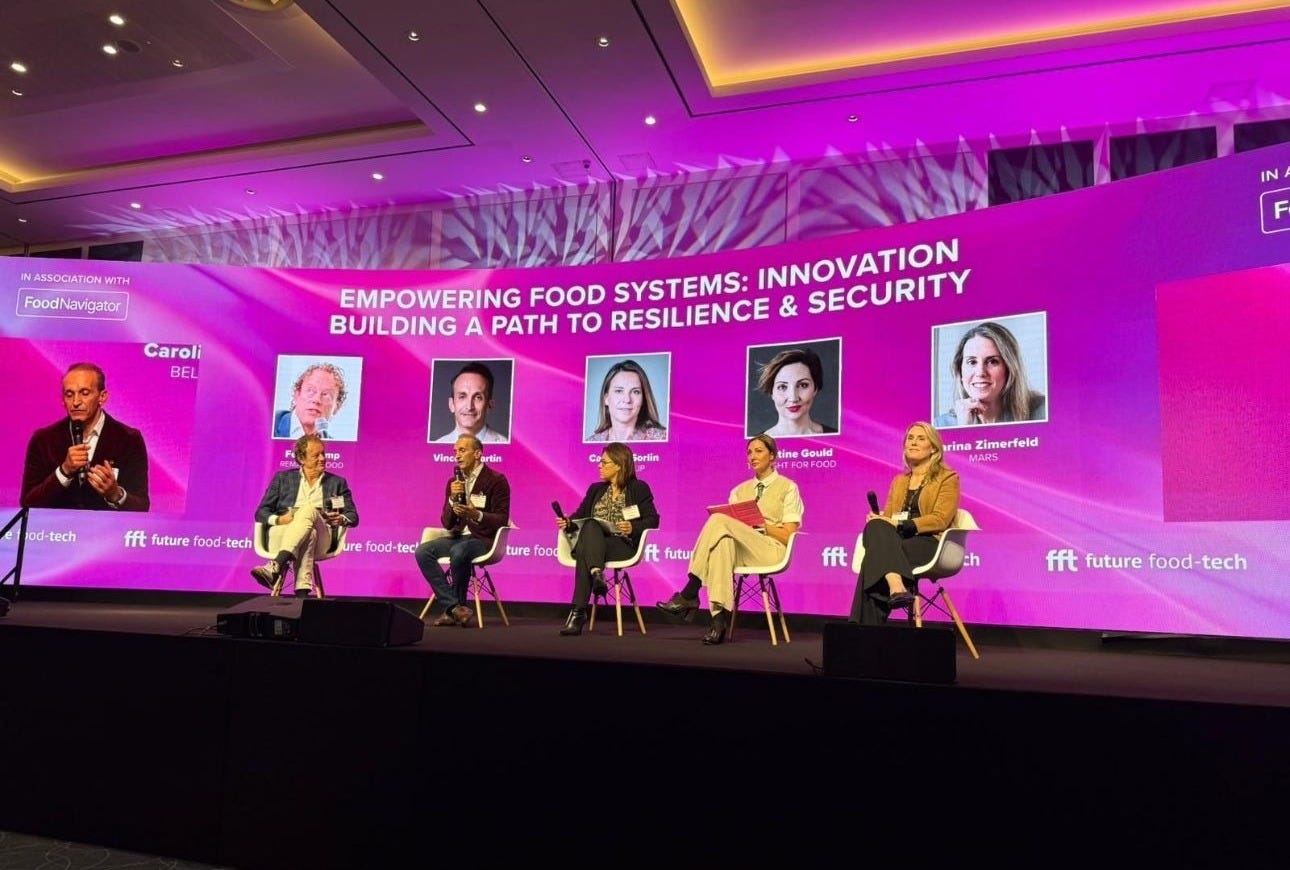
On paper, startups and corporates look like a perfect match. The speed and creativity of a startup, paired with the scale and muscle of a multinational. In reality, Ferry has watched many of these collaborations unravel into culture clashes and stalled pilots. Startups optimise for learning and iteration, while corporates show up asking about gross margins and risk controls from day one.
His view is that most collaborations are designed for the corporate, not the startup. Corporate processes and governance quickly become straitjackets that slow founders down, drain teams, and sometimes push them out. If a partnership does not remove the startup’s biggest scaling bottleneck, it is a distraction.
From a founder’s seat, good partnerships share four non-negotiables:
Named internal owner: Someone inside the corporate whose P&L or bonus depends on the partnership’s success. If everyone “supports” the startup but no one owns it, nothing moves.
Clear value exchange: Not vague “learning” or “exploration,” but explicit access to assets: manufacturing capacity, customers, regulatory muscle, or distribution.
Time-bound decision path: Founders should know what decision gets made in six to twelve months if milestones are hit, whether that is a rollout, a strategic investment, or more capacity.
Founder protection: IP ownership, decision rights, and commitments need to be clear up front. The agreements Ferry structures with strategics include in-kind contributions like production, clinical trials, and customer access to avoid the “no one picks up the phone” problem after the deal closes.
Finding the right capital stack for scaling
Food tech gets into trouble when teams try to force it into a software-style funding approach. Ferry’s golden rule: Match the capital type to the risk you’re trying to remove. Most startups fail because they fund scale risk with innovation capital.
He breaks the stack into four broad buckets.
Venture capital
VC should fund early tech validation, building the core team, and first commercial proof points. This is the phase where high-risk capital is needed because the basic question “does it work and will anyone pay for it” is not yet answered, and banks or strategics will not step in. Where Ferry sees trouble is when VC money is used for heavy CAPEX, long manufacturing ramps, and slow-margin infrastructure.
Strategic capital
Money from large food or ingredient companies is best used once there is clear commercial pull and should buy more than cash: manufacturing access, raw materials, go-to-market acceleration, and de-risked scale.
In one precision fermentation deal Remagine Food is closing, two of the largest ingredient companies are investing capital and in-kind support, including production, clinical trials, and customer introductions, with automatic follow-on investment if the startup hits its milestones. Those strategics are also likely M&A candidates down the road, effectively building a highway to scale rather than a series of disconnected rounds.
Debt and project finance
Debt becomes viable when unit economics are proven, contracts or offtakes exist, and CAPEX has predictable returns. At that point, the business starts to look like something a bank or project financier recognises: evidence of demand, line of sight to payback, and enough operational stability to carry leverage.
Grants
These are powerful tools for technical risk and early pilots, especially in ecosystems like the Netherlands, where clusters around precision fermentation or alternative proteins offer structured support. The risk is that they delay exposure to real customers, pushing teams to optimise for winning proposals instead of winning buyers.
Designing portfolios for strategic outcomes, not unicorn IPOs
In a market where liquidity is scarce and most exits are likely to be strategic M&A rather than IPOs, portfolio construction warrants reconsideration. For Remagine Food, in collaboration with Hive Capital, that starts with treating the fund itself as a collective: bringing strategics in as LPs, working with governments and other investors, and using that ecosystem to see what the industry wants solved.
That information then drives capital allocation. If you know what large buyers are trying to solve, you can build or scale companies against those specifications, increasing the odds they become customers, strategic investors, or acquirers. Strategics are also more patient than purely financially driven investors, giving companies time and technical and commercial support, which Ferry believes leads to stronger businesses and higher valuations.
For fund design, this means underwriting to credible buyers, not just big TAM numbers, and accepting that “base hits” matter. Multiple 2-5x exits into strategic buyers can drive strong fund returns if you own meaningful stakes and shorten growth cycles through active involvement. Food tech does not need unicorns to work. It needs repeatable strategic outcomes mapped against clear M&A pathways.
What’s interesting now and what isn’t
Asked what excites him, Ferry leans toward system innovation rather than single products. Four clusters stand out in his mind:
Precision fermentation platforms with credible pathways to reduce costs.
Ingredient technologies that plug into existing supply chains.
Fermentation, enzymes, and process technologies that upgrade today’s food system rather than replace it.
Food waste valorisation: turning food loss into high-value ingredients and building profitable businesses.
Food loss is the topic the conversation kept circling back to. More than 40% of food produced is lost or wasted, and roughly half of that loss happens early in the chain at farms, in transit, or in factories. That early-stage loss is worth hundreds of billions of dollars and represents one of the biggest margin levers available to producers and retailers.
Yet loss and waste are still treated as background noise, simply baked into business cases. Ferry expects prevention to move from nice-to-have to must-have as it becomes mathematically impossible to feed a growing population while throwing away 40% of output, and as companies see that cutting losses improves margins more than marginal logistics tweaks.
On the flip side, there are areas where Remagine Food is deliberately cautious (for now). Ferry is less interested in end-of-chain brands and propositions that rely on consumers paying a premium for sustainability. After working closely with alternative protein and meat analogue companies, Ferry no longer believes that direct meat imitation is the main path forward, especially when plant-based burgers are priced much higher than meat for households that rarely cook burgers in the first place.
He sees more potential in natural, clean and flexible plant-based ingredients that slot into dishes people already cook, at budgets they can live with. That lens also shapes his view of cultivated meat and some alternative protein plays: they are not dead, but they are ahead of their financing reality, with unresolved questions around consumer adoption and reaching mainstream price points before other solutions fill the space.
Ferry’s closing thoughts: “Food system transformation will not be led by better pitch decks. It will be led by people who know how to build, finance, and operate in complexity. That is the gap Remagine Food is trying to close.”
If you found value in this newsletter, consider sharing it with a friend who might benefit from it! Or, if someone forwarded this to you, consider subscribing.