

Hey, it’s Eshan. Welcome to Better Bioeconomy, insights on companies, capital, and ideas reshaping food, agriculture, and biomanufacturing for human and planetary health. Thanks for being here!
For Issue #153 of Better Bioeconomy, I sat down with Toby Hurley, Director of Product at Halter, one of the most talked-about companies in agtech right now.
If you follow this space at all, you have heard of Halter, and lately for one reason. In March this year the New Zealand company raised a US$220 million Series E led by Peter Thiel’s Founders Fund at a US$2 billion valuation. That roughly doubled its valuation in nine months, after a US$100 million Series D in June 2025 at around US$1 billion.
It is one of the largest agtech rounds ever, landing while the sector’s funding has collapsed from its highs. For an APAC-born company in a category most people wrote off as niche a few years ago, that is a remarkable run.
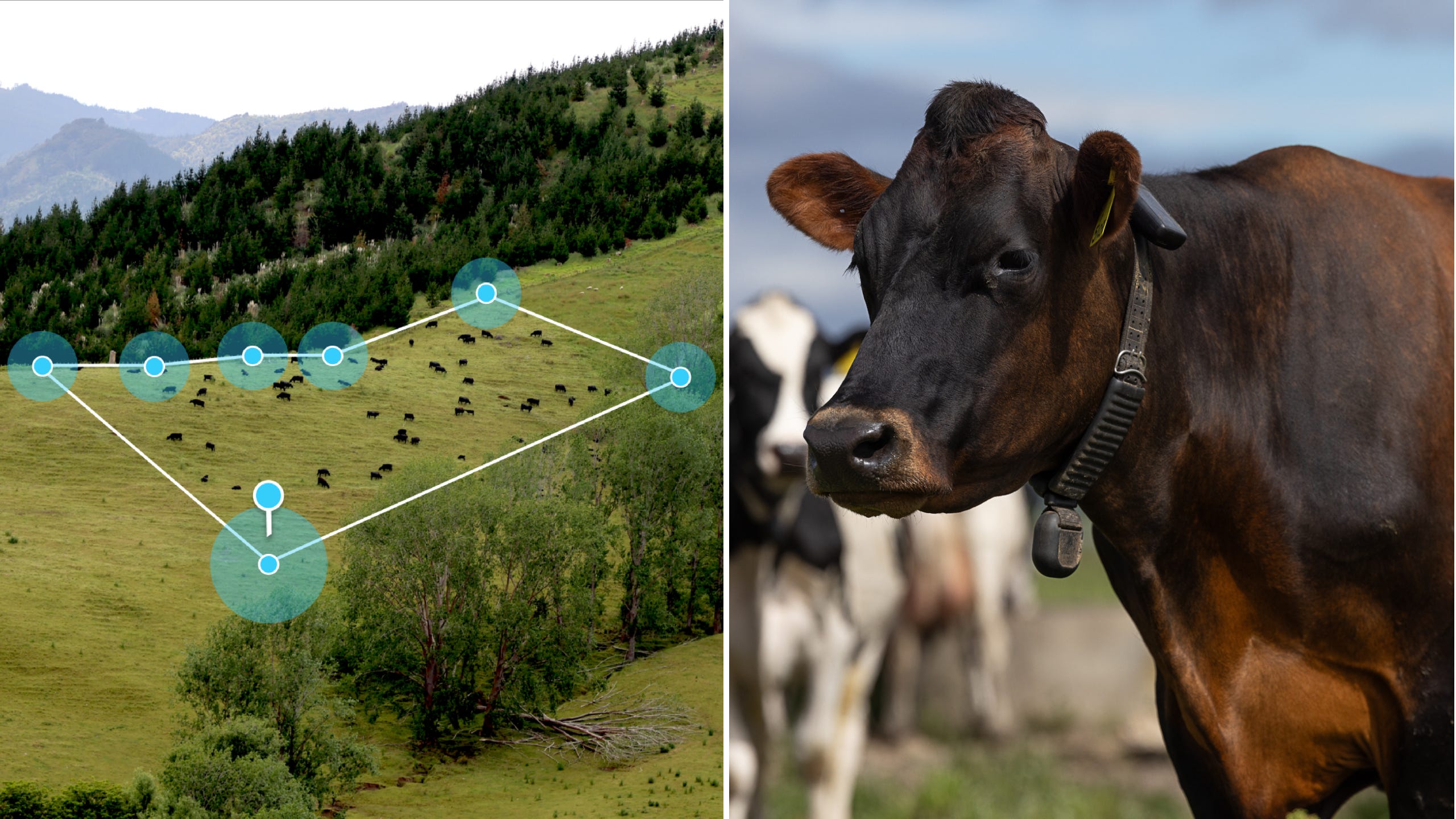
For anyone who needs the primer: Halter builds solar-powered, GPS-enabled smart collars that let farmers virtually fence and shift cattle from a smartphone, no physical fences required. Founded in 2016 by Craig Piggott, a former Rocket Lab engineer who grew up on a Waikato dairy farm, it now serves more than 3,500 farmers and ranchers across New Zealand, Australia, and the United States, and has sold over a million collars.
Toby is the person who runs product on top of all of it. He joined in 2021 from corporate litigation, with no background in product, agtech, or farming, and today leads an org of more than 100 engineers and designers. I came to this conversation from a technical background of my own, curious about how a product like this actually gets built, the thinking behind each upgrade, and how the pipeline holds together as it moves from one market to the next.
In our chat, we spoke about what carries across very different markets, when to pile features on and when to strip them back, why owning the data matters and owning the execution layer matters more, and the whole-farm model he is chasing next.
Let’s jump in!
Underneath the collar, Halter is four systems working as one
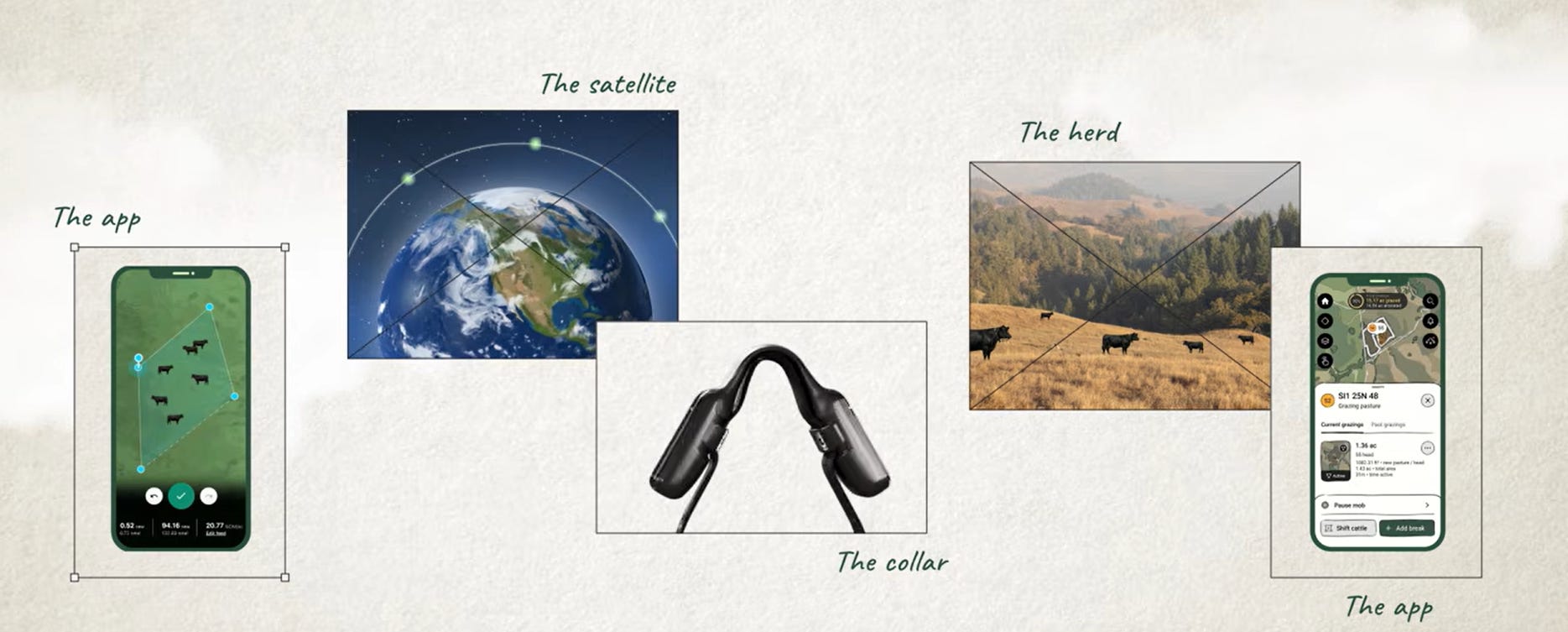
Before the product decisions make sense, it is important to understand what Halter really is, because it is more than a collar. A team of engineers and designers builds it as four parts that work as one system: the collar, the connection, the app, and the intelligence underneath.
The collar is the foundation. Solar-powered, weather-sealed, and built to sit on an animal year-round, it carries two speakers that play directional audio and a vibration that confirms when the animal is moving the right way. That is how a farmer holds cattle inside a virtual boundary and shifts them on command, and most learn to respond within three interactions with a virtual fence.
The connection is where Halter recently pulled ahead. Collars used to rely on towers on the ranch, fine on a compact dairy farm but expensive or impossible across remote rangeland. In 2026, Halter launched direct-to-satellite collars, the first virtual fencing that works anywhere you can see the sky. The collars form a mesh network, and every few minutes one takes a turn as leader, connecting to satellite to pull down the latest fence lines and push up the herd’s location and health data before sharing it back across the rest.
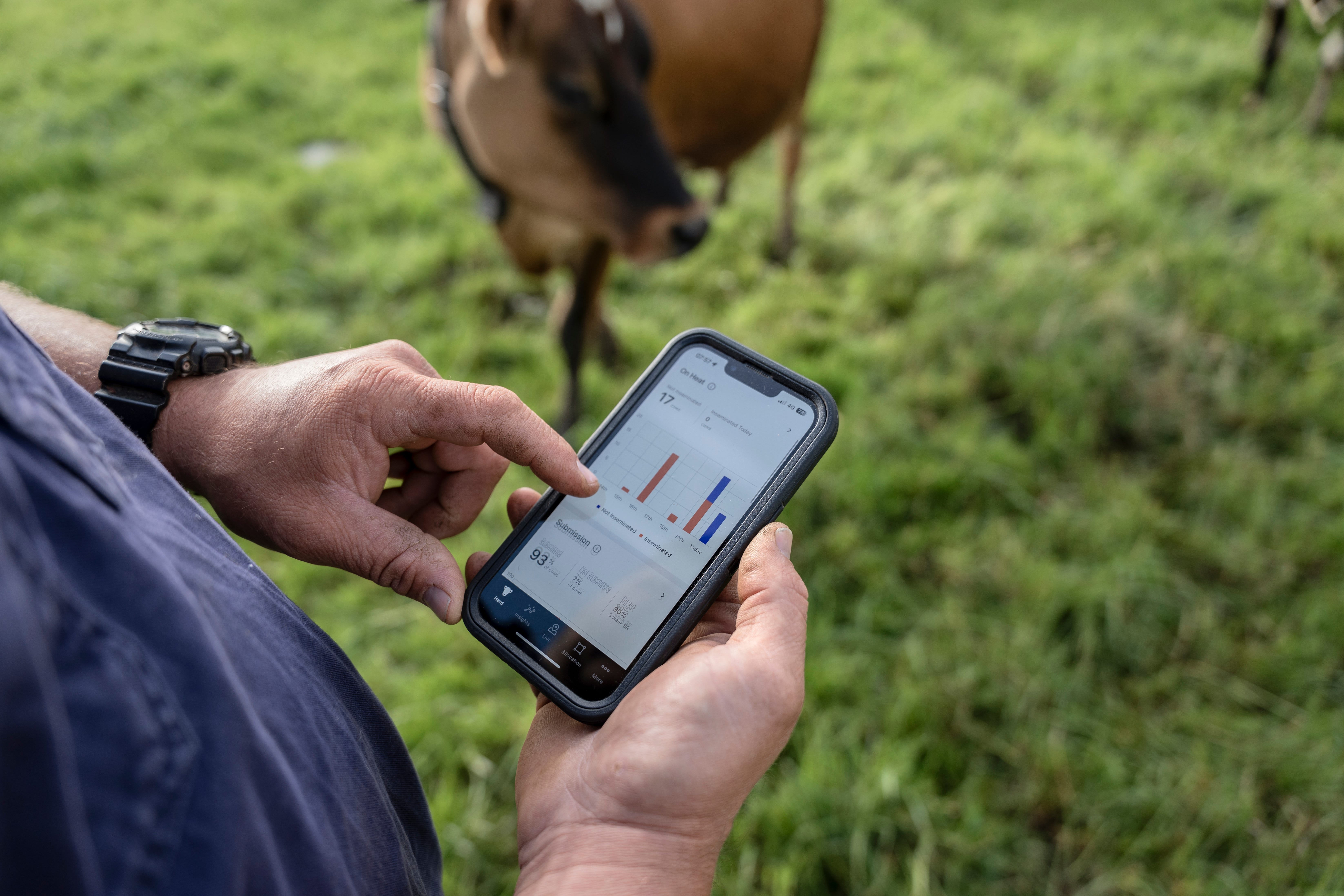
The app is the control panel: a live digital twin of the ranch that shows where every animal is and how each paddock is grazing, and lets the farmer draw a fence or move a mob with a tap. Set a shift in the app, and minutes later, the cattle move in the real world.
The fourth part is the one you cannot see. Every collar streams over 6,000 data points a minute to Halter’s cloud, feeding what the company says is now more than 7 billion hours of animal behaviour data. Machine learning turns that into the cues, health alerts, and grazing insights that come back to the farmer. At the centre sits the Cowgorithm, Halter’s trademarked model that teaches cattle to respond to the audio cues in the first place. It is the main reason the virtual fence works at all.
How coming in with no farming background was an advantage
Toby joined Halter from an unlikely place: law. He had been a corporate litigator at one of Auckland’s big firms, and he treats that outsider’s start as one of his biggest advantages.
He loved litigation for the hard problems and the grind, but could not see the path: ten years to make partner, then a job that is mostly client relationships rather than the work itself. So he started looking. His path crossed with Craig, who was looking to hire Halter’s first product manager as the company moved from “build the collar, does it work?” to taking a product to market. He started as an associate product manager and grew into the role he holds now.
His first six months were spent as a sponge, talking to farmers and working out what they did and why. Then his legal training took over: find the most important problems, work out why they are the most important, and find creative ways to solve them.
The advantage was having no attachment to how things were supposed to be done. "I had never used any competitor products. I wasn't familiar with what normal looked like," he told me. That let him ask a sharper question than most insiders would: what is actually worth reinventing? Some parts of farming rest on decades of science and do not need tearing down. Others do. Coming in fresh made it easier to tell the two apart.
Most of the product travels across regions since the ingredients don’t change
New Zealand dairy and US beef ranching look nothing alike on the surface. Different herd sizes, different terrain, different economics. How much of the product needs to be rebuilt each time it enters a new market? Toby’s answer was to look past the surface, to what every one of these operations has in common.
Every Halter customer is working with the same ones: land, grass, and cattle. The land grows grass, the cows eat it, and the farmer’s job is to turn that grass into a product. A New Zealand dairy farm, a Texas ranch, and a Canadian or Brazilian operation are all solving that single problem.
Halter built its foundations around it. The collar is identical in every market, gives the same cues, and pulls the same data, and the machine learning models are built to transfer across regions rather than be rebuilt for each one.
What localises is the layer on top: the tooling, and how the mobile and web apps present things to a given customer. “For the most part, it’s really the translation layer that changes,” Toby said, not the hardware or the core systems underneath. Craig has described the same split, saying that the team reworked the software to fit how US ranchers work and pushes updates to the collars remotely, so the system keeps improving without anyone buying new equipment.
A foundational system may need to change for a new market in the future, but so far that has not happened. Every market has run on the same foundations. For a company entering several countries at once, that is a real head start, because each new market stands on something already proven rather than a blank page.
When software is cheap, owning the data matters, and owning the execution layer matters more
The collar does a lot of the work. The other half of what makes Halter hard to compete with is the software and the data beneath it, and Toby is clear-eyed about why. Building software has become cheap, and so has AI. Pay a hundred dollars for a Claude subscription, he points out, and you can do powerful things without being a developer. When the tools are that commoditised, the edge moves to the one thing that is hard to copy: access to the data that feeds them.
Halter pulls that data from everywhere, on and off the collar. For pasture, it layers weather data, satellite imagery, and now drone data on top of what the collars gather. As Craig told TechCrunch, the health and fertility detection have sharpened as Halter has built up what is likely the world’s largest dataset of cattle behaviour.
The part Toby pushed back on was the shallow version of the data story. People picture the collar as a Fitbit for cows, a wearable that just collects data, and forget it is also a fencing and shifting device. "If you build the most unbelievably accurate optimised plan for how you should run your farm," he said, "if you can't actually go out and execute that with precision every day, then it doesn't really materialise into an outcome."
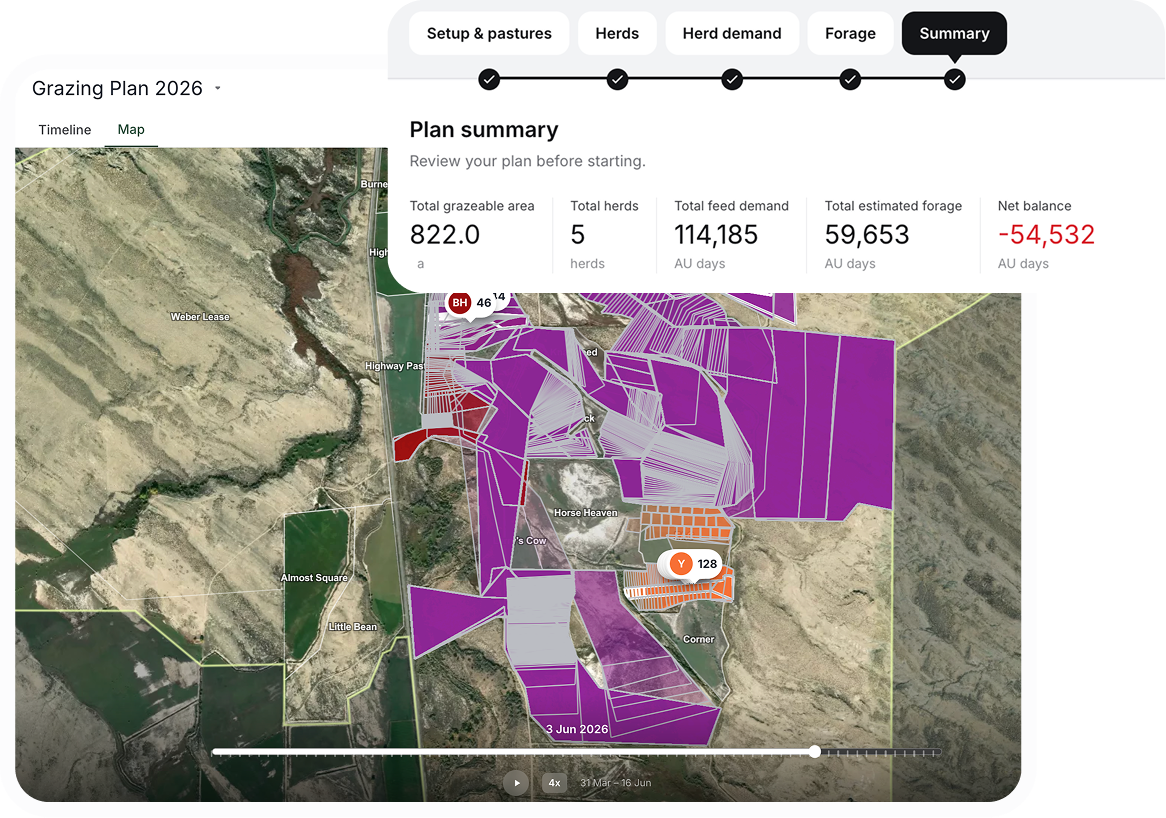
The collar collects the data and acts on it. An AirTag tells you where the cow is. A Halter collar moves her. That execution layer is what a competitor running pure analytics cannot easily replicate, and as one investor told AgFunder, the collar is only the entry point. Beef Pro is the newest thing built on top of it. Halter launched it in the US and Australia just after we spoke, and as Toby put it, it “adds the measurement and planning layer on top of the execution layer that is virtual fencing.”
‘You earn the right to simplify’ by shipping fast, then stripping back
Halter ships constantly. Craig has said the product a rancher uses today is radically different from what they bought a year ago, with new things going out every week. So how does the team keep adding capability without bloating the product away from the job a farmer bought it for? "We think of everything from a first principles perspective," Toby told me.
The north star is the short list of jobs a pasture operation has to get right to turn grass into product, and that rules most things out. Halter does not chase nice-to-haves that save a little time but do nothing for whether the business is more profitable or more sustainable.
Toby thinks about simplicity differently from most product people. The instinct is to chase a clean, elegant product from day one, and he thinks that is a trap, because you never learn what was too much or what did not need to be there. “You very much earn the right to simplify,” he said.
The approach is to nail an important problem, then ship, test, and validate as fast as possible. In the short term that can mean several things running at once, which can look like bloat, but what it is really doing is generating signal about what works. Only once you can see the full picture do you strip back what does not matter. More iterations, simpler product.
The testing is risk-tiered. Low-stakes changes, like showing data as a graph instead of a table, get shipped and tested liberally. Core systems, like measuring grass or a cow's health, run through a disciplined process on Halter's own research farm before they reach customers. Toby counts himself lucky to have beta and closed-tester groups across countries who are happy to try things and say what works, which builds confidence before any wider release.
Hardware and software get you in the door, trust is what makes the product stick
Halter is not a fully self-serve product, and may never be. Toby is at peace with that.
Every product team wants customers who buy and onboard themselves with no support, because that is what margins and scale reward. Halter is asking for something harder. Physical devices go onto the land. The humans learn to run their operation through a phone. The cows have to learn entirely new cues. That is a rethink of how a farm runs, and it does not happen unattended.
According to Craig, this is the deal: Halter is not a set-and-forget product. “You need to be willing to use the product and change what you were doing to some degree,” he told AgFunder. “If you really want the returns, you have to be willing to do some level of system change in how you allocate your land.”
So Halter goes hands-on at the start, with a dedicated team sitting alongside customers through onboarding. Toby’s read is that confident, happy farmers and happy cows are the single biggest predictor of long-term success, so that early stage is where the effort goes.
The support will shift as the company scales, but he expects the trust-building part to matter indefinitely. The hardware and software get Halter in the door. Trust is what keeps it there.
Modelling the whole farm would be the “quantum leap”
Given everything Halter has already built, I asked what he was most excited to build and what the hardest unsolved problem was. He gave one answer to both.
It comes back to the same equation: land, grass, cattle, product. The difficulty is that you are dealing with several systems interacting at once: the land and grass, the weather, the cows, and the human running it all.
The end state is a model of that entire system. Change one variable today, and Halter tells you what happens in a month, six months, a year, with economics and market pricing overlaid. “You’re not going to build that all at once,” he said, “but that is kind of the end state that I’m most excited about us building.”
It is also the least solved problem he has. If you could predict the weather six months out, know to the calorie how much energy a cow needs, and know to the calorie how much energy is in the grass, this would all be easy. But you cannot. That uncertainty is the hard part.
Halter’s bet is that more data and more investment in its systems close the gap over time. Everything it has built so far has been a big leap forward. What comes next, Toby said, is a “quantum leap” forward.
If you found this useful, consider sharing it with a founder or operator building at the messy seam where hardware, software, and biology meet.
Or, if someone forwarded this to you, consider subscribing.
Disclaimer: The views and opinions expressed in this newsletter are my own and do not reflect those of my employer, affiliates, or any organisations I am associated with.