

Hey, it’s Eshan. Welcome to Issue #161 of Better Bioeconomy. Thanks for being here!
Longevity has become one of the buzziest words in nutrition and health. I have been trying to work out how much of it is new biology and how much is old products with new labels.
The answer may be found one layer upstream of the brands, with the ingredient suppliers who decide which science is worth turning into a product, and what it takes to get it there.
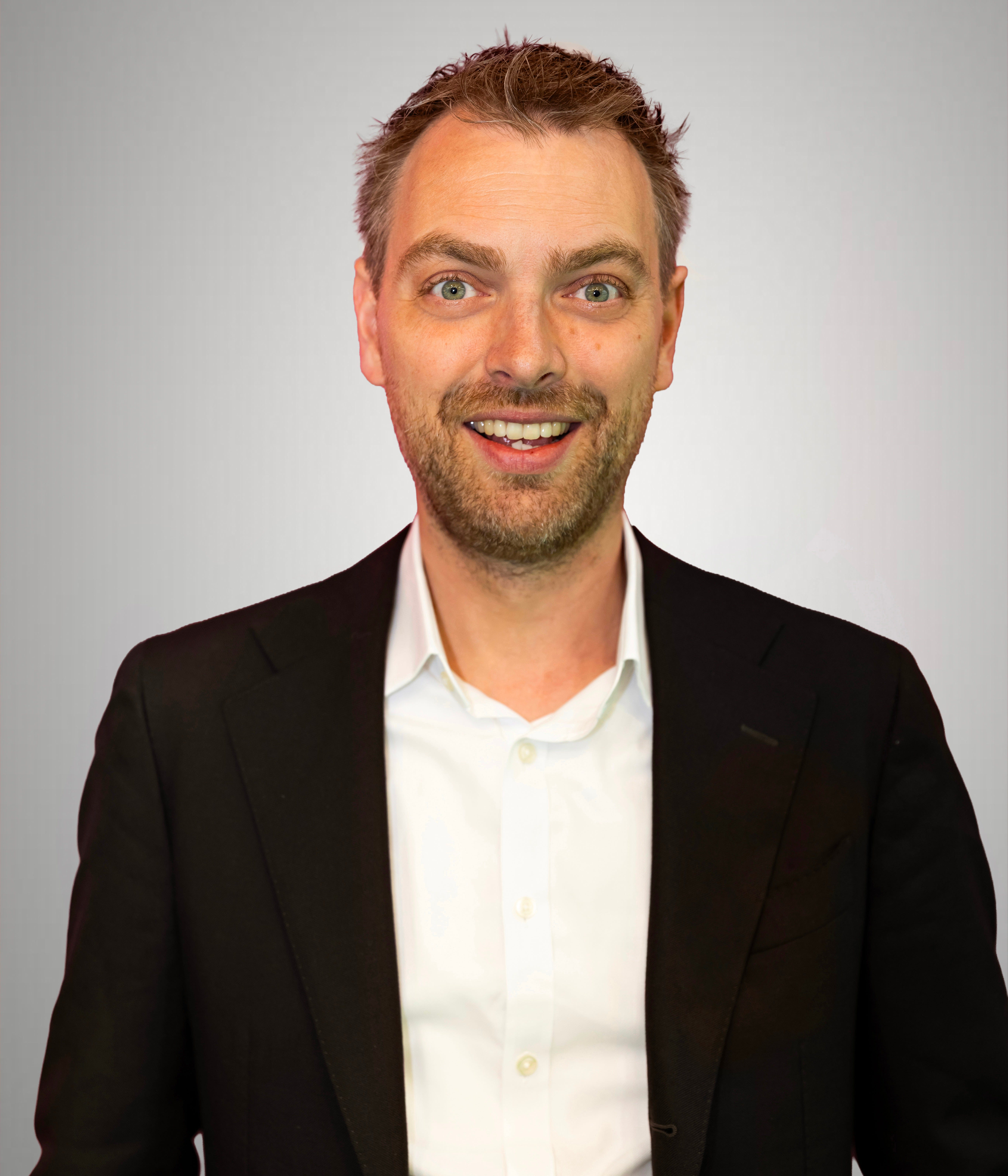
So I recently sat down with Vincent van Buul, Director Innovation, Application & Formulation EMEA at dsm-firmenich. Vincent’s framing, moving from lifespan and healthspan to cellspan, which he shared on NutraIngredients, is what made me want the conversation.
dsm-firmenich was created in 2023 by the merger of Dutch nutrition group DSM and Swiss flavour and fragrance house Firmenich. The company describes itself as a nutrition, health and beauty business. A worldwide team of nearly 21,000 people works across nearly 60 countries, and continuing operations generated revenues above €9 billion.
Its customers are food, supplement, medical nutrition, and pharma companies, which it supports with ingredients, solutions, and expertise spanning nutrition, health, taste, texture, and formulation.
Vincent has a PhD in behavioural nutrition and an MBA, and his career has moved between the science and the commercial end of it. He was Global Head of Dietary Fibre Science and Innovation, worked on innovation strategy under the Global CTO, and spent time in a venturing role analysing startups before that.
His current remit covers the gap the whole category keeps falling into, between an active ingredient that works in a study and a product someone will eat regularly.
In our chat, Vincent shared:
How a hallmark of ageing earns a place on the build list
What cellspan means, and why the category needed a new word
Why the ingredient is only part of the answer
What separates a healthspan ingredient from a healthspan claim
How the company decides which ideas to work on
Where the next frontier in healthy ageing is
Let’s jump in!
A hallmark of ageing is only relevant if nutrition can influence it
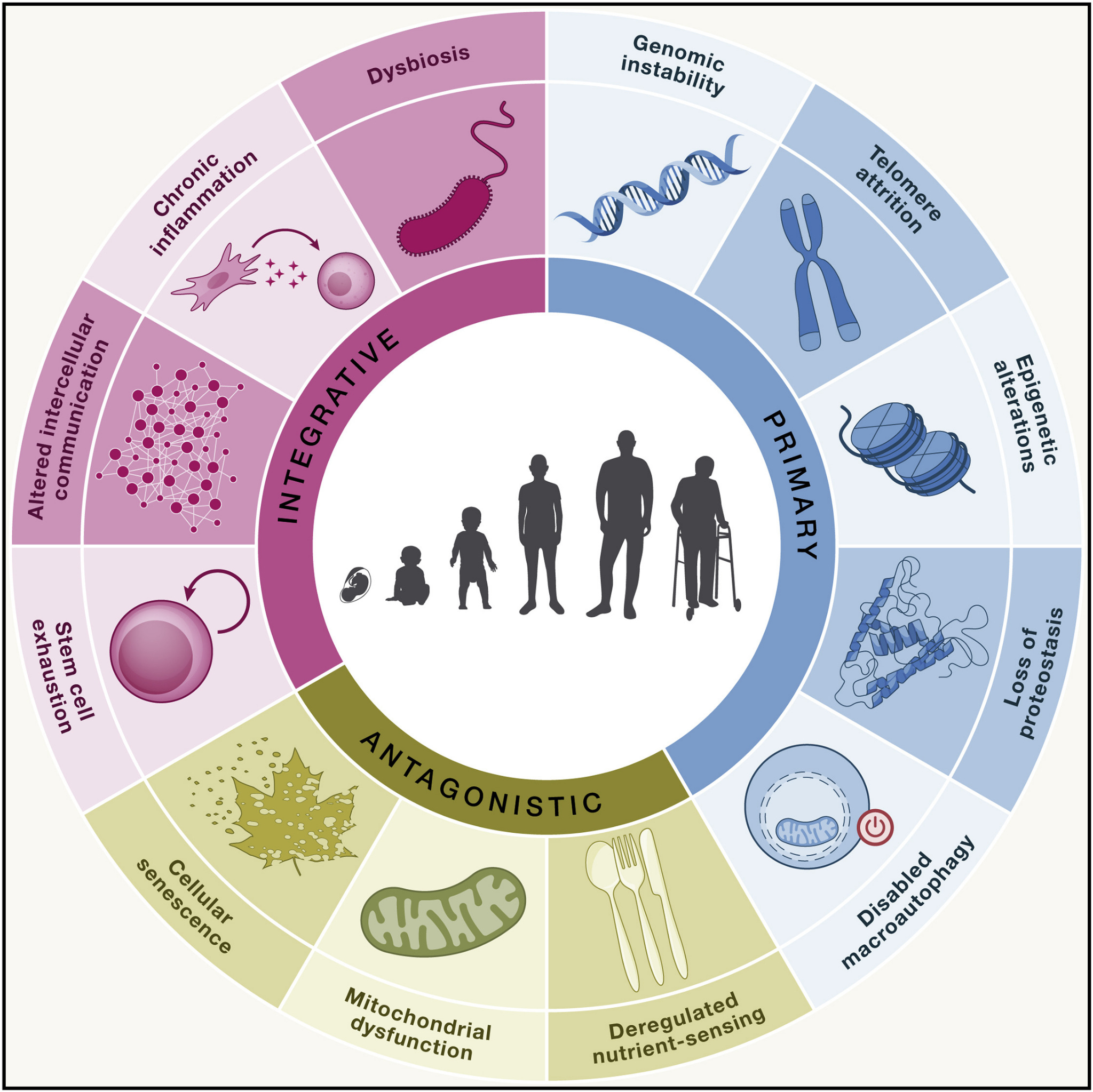
The hallmarks of ageing are the biological processes researchers accept as drivers of ageing, as opposed to symptoms of it. To qualify, a process has to show up as you age, speed ageing up when it is made worse, and slow ageing down when it is treated. A 2013 paper named nine, later a 2023 update took the list to twelve:
Genomic instability
Telomere attrition
Epigenetic alterations
Loss of proteostasis
Disabled macroautophagy
Deregulated nutrient-sensing
Mitochondrial dysfunction
Cellular senescence
Stem cell exhaustion
Altered intercellular communication
Chronic inflammation
Dysbiosis
dsm-firmenich builds against four of them. Why those four? Three conditions have to be true:
Nutrition has to be able to influence the hallmark.
The effect has to be mechanistic enough to measure.
It has to translate into a product that can be developed and sold.
A hallmark that matters a lot in ageing but cannot be reached by what you eat does not earn a programme.
The four are chronic inflammation, gut dysbiosis, cellular senescence and mitochondrial dysfunction. Vincent puts chronic inflammation front and centre, largely because of what it does downstream. Small inflammations in the gut and elsewhere set off secondary effects far from where they started.
Gut dysbiosis is the neighbouring one. “There are roughly as many microbial cells living in and on our bodies as there are human cells,” Vincent said, “with a large proportion of those microbes residing in the gut.” Nutrition passes directly through that system, which puts a nutrient in contact with it by default.
Senescence and mitochondrial function cover the cell itself. A senescent cell is not dead. It stays metabolically active, converts nutrients into unhelpful compounds and feeds the same inflammatory load. Mitochondria run the energy side, and the receptors and pathways around them respond to molecules that arrive through food.
What nutrition can reach is what decides that list. The same constraint shapes everything below.
Cellspan brings lifespan and healthspan back together
Okay, that is a lot of “spans”! Here is how Vincent separates them. Lifespan is how long we live, measured in years. Healthspan is how long we stay healthy. Those two numbers should match, but they do not, which is the problem the whole field exists to solve.
Cellspan runs underneath both. He defines it as how long cells remain resilient, functional, and able to repair, communicate and produce energy. It gives his teams something to design against that is smaller and more testable than healthy ageing, and it is the layer where the four hallmarks operate.
When longevity started showing across supplements, medical nutrition and functional foods, his first reaction was that the industry was relabelling itself. “Yet another term to basically say the same thing that this industry has been doing for decades,” is how he put it.
His own example is vitamin C. It has been sold for decades, it supports immunity, a benefit that can contribute to healthier ageing. What has changed is not necessarily the underlying ingredient, but the way consumers think about health: increasingly proactively, with a focus on maintaining function and resilience before disease occurs.
Vincent’s point is that longevity becomes most meaningful when that shift in mindset is matched by a deeper understanding of the mechanisms involved, rather than simply applying a new label to familiar health benefits.
Cellspan is his way of bringing the longevity story back toward mechanism. It asks what is changing at the cellular level, not whether an existing benefit can be renamed.
The science only translates if the dose fits into a product
The cellspan test raises the question: Once you know which biology to target, what stops the product from working?
Vincent points to gut health as a good example. Beyond traditional dietary fibre, his teams look at more targeted ways to influence the gut environment, including human milk oligosaccharides, or HMOs, and Humiome® B2. These approaches show how nutrition can move towards more precise modulation of gut health and dysbiosis.
But the ingredient is only part of the answer. The real challenge is building it into a broader solution with the right dose, format, taste and consumer experience.
That challenge generalises well beyond gut health. Most nutrients taste bad, arriving with off-notes and other barriers to consumption. This is where the flavour and texture half of dsm-firmenich shines. Pairing an active with a flavour system is the step that decides whether the ingredient gets consumed at all.
“If they’re never consumed by someone, nothing will work,” Vincent said of the many promising nutrients in the literature. Taste has to be right, the format has to be one people enjoy, and the price has to be viable. Miss one and the active is irrelevant.
He describes it as a chain:
The ingredient has to work
The human evidence has to be credible
The product has to be something people consume, trust and understand
A brand ecosystem has to get it to them
“If that whole chain somewhere is broken, there is no impact,” he said. “And then all the efforts of science get lost.” He is a scientist by training, and he wants his time to produce real impact, not what he calls paper impact.
Credible healthspan evidence comes from multiple layers of evidence
Credible human evidence is the second link in that chain, and it is the one every ingredient on the market claims to have. So what separates a healthspan ingredient from a healthspan claim?
“It’s not about one ingredient, one brand, one biomarker or one claim,” Vincent said. He looks for convergence across mechanism, human evidence, formulation, dose, consumer behaviour and how responsibly the whole thing is communicated. Any single element can be bought, but the whole set is harder to fake.
His example of evidence done properly is DO-HEALTH, run by Professor Heike Bischoff-Ferrari. The trial enrolled 2,157 adults aged 70 and older across seven centres in five European countries and followed them for three years.
DO-HEALTH ran a 2x2x2 factorial, splitting participants into eight groups across three variables. Each group either did or did not get:
Vitamin D, provided as Quali®-D at 2,000 IU a day
life’s®OMEGA 60, providing 1,000 mg EPA+DHA per day
A home exercise programme
That structure shows whether interventions add to each other, which no single-ingredient trial can do.
A later post-hoc analysis of 777 participants from the DO-HEALTH cohort, published in Nature Aging in 2025, applied four DNA methylation clocks to the cohort. Methylation is a chemical tag that attaches to DNA without altering the DNA itself. The pattern those tags form shifts as you age, and it shifts regularly enough to be read as a measure of ageing.
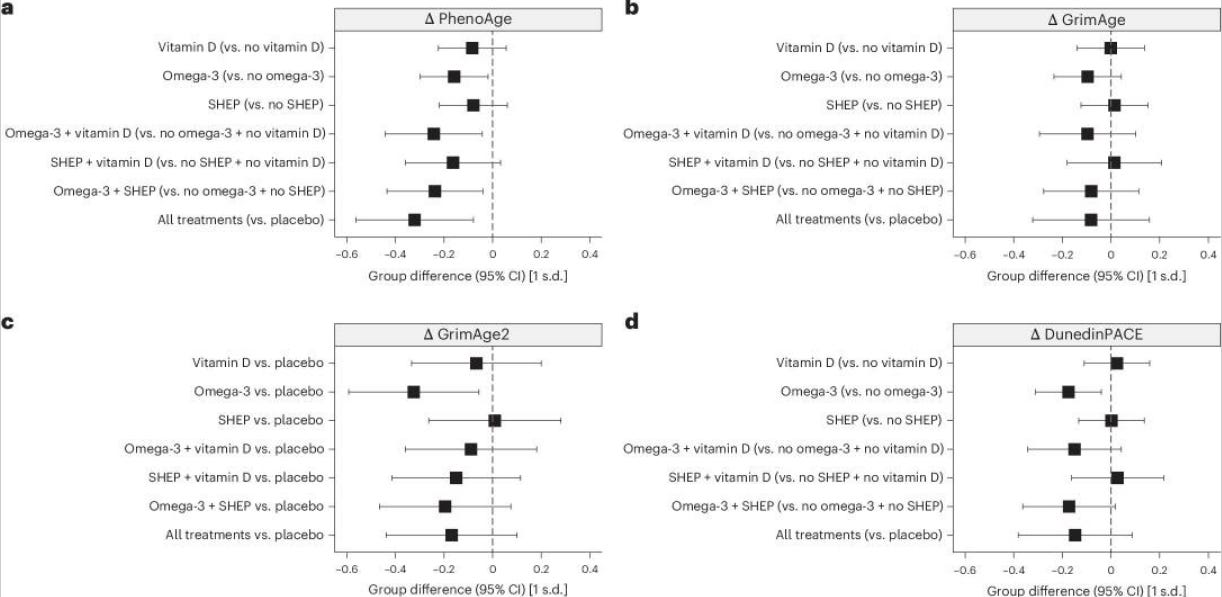
The clocks are algorithms that read the pattern across thousands of sites and estimate biological age. The omega-3 intervention with life’s®OMEGA 60 showed effects across several epigenetic ageing measures, corresponding to an estimated 2.9 to 3.8 months of biological-age advantage over three years. All three interventions together showed an additive benefit on one clock, PhenoAge.
Vincent explained the underlying biology with an analogy of his own. DNA gets read and copied every time a cell divides, and methylation marks attach to it. “Basically, it is the Post-its you put in a book,” he said, marking where to start and stop reading. The trial changed a set of methylation-based estimates of biological age. It did not show DNA being copied more accurately, and as Vincent stated, nothing here changes anyone’s DNA.
More than 90% of innovation starts with a problem worth solving
With all the emerging science and consumer trends, how does dsm-firmenich decide what to work on?
For more than 90% of projects, the first question is whether there is a real pain in the market worth solving, felt by a consumer or a patient. Establish that, and the technology to solve it can be found afterwards.
That ordering is key because the input is effectively unlimited. Ideas are endless, in Vincent’s view, and not confined to his company. Eight billion people, eight billion brains, and now an unlimited amount of compute augmenting them. With ideas that abundant, the hard part is picking between them.
His answer is a stage-gate funnel, where an idea has to clear a defined checkpoint before it gets more resources. He keeps the funnel deliberately loose at the front. That early stage, the fuzzy front end, can stay unstructured, because that is where large and messy sets of ideas live. Each gate downstream demands more concreteness, until an idea has to justify real investment.
The remaining 10% or so is technology push, and he does not take it lightly. Ask people thirty years ago whether they would buy a mobile phone, and they would say no. Some things consumers cannot ask for.
Those bets get held to a different test, one a mentor gave him. “You should smell the money from the start,” he said. If an idea leaves you thinking there are a thousand hurdles and a billion-dollar prize behind them, it goes into a small protected box outside the normal business case. Everything else has to earn its way through the gates.
The next frontier is the format
So where does the science go next? Vincent gave two answers.
The microbiome comes first, and it has been his answer for a while. He still sees it as the place where the most health factors can be modulated.
His second answer is earlier-stage. He is interested in whether flavour perception itself can drive biological effects, particularly around relaxation and the gut-brain axis, using chai and other smooth flavours as the intuitive example. The brain is a part of the body the nutrition industry rarely designs for.
Ask him what is underrated, though, and his answer is format. The assumption that a supplement means a pill, a softgel or a gummy is rapidly changing, and functional foods have come back with it. He pointed to the growth of meal replacements as evidence that the delivery question has reopened.
He sees the same shift in supermarkets, which he visits wherever he travels. The aisle keeps expanding, and it also keeps moving. “It’s not a dietary supplements aisle anymore,” he said.
That shift matters for the hallmarks he builds against. Fibres and lipids take up real space in a product, unlike micronutrients that need only milligrams. A format with room for grams is a format that can carry doses a capsule never could.
A bigger format also has more that can go wrong. It has to taste good, remain palatable over its shelf life, manage moisture and stay safe at the point of consumption. His teams work on those challenges daily, with large brand owners and startups alike.
For a nutrient supplier, that could be where the next decade of work is. Plenty of the industry is still looking for the next active. Vincent argues that for a lot of promising nutrients, the harder problem is downstream of discovery. Getting an effective dose of a credible ingredient into someone, repeatedly, for years, in a format they keep choosing.
Want to connect with Vincent?
Vincent is always interested in connecting with people working on the next generation of nutrition and health innovation, from new science and ingredients to formulation, delivery formats and consumer adoption.
If you are developing a healthy longevity concept, tackling a formulation challenge, or exploring how promising science can be translated into products people will actually use, connect with Vincent on LinkedIn or reach him directly at vincent.van-buul@dsm-firmenich.com
I’m Eshan. An operator-turned investor, backing companies in food, agri, nutrition, and health. I’ve been writing Better Bioeconomy since 2023, as a way to share my learnings and to connect with cool people like you. Thanks for reading!
If you found value in this newsletter, consider sharing it with a friend who might like it.
Or, if someone shared this with you, consider subscribing (it’s free!).
Unlock Asia’s trillion-dollar opportunity
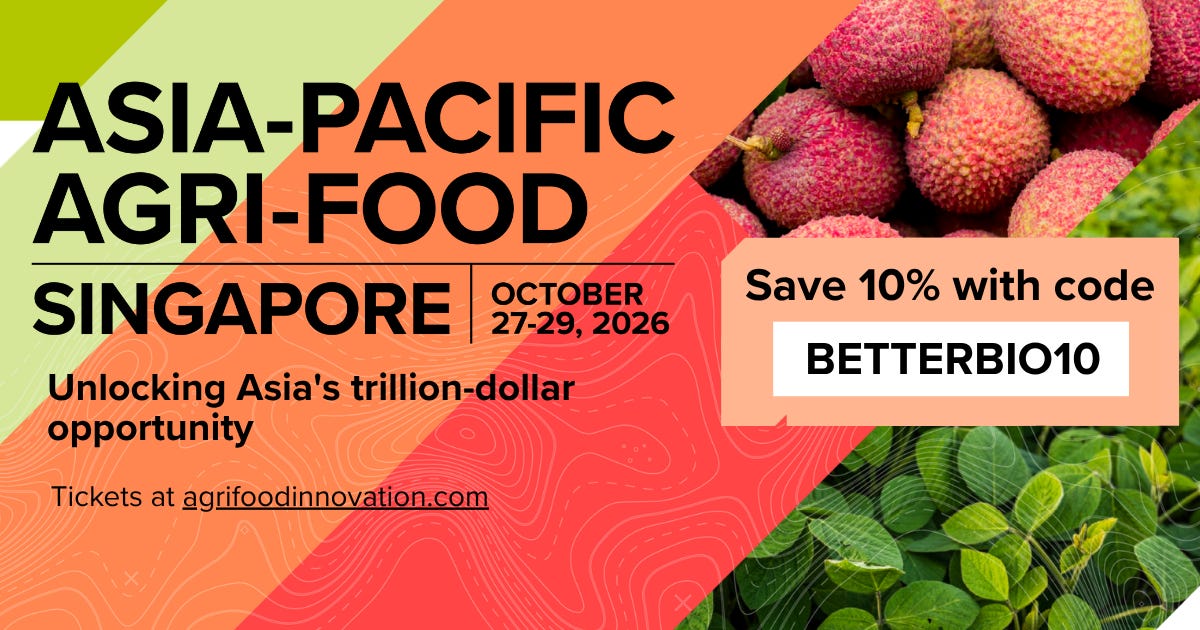
Don’t miss your chance to attend the Asia-Pacific Agri-Food Innovation Summit and get 10% OFF with my network code. Use my exclusive partner code for 10% OFF your pass: BETTERBIO10. See you there!
Disclaimer: The views and opinions expressed in this newsletter are my own and do not reflect those of my employer, affiliates, or any organisations I am associated with.