

Hey folks!
Thanks for being here. For Issue #129 of Better Bioeconomy, I spoke with Andrew D. Ive, Founder and Managing General Partner of Big Idea Ventures. The fund is one of the most active investors in food tech with more than 150 portfolio companies across 30 countries and a hybrid fund-accelerator model that has shaped much of the category’s early growth.
Before launching Big Idea Ventures in 2018 to “solve the world’s biggest challenges by backing the world’s best entrepreneurs,” Andrew began investing in food startups as Managing Director of SOSV’s Food-X accelerator and has worked across consumer goods, software and entrepreneurship.
In our conversation we walked through why the Big Idea Ventures chose twenty weeks and hundreds of hours with founders instead of the classic twelve week accelerator template, how Andrew is thinking about the next chapter of alt protiens, the three way division of labour between startups, corporates and governments, what a good exit looks like in food and ag, and where the fund is leaning now in its own thesis.
Let’s jump in!
How 800 hours of hands-on work with a startup builds conviction
Big Idea Ventures built its model around a simple idea: you only really understand a team by spending time with them. That is why their accelerator runs for twenty weeks and why they commit hundreds of hours to each company before making larger investment decisions.
Across the program and diligence, the fund spends about ~800 hours with every startup. The first cheque is modest at about 125,000 USD. The real investment is the five months of work the founders and the investment team do together. The larger cheques come later, after the fund has watched the team operate over that period.
This time gives Andrew’s team a view that most early-stage investors do not have. In Andrew’s view, traditional early-stage deals in food and ag often follow a similar pattern. A fund meets a team a few times, sees a deck, asks tough questions in a boardroom, does market and competitor analysis, and then decides whether to write a cheque after “maybe 15 hours of real interaction.”
In those meetings, everyone is on their best behaviour. The founder has rehearsed their answers. The team looks aligned, at least on the surface. You do not see what happens when things go off script.
Over five months, you see much more. You see how founders react when a large food company disagrees with their pricing. You see what they do when a pilot fails. You see whether they listen to feedback and change course, or nod politely and keep going. You see the small frictions between co-founders when they are tired or under pressure.
Spending that much time with teams has also changed how Andrew thinks about failure. When you think about why companies do not make it, the answers are familiar. Competition heats up. The technology does not work as expected. Customers are slower than planned. Those factors are real. But from Andrew’s experience, many of the hardest problems are human.
The companies that shut down most often did so because the founding team could not hold together. Co-founders who started aligned realised they had very different risk appetites or decision styles. Disagreements on strategy hardened into personal conflict. People who looked strong on paper discovered, slowly and then suddenly, that they did not want to work together anymore.
There was a second, related theme. Teams made up entirely of highly technical, highly credentialled scientists struggled more often with customers and commercial traction. The science might be strong and the IP clean, but there was nobody whose job it was to sell. Nobody focused on building partnerships, managing procurement, or translating the tech into something chefs, farmers, retailers or food service buyers could say yes to.
The teams that did well over time looked more rounded. They still had deep technical skill, but they also had at least one person who spent time with customers and partners. Someone who could explain the biology or process in plain language and bring back uncomfortable feedback from the market.
By the end of 20 weeks, the fund can form a deeper view of each company. Some teams look like clear magnets for future capital. They are learning fast, signing the right partners and handling setbacks well. Some teams have potential but need more time and support. Others may become decent businesses, but are unlikely to reshape the food system in a way that fits the fund’s mandate.
The fund is called ‘Big’ Idea Ventures for a reason. It exists to back companies that can make a meaningful dent in how food is produced and consumed, and ultimately some of the most important challenges we’ll experience as a species. The 20-week model and the choice to risk time before major capital are part of how they sort that.
Plant‑based needs better products, while fermentation and cultivated need time and scale

Alt protein is a space Big Idea Ventures knows well. Across its funds, it has backed plant-based, fermentation and cultivated meat companies and has seen the sector move through hype, growth and a more sober phase. The question now is which parts need a real rethink and which simply need more time and scale.
On plant-based, Andrew is clear that the sector is in an in-between place. For several years, companies said they could match animal products in taste, texture, cost, and cooking performance. The story was strong. The branding was sharp. Supermarkets and food service signed up.
For many mainstream meat eaters, the products did not live up to the promise. A few brands got close in certain formats. Many did not. The gap between expectation and reality was large enough that people tried a product once, felt it was worse than advertised, and did not come back. In some cases, they wrote off the whole category after trying a single product.
Fast capital made this worse. Strong early demand and large funding rounds pushed some companies to ship before their products were ready. Attractive packaging and bold claims could not fix an underwhelming eating experience.
All that said, Andrew does not think plant-based is a lost cause. He thinks it needs two things. First, better products. That means a focus on ingredients, formulations and process. It means fewer rushed launches and more careful, iterative work. It also likely means deeper partnerships between ingredient suppliers and large manufacturers, so that the same building blocks can upgrade many products rather than rely on a single hero brand.
Second, time. Consumers who got burned will not keep trying new plant-based options every month. It may take a few years before they are ready to give the category another chance.
He also sees room for a shift in focus. Instead of chasing only one-to-one copies of burgers or nuggets, plant-based companies can build ingredient systems that improve many foods. Fats, proteins, fibres and other components can improve nutrition and sustainability across the board, without always being front and centre on the label.
Fermentation and cultivated meat sit on a different timeline. “The first major question for these two technologies was: Can we do this at all? Can we grow cells or use precision fermentation to produce specific proteins in a controlled manner? The answer today is yes.”
The second question concerns cost. Early cultivated meat work relied on expensive ingredients such as fetal bovine serum. In recent years, companies working on new growth media and process improvements have driven those costs down by large factors. Precision fermentation has also benefited from better strains, smarter process design and cheaper feedstocks.
Now the hard part is scale. The issue is not whether these methods work in principle. It is whether they can operate at volumes and costs that make sense in the real world. Here, regulation matters. Building a major plant can take 100-300 million dollars or more. It is hard to justify that if you can only sell into one small market, or if approvals are uncertain. Countries are moving at different regulatory speeds. Companies cannot sensibly plan mega scale on such a patchwork.
Andrew is still positive about the role fermentation and cultivated systems can play. He believes they can, over time, reach cost levels that compete with some conventional animal products, particularly in specific use cases and formats. He does not expect them to replace industrial animal farming in his lifetime fully. He expects a long period during which both systems will sit side by side.
When startups, corporates and governments do what they’re good at, innovations scale
Big Idea Ventures sits at the centre of a relationship that spans three very different types of organisation.
On one side are startups. On the other hand, there are large corporates such as Tyson, Bühler, Givaudan and AAK, who anchored Big Idea Ventures’ early funds and still work closely with portfolio companies. A third comprises governments and sovereign investors, who care about food security, jobs, climate targets, and industrial positioning. Andrew’s framing is that each group has strengths and weaknesses that fit together when used in the right way.
Startups are good at moving fast. They explore new science, test new business models and get direct feedback from customers. They accept that many experiments will fail. That is part of their job. They take on scientific and market risk. They are not good at scale. They usually lack the capital, systems and experience to operate many factories or serve every major retailer.
Corporates are strong where startups are weak. They know how to run large plants, maintain quality, distribution and handle big customers. They have teams for sales, logistics and compliance. They know how to operate across countries and channels. They are slower at early-stage innovation. Their structures and incentives make it hard to run many risky experiments. They also have existing products and relationships to protect.
In the best cases, these two sides work together. A startup proves that a product works and that early adopters and new customers want it. A corporate then helps make and distribute it at a scale the startup could not reach alone. If the deal is structured well, both benefit.
Governments and sovereigns add another layer. They do not run startups or corporates, but they set the environment. They decide how much funding to give to early research. They design grants and loan programs for plants and infrastructure. They set rules on safety and labelling that affect whether new products are feasible.
When things go well, each group does what it does best. Startups take early technical and market risk. Corporates pick up what works and push it through global systems. Governments build and maintain an environment where both can succeed.
Big Idea Ventures’ role in this is both investor and translator. Its LP base includes corporates and a sovereign investor, and its team works daily with founders. A large part of the job is helping these groups understand each other and making sure promising technologies do not get stuck between the expectations of a corporate, the reality of a startup and the processes of a government.
What does a ‘good’ startup exit look like?
In food and ag, most exits are still trade sales. The Beyond Meat and Oatly IPOs sit in people’s minds because they were media moments, but that is not the norm.
When Andrew thinks about good exits, he starts with reach and impact. A strong outcome is one where the technology gets into the world at scale, and the acquiring company actually helps that happen. The financial result then follows from that.
He sees two common early exit patterns that are less attractive. One is excitement-driven. A large food company acquires a very young startup because it feels new and interesting. On paper, the deal looks promising. In practice, the product is not ready, the team is not settled, and the startup is absorbed into a large structure that cannot give it what it needs. The technology loses momentum.
The other is distress-driven. This is more common these days. A startup runs out of cash and looks for a home. A buyer steps in, often on terms that are better than a shutdown but not great for early investors. The technology may survive, but usually in a narrow way.
The path Andrew optimises for is more deliberate. A company proves that its technology works. It builds a strong team. It finds repeat customers. It becomes a real business with revenue, processes and a clear role in the market. At that point, if a larger company acquires it and uses its own footprint to take the products into more markets, the result can be powerful for everyone.
This view links to how Andrew thinks investors should behave after they write the first check. Before investing, you care a lot about valuation and terms. You negotiate to a place that is fair for both sides. Once the deal is done, you stop focusing on the paper and focus instead on helping the company succeed. You expect to be in the story for six to ten years. You accept that you do not control the exit. You support the founders in building a business that many potential buyers would want to buy.
The advantage a good investor has, in Andrew’s view, is not superior intelligence. It is pattern recognition and distance. Founders live inside the company every day. Investors see across many companies and can help with context, introductions and framing. If an investor behaves as if they are smarter than the founder and tries to run the company by remote control, they will make things worse.
Zooming in on the building blocks of food innovation
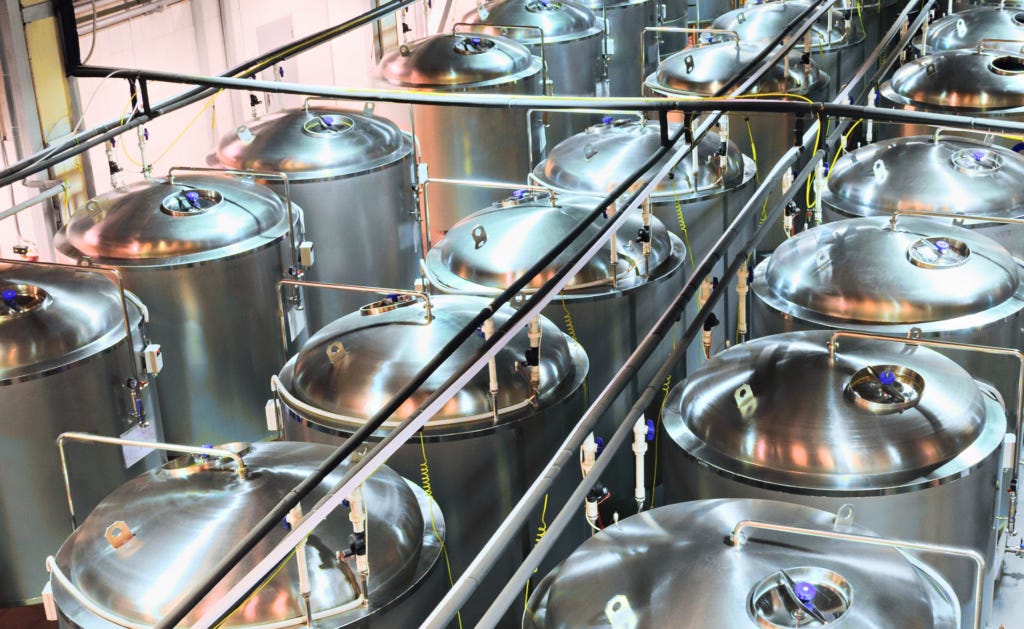
Where does Andrew see opportunity today? One clear focus is ingredients. After its early work in alt protein, Big Idea Ventures has spent more time with companies working on fats, flavours, colourants, sweeteners and innovations around crops like cocoa, coffee, sugar and palm. The appeal is that ingredients are modular. A better fat system can improve many products. A new flavour approach can shift taste and nutrition at the same time without relying on one flagship brand.
Another area is food waste upcycling, but with more technical depth than before. Early upcycling often meant repurposing, such as turning spent grain into flour or snacks. Newer companies are using biotechnology to turn specific waste streams into higher-value ingredients. They work on defined outputs and often aim for clear functional roles in food formulations.
Fermentation remains central, with growing interest in bacteria-based platforms. Bacteria can grow faster than yeast in many cases. They can sometimes use a wider range of low-cost feedstocks, including byproducts and wastes. That combination can help both economics and climate performance, especially when paired with upcycling themes.
Closely linked to this are tools that search for better biology. Instead of improving only one strain at a time, some companies are running structured competitions among multiple strains of algae or microbes. They use data from those competitions to select the best performers. This moves the work from one-off experiments to a more systematic search.
The fund is also increasing its efforts to partner with university research. Generation Food Rural Partners (GFRP), created and managed by Big Idea Ventures, licenses and commercialises university intellectual property in food tech, agritech and sustainable materials from a growing network of more than 30 partner universities across the United States and with plans to expand this model into Europe in 2026.
There is also a clear geographic angle. Andrew and his team are paying closer attention to Japan and other parts of Asia, as well as to some markets in the Middle East. In these places, food security, climate pressure and economic diversification are all strong drivers. As with Singapore more than five years ago, Big Idea Ventures likes to be early to new innovation hubs around the world, helping to build a healthy, thriving food and agricultural innovation ecosystem. That often means more policy support and corporate interest for the kind of companies Big Idea Ventures backs.
If you found value in this newsletter, consider sharing it with a friend who might benefit from it! Or, if someone forwarded this to you, consider subscribing.
Excellent issue #129 Eshan! Thank you very much for taking the considerable time and effort to create this interesting issue. I always learn something valuable from reading your great newsletters. Hopefully, cultured meat will be a big seller as pet foods, where taste and texture won't be judged so harshly. Also, proper advertising campaigns will help erase past cultured meat taste shortcomings. Besides, people have short memories, and like value. Cultured meat will become mainstream because it will help reduce, perhaps greatly reduce factory farming and the cruelty involved. The Universe has our backs. It's just a matter of time, in my opinion. Love your fantastic work, Eshan. Have a very nice and peaceful week 😊 ♥️