

Hey, it’s Eshan. Welcome to Issue #162 of Better Bioeconomy. Insights on the companies and capital shaping how we produce food, nourish ourselves, and improve our health. Thanks for being here!
The first David Protein bar went on sale 24 months ago. Last week, Medici Brands, the company behind it, raised $250 million at a $2.25 billion valuation, roughly triple where it was a year ago.
My first reaction was that valuation is absurd for a company built around a two-year-old protein bar. Then again, this is Peter Rahal we are talking about. The Medici founder and CEO had already co-founded RXBAR and sold it to Kellogg.
Never bet against Peter.
Drew Fallon, co-founder and chief executive of CPG finance firm Iris Finance, put that speed in perspective in the chart below.
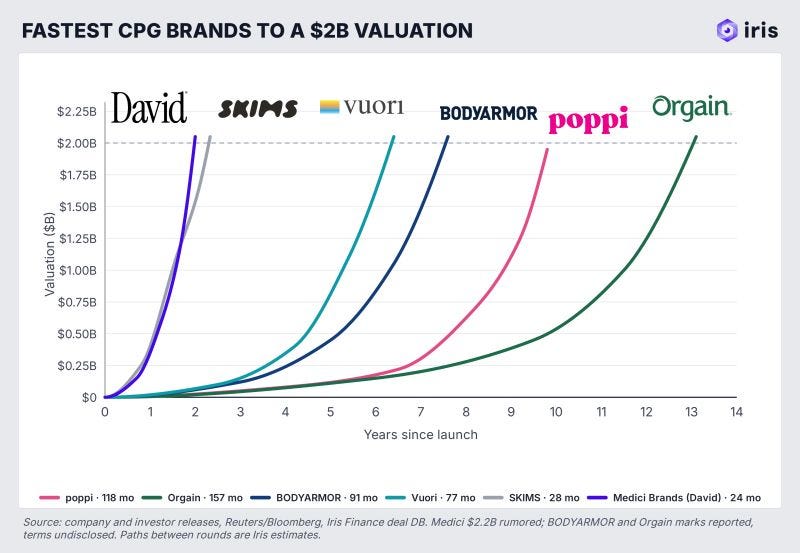
Sure, it is not a perfect comparison. The chart mixes financing valuations with acquisition prices, and some dates and deal terms are estimates.
What I wanted to know was what investors believed they were buying besides the protein bar. Rahal’s exit explains part of Medici’s speed, but not all of it. The rest is how one product claim became an owned ingredient and a parent company with three brands, and why investors are willing to pay a multiple that established food businesses do not get.
David started with the advantages RXBAR had to earn
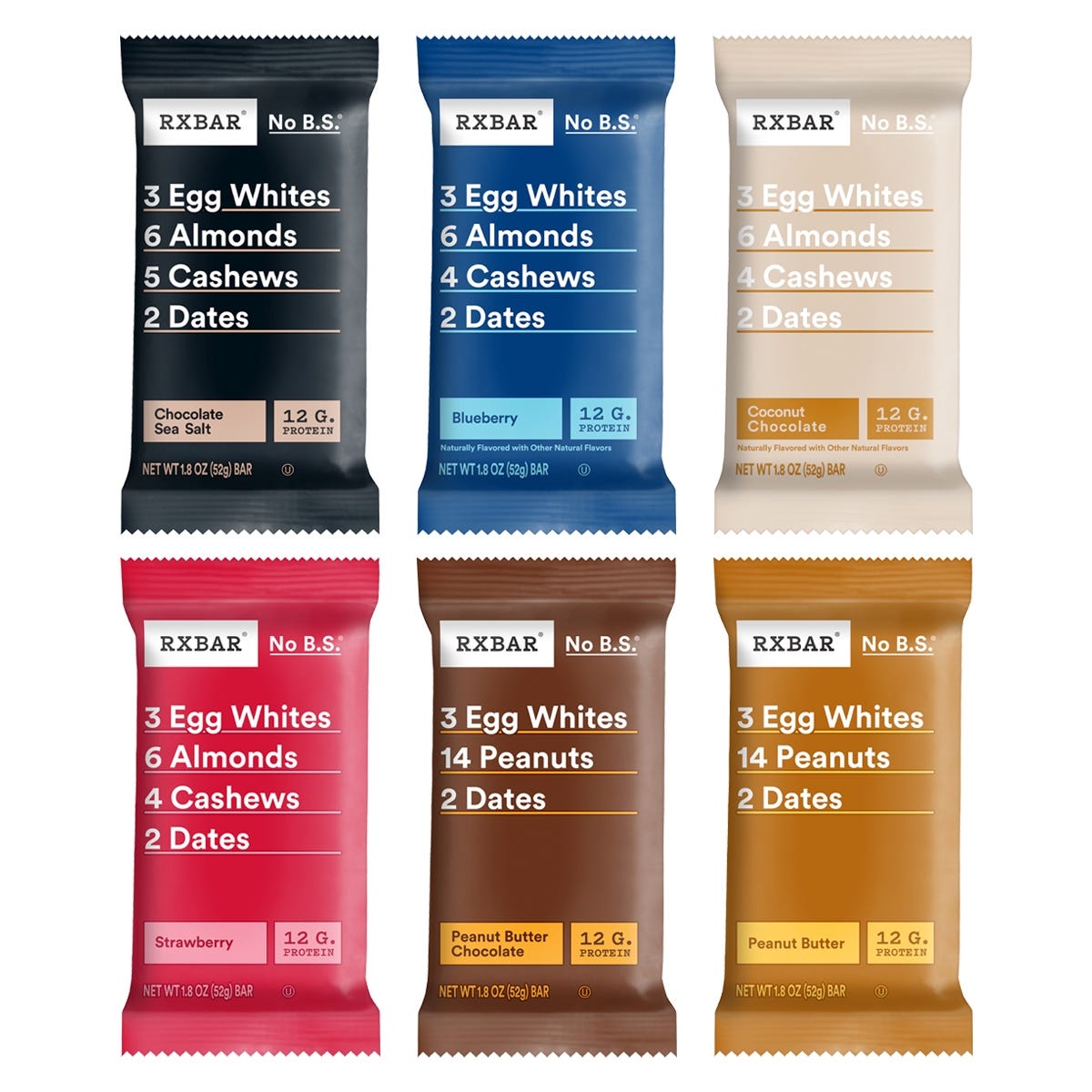
Rahal and Jared Smith started RXBAR in 2013 in his parents’ basement with $10,000 and no outside investors. The bar was four ingredients: egg whites, almonds, cashews and dates. The idea that made the company was the wrapper. RXBAR printed the ingredients on the front of the pack in large type, with the quantities, so the label read “3 egg whites, 4 cashews, 2 dates”. Nothing to turn over, nothing to look up.
It was a hit. RXBAR did $600,000 in its first nine months and $2 million in 2014, and by 2017 it was doing an estimated $160 million when Kellogg bought it for $600 million. Rahal’s share was roughly $300 million before tax.
The sale came with a five-year non-compete that expired in October 2022. During that time, Rahal set up the family office Litani Ventures, then spent eighteen months as a managing partner at CPG fund Humble Growth. When he returned to operating in 2024, he brought the capital, track record and investor network created by RXBAR.
He used the liquidity immediately. When David announced a $10 million seed in August 2024, Rahal led the round himself with $6 million of his own money, with Valor Siren Ventures, Peter Attia, Andrew Huberman and Layne Norton beside him.
Rahal could afford to fund formulation and inventory before the first bar was sold. That was a massive advantage, but it still left all the operating work. Rahal and his team had to formulate the bar, create demand and win shelf space.
The money gave Rahal a head start. It did not give anyone a reason to buy the bar.
The boiled cod was the strategy
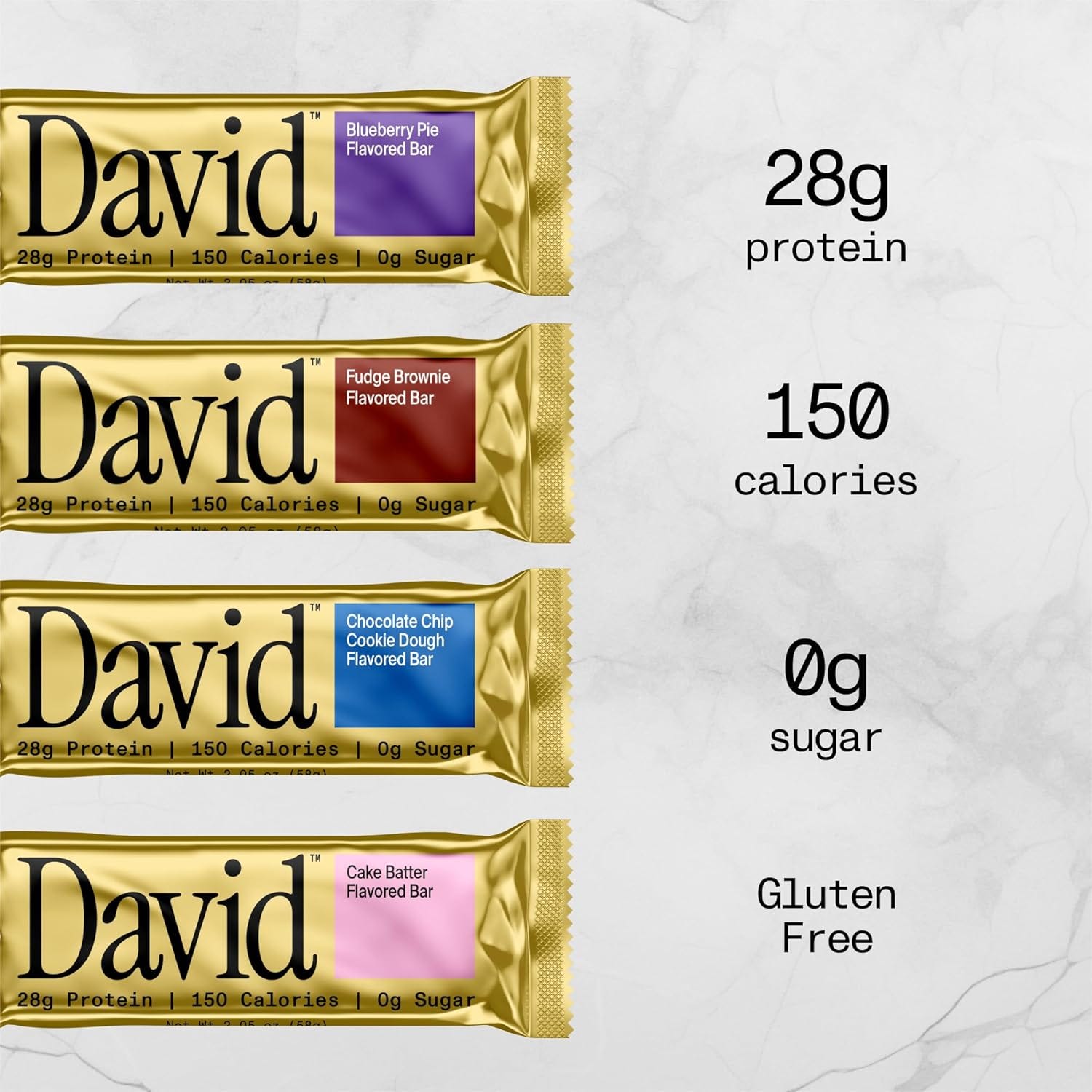
David gave them one: 28 grams of protein in 150 calories. That works out to roughly 75% of calories from protein against about 40% for a Quest bar.
But reaching those numbers meant giving up RXBAR’s defining promise: a short list of familiar ingredients. David’s bar carries allulose, maltitol, and a modified fat called EPG (Esterified Propoxylated Glycerol), which delivers about 0.7 calories per gram where ordinary fat delivers 9.
EPG is what lets both numbers work because it gives the bar the texture and richness of fat with a fraction of the calories. Rahal took the ultra-processed criticism as the cost of a claim a buyer can repeat back. In his own words, “the protein-to-calorie ratio concept is a really powerful message.”
Owning a metric has a strange consequence. In 2025, David started selling $69 frozen Pacific cod fillets and ran cod billboards across New York, on the grounds that boiled cod has a higher protein-to-calorie ratio than a David bar. The company partnered with an Alaskan fisherman to pack it under its own name. Other brands made parodies, but David kept going.
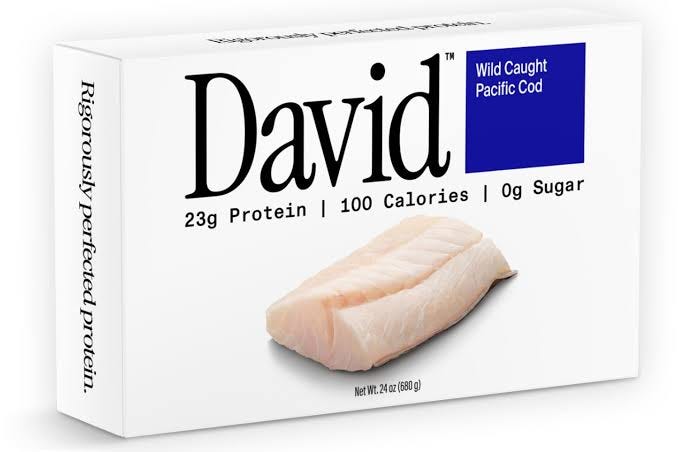
Selling frozen cod to advertise a protein bar is ridiculous, but that is the point. It’s so David. By admitting that cod had the better ratio, the company made the comparison feel more credible and kept attention on the metric it wanted people to use.
Cod may win on protein per calorie, but it does not fit in a gym bag. David could call itself second-best and still sell the more convenient product. According to the company, the cod campaign increased its engagement on X by 14,000% in its first week.
The provocation kept going up. To launch its Bronze bars, Julia Fox appeared on billboards declaring “Men disappoint. David satisfies”, while creators received PR boxes containing bars and vibrators.
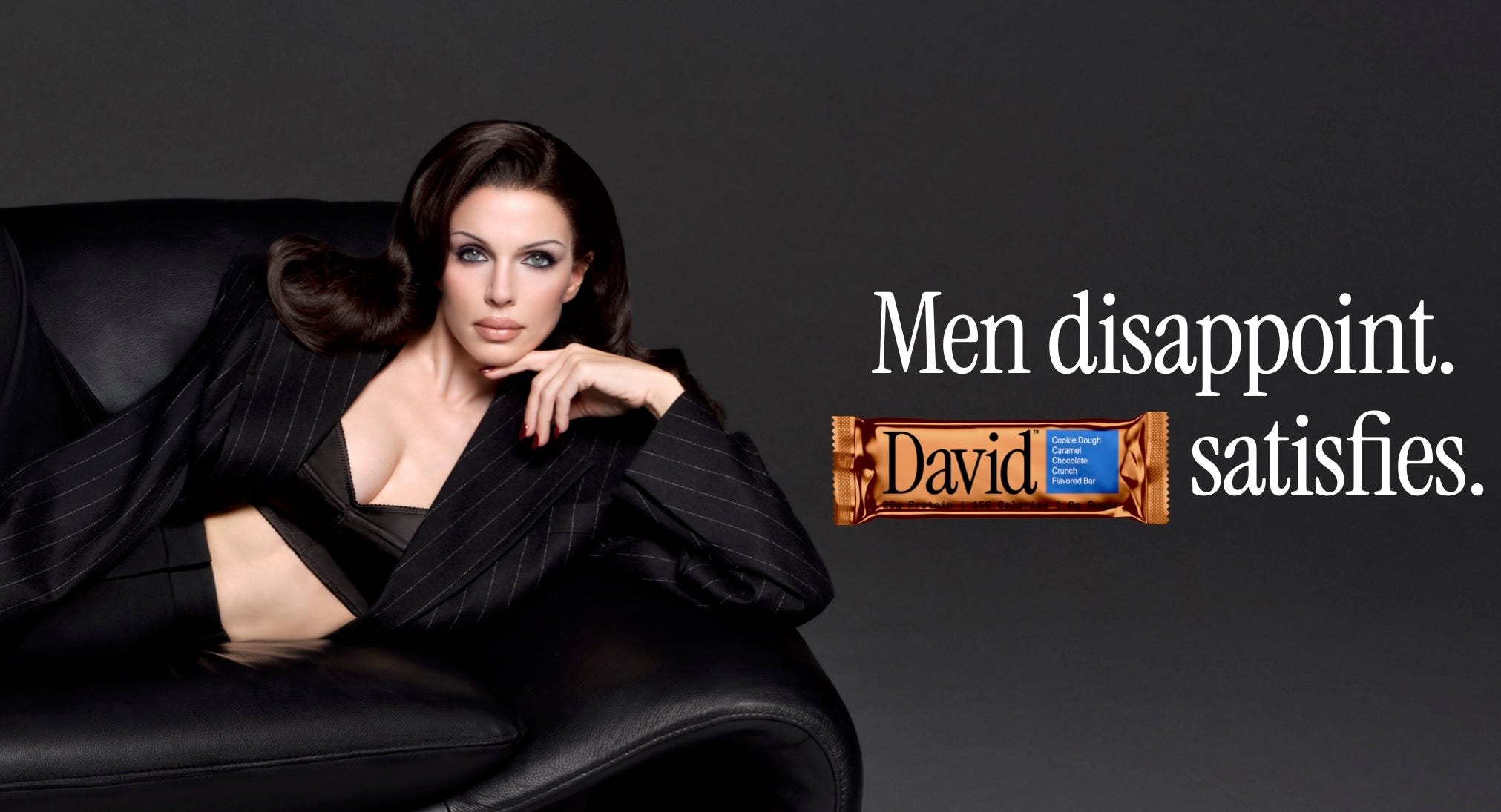
For the ice cream launch, David drove a truck with a jacked cow around Expo West. Even its subway ads ran without copy. Each stunt was designed to be photographed, mocked and shared. David did not need everybody to like the brand. It needed them to remember 28 grams and 150 calories.
David had two quarters of sales before it asked for shelf space
David was announced in March 2024 and launched online on 16 September, about six months later, reporting roughly $1 million in its first week. A million bars went out in the first six weeks. Fulfilment ran through a third party, so the company scaled orders without building a warehouse.
The retail push started in early 2025. Doors went from about 3,000 in May 2025 to roughly 16,000 by February 2026 to more than 35,000 today, including Walmart, Target and Costco.
By the time the retail push began, David could show buyers two quarters of demand. It was asking them to scale evidence it already had.
Then David bought the only company that could make its numbers work
On 9 May 2025, David acquired Epogee, the sole producer of EPG, for $75 million, according to filings in the antitrust case that followed. Three weeks later, it announced the acquisition and a Series A led by Greenoaks. Interestingly, the round was also $75 million: exactly what Epogee cost. Coincidence?
Rahal told AgFunderNews that David’s demand was already 120% of Epogee’s capacity when the acquisition happened and eventually reached 150%. By April 2026, AgFunderNews reported a fivefold expansion in EPG capacity, with Epogee courting commercial partners. Rahal said none of the companies in those talks were direct competitors.
The acquisition secured the key ingredient behind David’s numbers, gave Medici control over future capacity and created the possibility of a second business selling EPG outside its own brands.
That is where I stopped thinking of this as a protein-bar company. Medici was buying the technology behind the claim.
The same day David announced the deal, it told three other EPG customers that their supply would be wound down. OWN Your Hunger, Lighten Up Foods and Defiant Foods had each built products around the ingredient.
In June 2025, they sued in the Southern District of New York, claiming stranded R&D, lost sales and specialised inventory. One told the court the acquisition forced it to abandon its business.
Lighten Up has since settled after its founder received a supply agreement to restart his sauce. OWN Your Hunger and Defiant remain plaintiffs and say EPG is still unavailable to them. So far, access has reopened selectively and on Medici’s terms.
HallPass revealed what Medici was building
In February 2026, Rahal used an interview with The New Consumer to lay out the wider plan, and Medici Brands was introduced as the parent. Frozen dessert pints went on sale online in June and into Target over the summer, and ready-to-drink shakes launched in August.
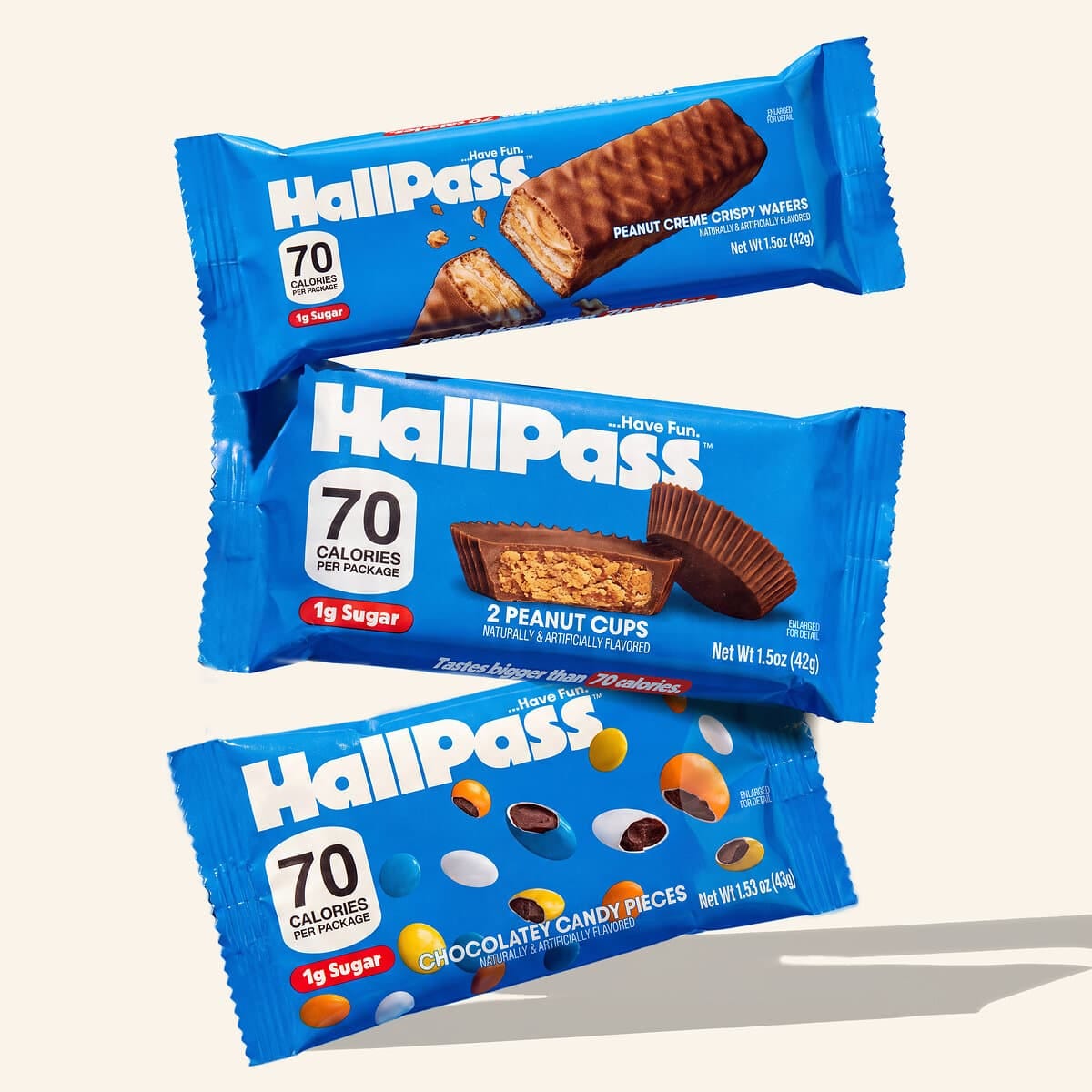
Then came the second brand. HallPass, co-founded with Michael Tierney of Stuffed Puffs, launched nationally at Walmart in late August with peanut cups, crispy wafers and chocolatey candy pieces at 70 calories and 1g of sugar.
Rahal said Walmart would provide “the vast majority of our distribution day one,” and told Inc. he wants HallPass to be the Coke Zero of candy. Rowdy, a chip brand, was revealed soon afterwards and is due before the end of the year.
HallPass drops the protein claim entirely, but EPG remains in its fat system. The nutritional promise changed from protein density to 70 calories and 1g of sugar. The provocation stayed. HallPass shipped product images with visible typos, and Tierney told Business Insider they left them in “for a little bit of internet rage bait.”
Brand two reveals the common system. What carries from David to HallPass, and eventually Rowdy, is not protein or any single category. It is EPG and a way of getting attention.
One Reddit community offers a small but telling example. David is treated as a villain in protein-snack forums, yet the most upvoted HallPass post in a low-calorie food community read: “I know they’re owned by david protein, but these are worth it anyways.” Jenna Movsowitz described the psychology neatly: David’s antagonism can make buying it feel like an act of rebellion.
Yes, I know: Reddit is one community, not the market. But it is an early sign that the product logic and attention strategy may travel even when David’s goodwill does not.
David proved the model. Investors are paying for the repeats.
One limitation before comparing Medici with other food companies: almost every available number comes from the company or an outside estimate.
Sacra estimates that David grew from $8 million in 2024 to $102 million in 2025. David says it passed $100 million in its first year and expects more than $300 million in 2026.
None of those figures appears in audited accounts, and the 2026 number is still a forecast. Medici also does not disclose gross margin, repeat purchase, retail velocity or how much cash its growth consumes.
On the company’s own 2026 projection of more than $300 million, $2.25 billion is about 7.5x revenue. On Sacra’s estimate of 2025 actuals it is closer to 22x.

These are rough headline comparisons and not clean enterprise-value multiples, because Medici’s cash and debt are not public. They still show the size of the premium. Five factors help explain it.
Medici is growing much faster: If Sacra’s estimates and David’s forecast are roughly right, revenue grew more than twelvefold in 2025 and could nearly triple in 2026. Chomps is projected to grow about 36% this year. Investors are paying for the rate of change, although David’s larger number remains a forecast from the company being valued.
The comparison is not like-for-like: Medici’s valuation comes from a funding round, while Quest, Poppi and RXBAR were sold outright. That difference does not explain the full premium, but it makes the headline multiples less exact than they look.
Investors are also underwriting Rahal: He has already built and sold one major protein-bar company. At David, he went from launch to more than 35,000 retail doors, acquired the brand’s critical supplier and introduced a second brand in two years. His execution makes the claim that Medici can repeat the process more credible.
EPG may add value beyond a food brand: Medici controls its sole producer, and capacity has expanded fivefold. If outside licensing grows, Epogee becomes another source of revenue. That opportunity is real, but its value is not yet visible.
The price includes businesses David has not built yet: Apply the 3x to 4x multiples paid for established food brands to David’s projected revenue and it is worth roughly $0.9 billion to $1.2 billion. The rest has to come from Epogee, new David formats, HallPass, Rowdy, future brands or a premium for the platform tying them together.
Rahal mentioned the same limit on The Peel in July 2026. He said David has a revenue ceiling somewhere between $1 billion and $2 billion, and warned against forcing products into the brand simply to grow past it.
Medici is the structure above that ceiling, holding cash, talent and product development across multiple brands. It is how Rahal plans to keep growing once David reaches its limit.
Now Medici has to grow into the valuation
Assume the $2.25 billion figure is a post-money valuation, the new investors want to triple their money over five years, and no further dilution occurs. That return target is mine, not something Greenoaks has disclosed.
On those assumptions, Medici would need to be worth about $6.75 billion at exit. The revenue required depends on what multiple the eventual buyer is willing to pay.
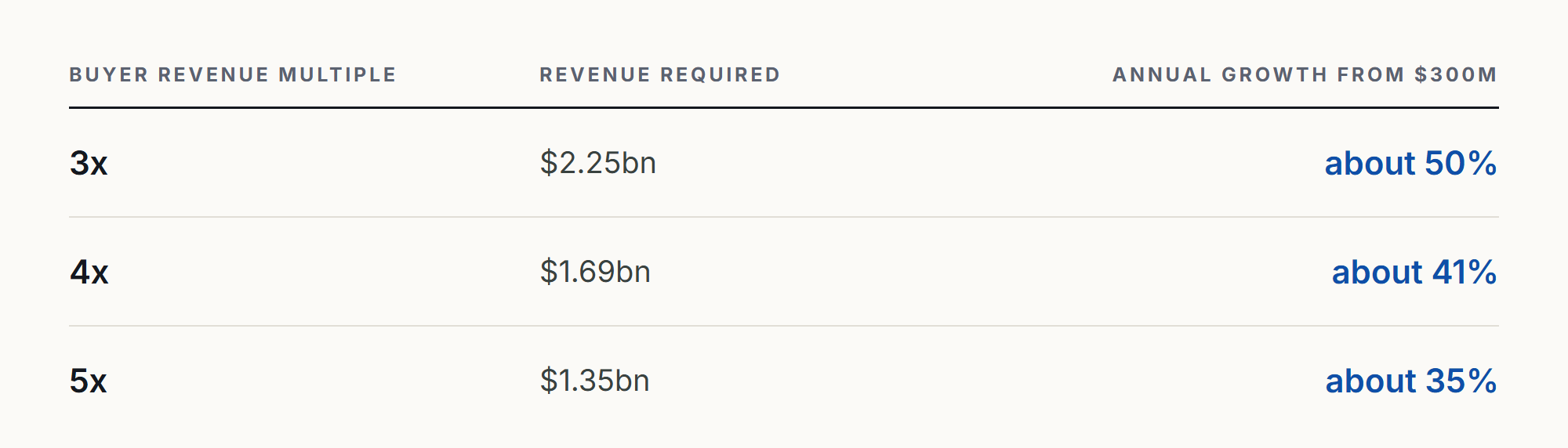
At the 3x to 4x multiples paid for Quest, Poppi and RXBAR, Medici would need to grow from a projected $300 million to between $1.69 billion and $2.25 billion in five years. That is annual growth of roughly 41% to 50%. If a buyer accepts the platform argument and pays 5x, the requirement falls to about 35% a year.
The round therefore depends on two things. Medici has to compound at a rate very few packaged-food businesses sustain, and the market at exit has to price it as something other than a bar company. Miss either and the numbers above stop working.
Chomps’ valuation leans on performance already visible. Medici’s leans much more heavily on performance yet to arrive. Neither valuation is necessarily wrong. Each places the burden of proof somewhere different.
Medici’s advantages come with their own risks
The EPG litigation tests the ingredient moat
On 4 February 2026, Judge Victor Marrero dismissed the plaintiffs’ complaint and denied their request for a preliminary injunction. They have since filed again. The dismissal turned on their failure to define a coherent market in which David could exercise monopoly power. It did not establish that EPG has ready substitutes.
That leaves an interesting tension. If EPG is easy to replace, the antitrust case weakens but so does the strategic value of owning it. If it is difficult to replace, the acquisition becomes more valuable and control of its supply becomes more consequential.
The labelling cases test whether David can keep making its simple numerical claim
In January 2026, a proposed class action alleged that lab testing found David bars carried 263 to 275 calories against the 150 on the label. David’s position is that its count reflects what the body absorbs. That suit was voluntarily dismissed on 31 March 2026 without prejudice, so it can be brought again, and the company said it remains confident in its labelling.
In late August, a second case challenged the zero-sugar claim on the grounds that allulose is legally a sugar. David is one of several defendants in a wider wave of allulose cases. In a related case against Chobani, the FDA filed an amicus brief arguing that the relevant regulation includes allulose within total sugars.
Whatever the courts decide, the commercial risk is clear. David was built on numbers a shopper can understand in two seconds, but those numbers depend on rules that do not map neatly to how every consumer interprets the label.
The tolerability question tests repeat purchase
In an eight-week randomised controlled study of 139 volunteers, seven predefined gastrointestinal adverse effects were reported more frequently among subjects taking 25 or 40 grams of EPG a day. These included gas, diarrhoea and oily stool. At 10 grams a day, it was reasonably well tolerated.
The study was commissioned to support EPG’s regulatory clearance and did not test a David bar. It does establish that dose matters. Medici does not disclose how much EPG a bar contains, so there is no way to tell from outside how many bars would approach the study’s higher doses. Digestive complaints recur in protein-snack forums, but those reports are anecdotes, not incidence data.
Peter Attia became a reputational problem
Attia, one of the most prominent names in David’s seed round, stepped down as chief science officer in early February 2026 after his communications with Jeffrey Epstein became public. David used experts like Attia to support its scientific credibility. That works both ways when one of them becomes controversial.
Look, none of these risks makes the valuation wrong. But they show how much Medici still has to prove: that David can travel beyond bars, that HallPass and Rowdy can hold shelf space, and that EPG can become more than an ingredient Medici primarily sells to itself.
I came into this wondering how a two-year-old protein bar could support a $2.25 billion valuation. I can now see what investors believe they bought: rage bait that keeps people talking, EPG that lets Medici build products competitors struggle to match, and Peter Rahal’s ability to turn both into brands at unusual speed.
What remains to be seen is whether that combination is a repeatable system or simply one extraordinary launch.
I’m Eshan. An operator-turned investor, backing companies in food, agri, nutrition, and health. I’ve been writing Better Bioeconomy since 2023, as a way to share my learnings and to connect with cool people like you. Thanks for reading!
If you found value in this newsletter, consider sharing it with a friend who might like it.
Or, if someone shared this to you, consider subscribing (it’s free!).
Disclaimer: The views and opinions expressed in this newsletter are my own and do not reflect those of my employer, affiliates, or any organisations I am associated with.