

Hey, it’s Eshan. Welcome to Issue #164 of Better Bioeconomy.
Insights on the companies and capital shaping how we produce food, nourish ourselves, and improve our health. Thanks for being here!
In August, Procter & Gamble agreed to pay $3.8B for Thorne, a supplement brand that doctors and dietitians recommend to their patients. In May, Nourish raised $100M to connect people with dietitians whose fees are paid by health insurers. In January, Oviva raised €200M to deliver insurer-paid care for weight-related conditions in Germany, the UK and Switzerland.
A supplement brand, a US care provider and a European one are three different businesses. What they share is that each one treats nutrition as a health intervention.
By that I mean a product or service that has been tested for a specific health outcome and that a clinician is willing to recommend. In some cases, an insurer pays for it too.
Running trials takes years and a lot of money. So what I wanted to know was what the evidence gets a company once it has it, and who ends up being paid for it. If evidence matters to buyers and investors, it should show up in what changed hands.
One limit first - most of the deals below did not disclose a price, so I can’t compare what buyers paid. What I can do is read what each buyer said it was getting.
My answer, after going through them, has two parts. In products and ingredients, evidence can be an asset that a buyer acquires. Once nutrition enters clinical care, the more valuable asset is often the relationship with the clinician, the patient or the payer.
The FTC went after “clinically proven”
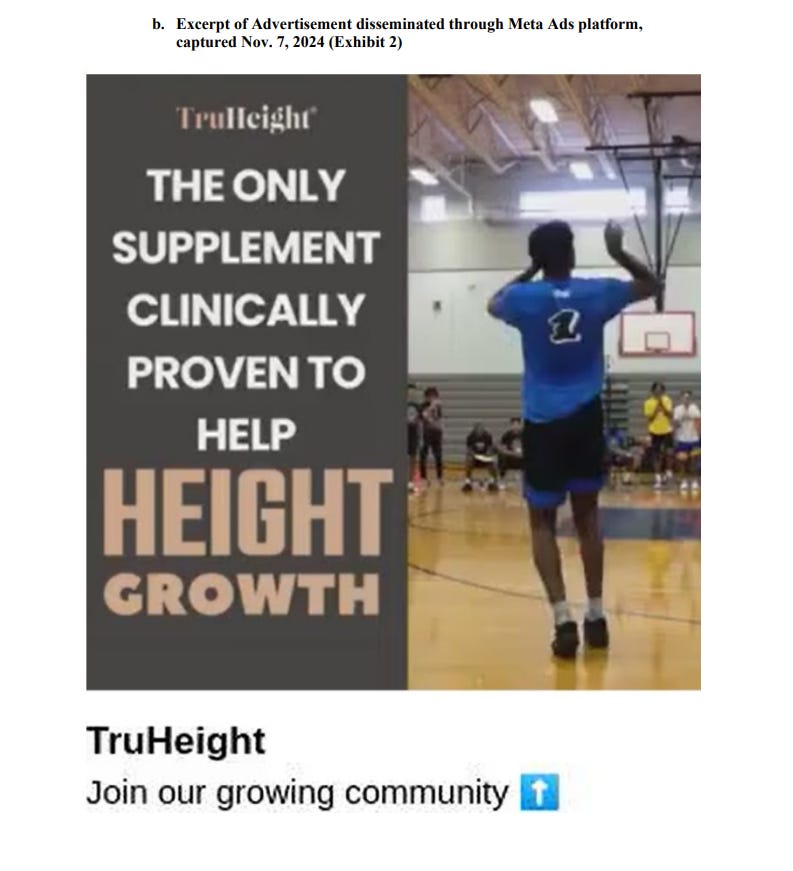
In April, the US Federal Trade Commission took action against TruHeight, which sold supplements it said would help children grow taller. One of its ads called the product “The Only Supplement Clinically Proven to Help Height Growth.”
The FTC said TruHeight did not have the scientific evidence to back that up. The order, made final in July, requires the company to pay $750,000 and bars it from making health claims it cannot support.
The EU has worked this way for longer. Its rules on nutrition and health claims date from 2006 and require claims to be “clear, accurate and based on scientific evidence.”
“Clinically proven” used to be a phrase that helped a product sell. In the TruHeight case, the same phrase is what the regulator went after.
When a trial is required before a company can make the claim, every serious company in the category will need one. A trial on its own stops being enough to set a company apart. What still differs is how good the trial is, what it measured and whether it tested the product being sold. So the question becomes what else a company has once it has the evidence.
L Catterton sold Thorne, then bought into where practitioners order
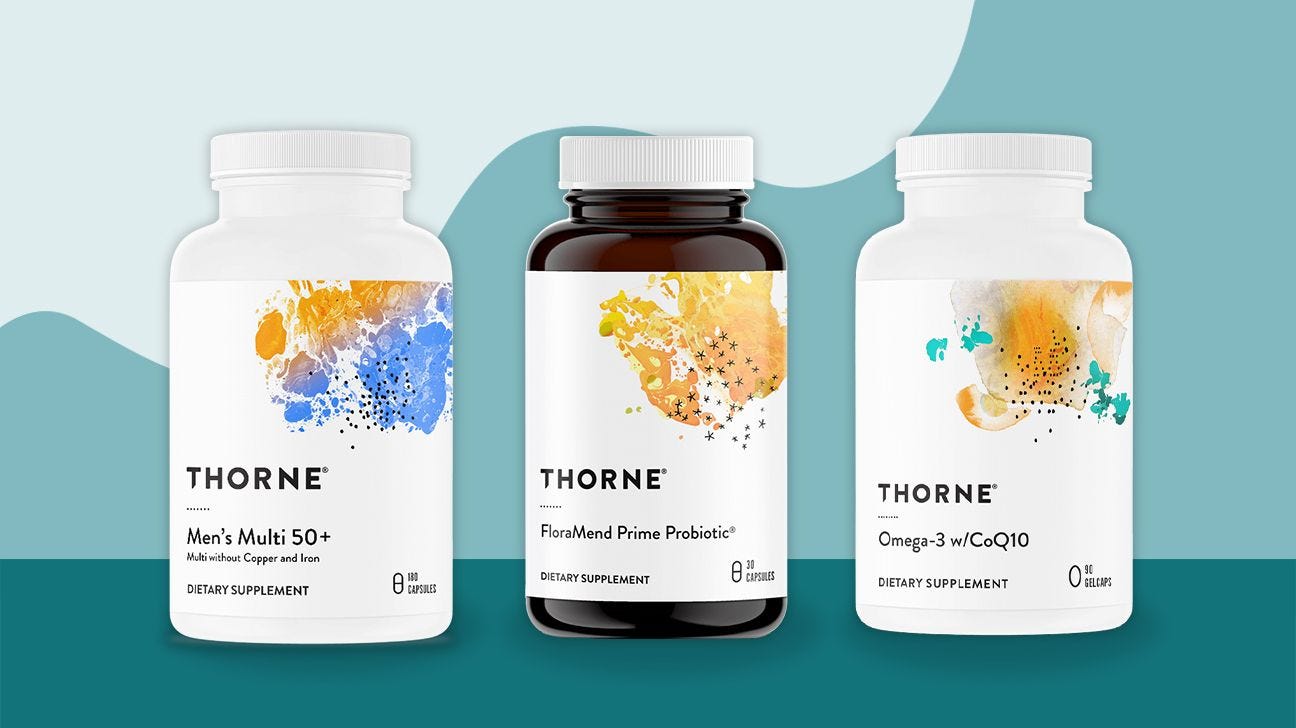
Thorne is used by tens of thousands of healthcare practitioners, and it also sells directly to millions of consumers. Roughly 60% of its revenue comes from people under 40. P&G already owned vitamin brands. It paid €3.4bn for Merck’s consumer health business in 2018, which came with several of them.
What those brands did not have was a base of practitioners who recommend them. Thorne does. The trials help explain why clinicians trust the brand, and that trust is part of why people who never visit a clinic will pay a premium for it.
So I think the $3.8B bought a consumer business and the practitioner trust underneath it, which is what I argued when the deal was announced. The second part is what P&G did not have.
L Catterton, the private equity firm selling Thorne, took it private in 2023 at $680M. The sale to P&G is 5.6x that price in under three years.
About five weeks after agreeing to that sale, L Catterton and Altas Partners agreed to buy a majority stake in Fullscript. Fullscript is a platform practitioners use to recommend supplements and have them sent to patients. It says more than 135,000 practitioners use it, supporting care for 10 million patients a year across North America.
The terms were not disclosed, and I can’t see L Catterton’s reasoning from outside. But Thorne is one brand that practitioners recommend. Fullscript is where practitioners place the order, whichever brand they choose.
So the firm that made 5.6x on a practitioner brand put its next money into the ordering system used by more than 135,000 of them. I read that as a bet that the practitioner relationship is the scarce thing, and that the platform holds more of it than any single brand does.
Evidence is one route to a large deal in this category, and there are others. Unilever paid $1.2B for Grüns in April for a product people take every day, and what it bought there was a habit. So I would be careful about using evidence to explain every large deal in nutrition.
In ingredients, buyers are paying for trials that come with a regulatory file
In June, Ingredion bought Benicaros, a prebiotic fibre made from the carrot pulp left over from juicing. The announcement lists what changed hands: “all intellectual property, trademarks, human clinical trials, and know-how related to manufacturing the product.” The trials are named as part of the asset, next to the patents.
Later that month, the ingredient was authorised as a novel food in the EU. NutraIngredients reported that the authorisation carries exclusive commercial rights until July 2031. I have not confirmed how that exclusivity passes to Ingredion, so treat it as reported. To be clear, a novel food authorisation is about safety and permission to sell. It is not an approval of the health benefit.
Japan had a similar deal in April. Euglena agreed to take over the EOD-1 microalgae business of Kobelco Eco-Solutions. The assets include the strain, the patents, the research data and the function-claim notifications already accepted for the ingredient. Those notifications cover maintaining immune function. Under Japan’s system, a company files its evidence and takes responsibility for the claim. The regulator accepts the filing and does not approve the claim’s efficacy.
These two deals show when evidence becomes something a company can sell. A trial on its own applies to one ingredient, so it is only as useful as the buyer’s ability to make and sell that ingredient. Bundled with the patents, the manufacturing know-how and a regulatory file, it gives the buyer a product it can sell without spending years putting that together itself. If the EU exclusivity holds, it also keeps competitors out for five years.
The same logic shows up at portfolio scale. In July, SuanNutra agreed to buy a group of natural ingredient businesses from IFF, and described what it was getting as “clinically supported branded ingredients.” Across a portfolio, each brand carries its own evidence, and the buyer is paying for the set.
In clinical care, the platforms are buying, and the brands are supplying
In May, Function bought SuppCo. Function sells a membership with more than 160 lab tests. SuppCo rates more than 35,000 supplement products and tests what is in them.
Function says members will get supplement guidance “grounded in their actual biology,” paired with clinician-guided protocols. It already held the member’s lab results and the clinician protocols. With SuppCo, it also holds the ratings.
So Function is now in a position to decide which products its members are pointed to. It will be doing that from lab results, which, as I wrote in August, are easier to measure than to act on. Inside Function, a brand’s own trials reach the member when Function’s guidance picks the product.
On the same day, University Hospitals in Cleveland put Fullscript inside its electronic health record. Its doctors can now recommend supplements from the screen they use to manage medications. The same logic applies, because the doctor chooses from what Fullscript carries.
In both cases, the company with the lab tests or the doctors is the one doing the buying or the integrating. I did not find a deal this year where a nutrition brand bought its way into a hospital or a clinic.
So supplements are reaching patients inside clinical care. But the brands get there as suppliers to a platform, and the platform shapes which products reach the patient.
Insurers are paying for a clinician’s time, and investors are funding the contracts
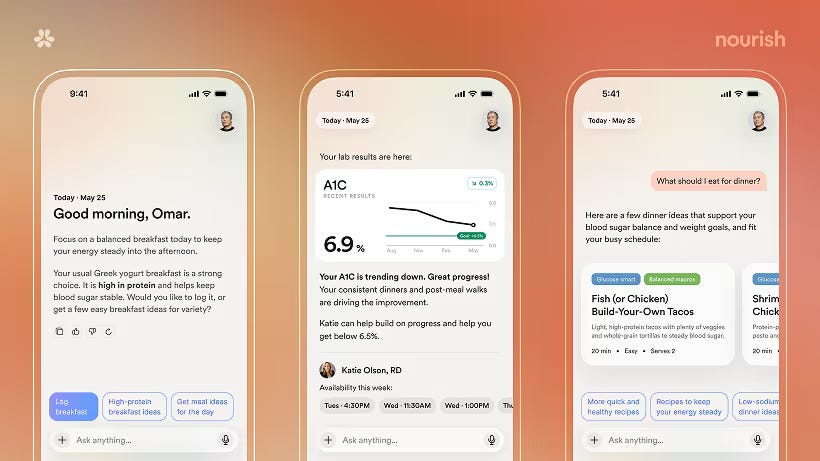
Nourish’s $100M round was led by Menlo Ventures and took its total funding to $215M. The company works with more than 10,000 registered dietitians. It says its health plan partners cover more than 200 million people in the US, and that patients typically pay nothing.
Nourish reports these results:
8% weight loss
A 1.3-point drop in A1C, a measure of average blood sugar
More than $2,000 in annual savings per patient for health plans
What Nourish has is the dietitians and the agreements with health plans, and I think that is what investors funded.
The evidence a payer wants is also different from the evidence behind a claim on a pack. A health plan is asking whether weight, blood sugar and costs stay down over time. Nourish’s three figures speak to that question, even though they are its own.
Oviva shows how much work those agreements take. Its €200M round was led by Kinnevik. Oviva combines an app certified as a medical device with clinical teams, and its programmes are reimbursed by a different route in each of its main markets:
As a certified digital health application in Germany
In partnership with the NHS in the UK
As part of the Swiss healthcare system
Oviva says more than 90 peer-reviewed abstracts and publications document the results. Each country also needed its own reimbursement route, and one of them needed a medical-device certification.
Even where a payer exists, evidence does not guarantee the budget. North Carolina’s Medicaid pilots paid for food, housing, transport and personal safety support. An evaluation by the University of North Carolina found they reduced healthcare costs by an average of $164 a month. That saving covers all four services, so it cannot be credited to food alone.
The programme has federal approval to run until December 2029. It suspended operations after 1 July 2025, because the state legislature did not provide the funding. A measured saving was not enough once the party holding the budget decided otherwise.
I did not find an Asia-Pacific company running insurer-funded nutrition care at the scale of Nourish or Oviva (let me know if you know of any). The closest is India’s Healthify, which merged with Berry Street in August. Berry Street is a US network of more than 2,000 dietitians and other clinicians, and it says 95% of its patients pay nothing out of pocket.
So an Indian health app with more than 45 million users reached insurer payment by merging into a US business. That suggests the model depends on having a payer that will contract for nutrition care. I did not find that payer in the Asian deals I looked at.
These dietitian networks are also starting to look like the platforms in the previous section. Nourish now prescribes insurance-covered GLP-1 drugs as part of its care. Berry Street runs a GLP-1 programme in which patients see a doctor through their insurance.
And in September, Abbott partnered with Berry Street so that users of Lingo, its over-the-counter glucose monitor, can book sessions with Berry Street’s dietitians. Abbott makes the device. Berry Street holds the dietitian and the health plan. So a large product company went to the network to reach the insured patient.
What this means if you are building or investing in nutrition
Ask who holds the relationship
In the brand, platform and care deals, what the buyer or investor got was access to the clinician, the patient or the payer. P&G paid for practitioners’ trust. L Catterton and Altas bought into the ordering system. Function bought the ratings. Nourish’s investors funded the insurer contracts.
So for any nutrition company with good trials, I would ask who recommends it, who it reaches patients through, and who pays. If the answer to all three is someone else’s platform, that platform will have a lot of say over the terms.
A company is better placed when it connects the patient, the clinician and the payer, and can show what happened to the patient afterwards.
Ask what the evidence is attached to
Ingredion and Euglena bought trials together with the patents, the manufacturing know-how and a regulatory file. For an ingredient company, that bundle is what a buyer can put to use.
With regulators asking companies to substantiate claims, I would want to see the trial, the claim it supports and the authorisation or filing that goes with it.
Watch what the new owners do with the practitioners
P&G’s Thorne deal and L Catterton’s Fullscript deal are both expected to close in the fourth quarter. If P&G sells Thorne the way it sells its other brands, the clinicians may stop treating it as theirs. If Fullscript starts favouring certain brands, practitioners may notice that too.
So what does the evidence buy a company? It can buy the right to make a claim and the attention of clinicians. In some cases it becomes a regulatory file or a set of trials that another company wants to own.
So who gets paid when nutrition enters healthcare? In this year’s deals, buyers and investors put their money behind the companies that hold the relationship: Fullscript for its practitioners, and Nourish and Oviva for their insurer contracts. Function made the same bet from the other side, buying supplement ratings to go with its lab results.
Evidence got nutrition into healthcare, and the relationship is where I expect most of the value to collect.
I’m Eshan. An operator-turned investor, backing companies in food, agri, nutrition, and health. I’ve been writing Better Bioeconomy since 2023, as a way to share my learnings and to connect with cool people like you. Thanks for reading!
If you found value in this newsletter, consider sharing it with a friend who might like it.
Or, if someone shared this with you, consider subscribing (it’s free!).
Unlock Asia’s trillion-dollar opportunity
Don’t miss your chance to attend the Asia-Pacific Agri-Food Innovation Summit and get 10% OFF with my network code. Use my exclusive partner code for 10% OFF your pass: BETTERBIO10. See you there!
Disclaimer: The views and opinions expressed in this newsletter are my own and do not reflect those of my employer, affiliates, or any organisations I am associated with.