

Hey, it’s Eshan. Welcome to Issue #165 of Better Bioeconomy. Thanks for being here!
Last month, I sat down with Fengru Lin, Founder and CEO of TurtleTree.
Lactoferrin is the protein the dairy industry calls “pink gold”. It binds iron, it turns up in every mammal’s milk, and there is very little of it in a cow’s.
Human milk has at least ten times as much. Lactoferrin is the most abundant whey protein in breast milk, where it helps protect a newborn’s gut and supports the developing immune system. That is why formula makers add it. In adults, it is studied for iron regulation, gut health and immunity.
Supply is the hard part. Getting one kilogram of the purified protein takes around 10,000 litres of milk, and it sells for somewhere between several hundred and a few thousand US dollars a kilogram.
TurtleTree makes it without the cow. The Singapore-founded company brews its lactoferrin, branded LF+, through precision fermentation. In 2025, it became the first company to receive a “no questions” letter from the US FDA for a precision-fermented version of the protein.
In July this year, Novonesis took exclusive rights to scale, manufacture and commercialise LF+ for early-life nutrition, with selected rights in dietary supplements. It also made a minority investment, together with 321Catalyst Ventures, the venture arm of Mitsui Chemicals.
Fengru co-founded TurtleTree in 2019. She was an account manager at Google in Singapore before that, and at Salesforce earlier still. The company raised a US$30 million Series A led by Verso Capital in 2021. She now spends most of her time in Seattle, with a team in Singapore and in the US.
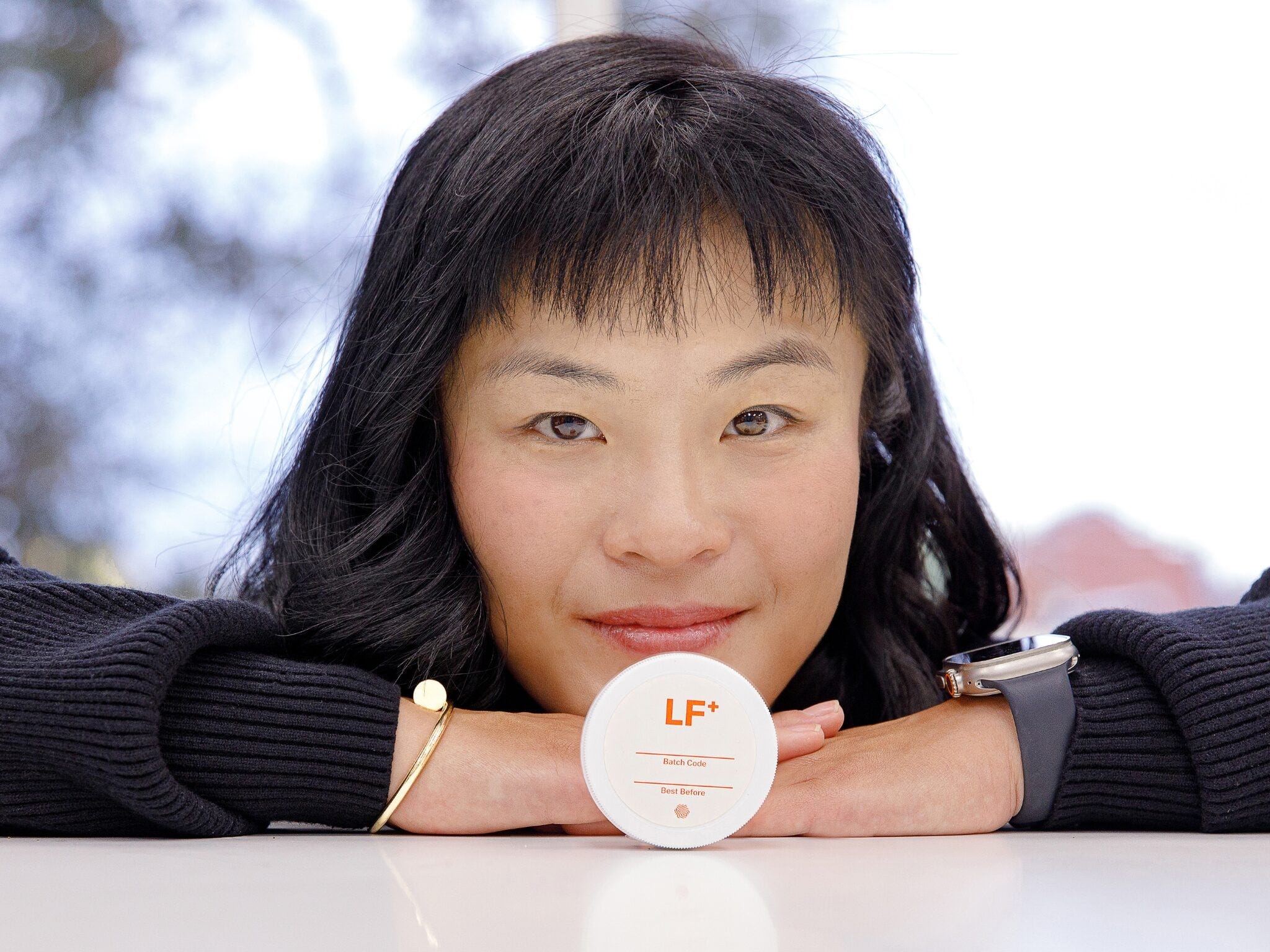
In our chat, Fengru shared:
How a batch of mozzarella that would not stretch started the company
Why the business went from milk to one high-value protein in it
What a partner is buying, and what a customer is buying
The two things Novonesis wanted to see before it signed
Why an ingredient company runs its own supplement brand
Where she thinks the next layer of competition is in lactoferrin
Let’s jump in!
A mozzarella that would not stretch is why TurtleTree exists
Fengru came to this from cheese.
Around 2018, she was working at Google in Singapore and learning to make cheese for fun, mostly because good cheese in Singapore is expensive. She flew to Vermont for a couple of weeks to learn how it is done, then tried to repeat the process at home. Singapore has no fresh milk to speak of, so she went looking for raw milk in Thailand and Indonesia.
What she found in Malang, in East Java, were smallholders working under contract. As Fengru tells it, the farmers gave their cows heavy doses of antibiotics to keep them healthy, and the animals had no room to walk around. The milk, she says, did not carry enough calcium, and the mozzarella she made from it would not stretch.
“That was the first time I really got to interact with food and where it comes from, being a city kid,” she said.
At the same time, Memphis Meats (now Upside Foods) and BlueNalu were growing meat and seafood from animal cells, and the idea followed from there. If you could do that with muscle, could you do it with milk?
She started messaging dairy scientists and industry people on LinkedIn, and every one of them said it was plausible. “Door after door that opened. Nobody said it was crazy.” So she gave it a shot.
Milk is a commodity, so the business went after one high-value protein in it
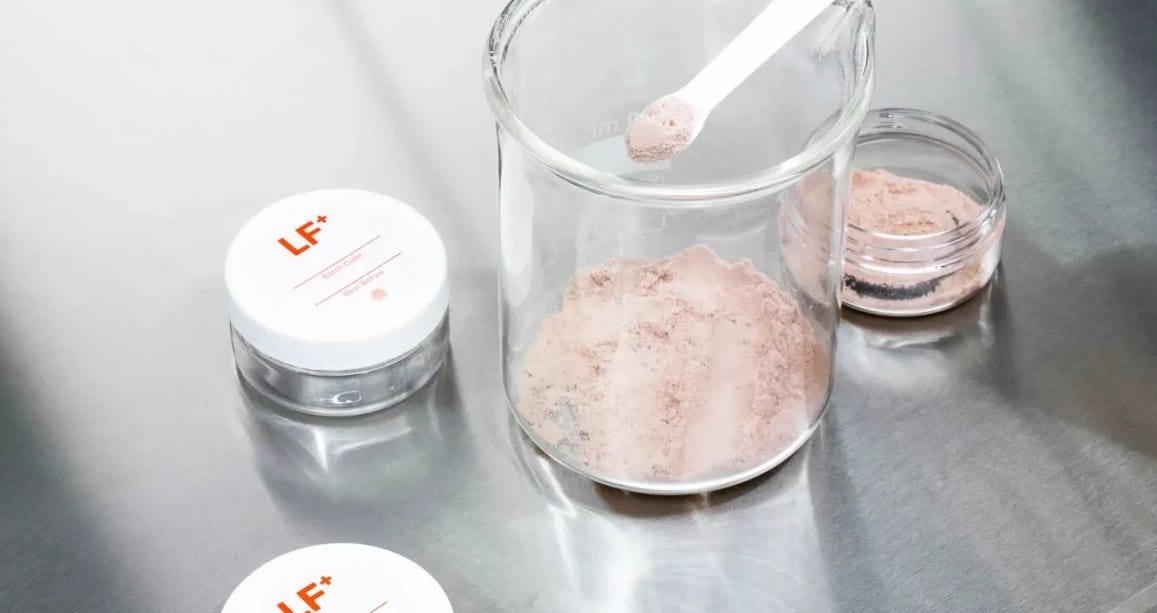
TurtleTree’s first product was going to be milk itself. The plan was to cultivate mammary cells and induce them to produce milk. The early work got far enough to detect specific proteins in the output and file provisional patents.
The problem was producing something consistent at a price that mattered. When the team took the early technology to people at Fonterra and Abbott, the feedback was the same from both sides. Milk is a great product and a commodity, trading at three or four dollars a gallon. The value is in the handful of proteins inside it that are hard to get.
“You should really focus on the high-value ingredients found in milk,” is how Fengru remembers the feedback. “Lactoferrin trades between a couple of hundred, eight hundred, nine hundred, to three thousand dollars per kilogram. You guys should focus there.”
So that is where the company put its resources. It dropped the cell-culture route for precision fermentation. Whey and casein, the usual precision fermentation targets, trade at a few dollars a kilogram and would have run into the same commodity wall. Lactoferrin did not.
Fengru came from sales, and that is how she explained the change in 2023. “As a businessperson, I’m not married to any technology. I want to produce products that the customer wants to buy.” The science, in her view, is something you build for.
Lactoferrin is scarce because you cannot take it out without dealing with the rest of the milk
Pull one kilogram of lactoferrin out of 10,000 litres of milk, and you now have 10,000 litres of milk with the lactoferrin removed. All of those other fractions have to go somewhere. The whey can go into protein powders and the casein into cheese.
But that means a lactoferrin producer is running a whole dairy business underneath, just to absorb everything else.
“You have to create a whole new industry away from lactoferrin to support the other ingredients, which is why today it’s a supply-constrained market,” Fengru said.
That constraint shaped where the protein ended up. Most of the world’s lactoferrin goes into infant nutrition, where brands use it to bring cow’s milk formula closer to breast milk. A lot of that goes into China.
What is left over is not enough to build the adult categories on, which is the gap TurtleTree is going after first. “There is a big white space for adult nutrition and supplements, which we are trying to fill today,” she said.
Fermentation changes the cost structure because there is no rest-of-the-milk to deal with. The microbe makes lactoferrin and only lactoferrin, so the output scales with tank volume instead of with how many cows a dairy can run.
LF+ is brewed in a yeast that regulators already knew
The microbe is Komagataella phaffii, the yeast older textbooks call Pichia pastoris, carrying the gene for bovine lactoferrin. That much is in the FDA’s response to TurtleTree’s GRAS notice.
The yeast was picked for its track record and its biology. When TurtleTree screened candidate microbes, it kept only those already used to make food ingredients with GRAS status, and able to run in large fermenters. A host the FDA has reviewed before makes for a shorter safety argument.
Making the cow’s version first followed the same idea. Human lactoferrin is a human protein. Fengru told Food Dive in 2024 that it would draw much heavier FDA scrutiny, including clinical trials on how it interacts with the immune system. In a previous regulatory submission for human lactoferrin, the FDA flagged safety concerns about the risk of triggering an autoimmune response when consuming a bio-similar recombinant human lactoferrin.
In comparison, bovine lactoferrin has been a safe food ingredient and supplement for decades. Human lactoferrin stays in TurtleTree’s pipeline, but safety requires further evidence. TurtleTree self-affirmed LF+ as GRAS in November 2023, and the FDA’s letter followed in May 2025. Fengru sees that review as the document that opens Singapore and Europe.
Two numbers matter a great deal to what a kilogram costs. One is the titer, how much protein the yeast makes per litre of broth. The other is how much of that protein comes through recovery and purification at the purity the customer needs.
Fengru has said margins improve as the company works on both the strain and the recovery rate. Last year LF+ still cost a little more than conventional lactoferrin, and she expects to reach price parity by 2027 and to halve that price in two to three years.
TurtleTree does not own the tanks. By 2023, it had interviewed about 30 contract manufacturers and picked three to work with. It keeps the strain, the process and the regulatory file in-house.
A partner is buying de-risked technology, and a customer is buying access
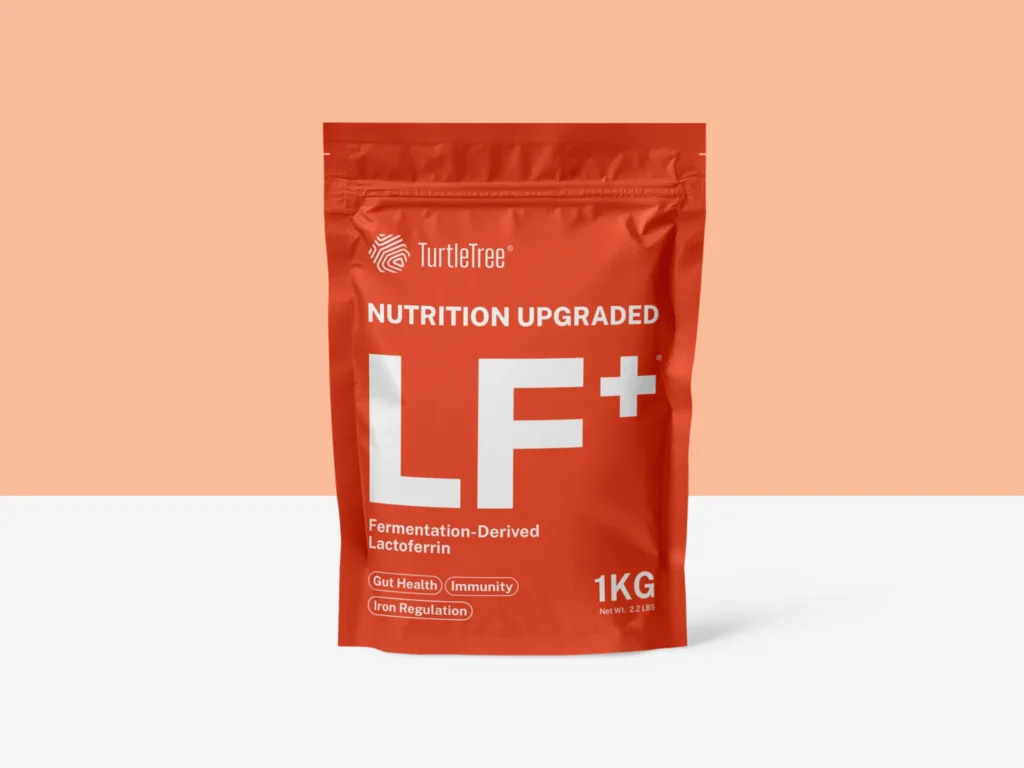
TurtleTree sells B2B, with a consumer line on the side. So what problem is a large nutrition company paying it to solve? It depends on which large company you are talking to, because there are two very different conversations.
The first is with a partner, which is what Novonesis is. It's buying access to a lactoferrin technology that TurtleTree has already taken through years of early-stage R&D.
TurtleTree has solved the risk of doing that work itself. In return, Novonesis brings scale manufacturing and commercial reach. Mitsui Chemicals’ venture arm came into the same deal as an investor.
The second conversation is with a customer, a supplement or infant nutrition company. It's buying access to lactoferrin. There is not enough of the conventional kind, at a price that lets a brand use it beyond a token inclusion. LF+ is already in products from Perelel and WayWyld.
The partnership helps with that second conversation too. “A lot of big companies want to buy from a partnership like Novonesis because they can underwrite the quality, the volumes that a big customer would need,” Fengru said.
A startup can show a large buyer a good ingredient. It cannot easily promise years of consistent supply at volume, and an ingredient major can. “Absolutely, the partnership is an aspect of TurtleTree’s strategy that is going to help us win the next couple of years.”
Novonesis wanted a leading titer and a process that had already advanced beyond pilot
What did Novonesis need to see before it signed? Fengru gave two things.
The first is titer. “Today the titer of our technology is probably one of, if not the best in the space,” she said. She credits the competitors with good work, but Novonesis wanted to start from a titer that was already advanced.
The second is that the process had already been run beyond the lab and the pilot plant. Plenty of companies can make a protein at small scale. TurtleTree’s process, Fengru says, was already running at a size Novonesis could pick up and work from. “They were heartened to see that it’s a commercially relevant size, which means they can hit the ground running,” Fengru said.
Titers in this category are rarely published, so from the outside it is hard to know where anyone stands. My guess is that Novonesis looked across the field before choosing, which is why I read its decision as a signal.
Commercially relevant is a starting point, and the bigger scale-up is still ahead. Novonesis’ own announcement says customers benefit “if successfully scaled,” and getting to the volumes infant formula needs is the work it has taken on.
Under the deal, it holds exclusive rights in early-life nutrition and selected rights in dietary supplements. TurtleTree keeps building its adult nutrition and supplement business, and its own consumer brand.
The consumer brand exists to teach the B2B customers what lactoferrin is for
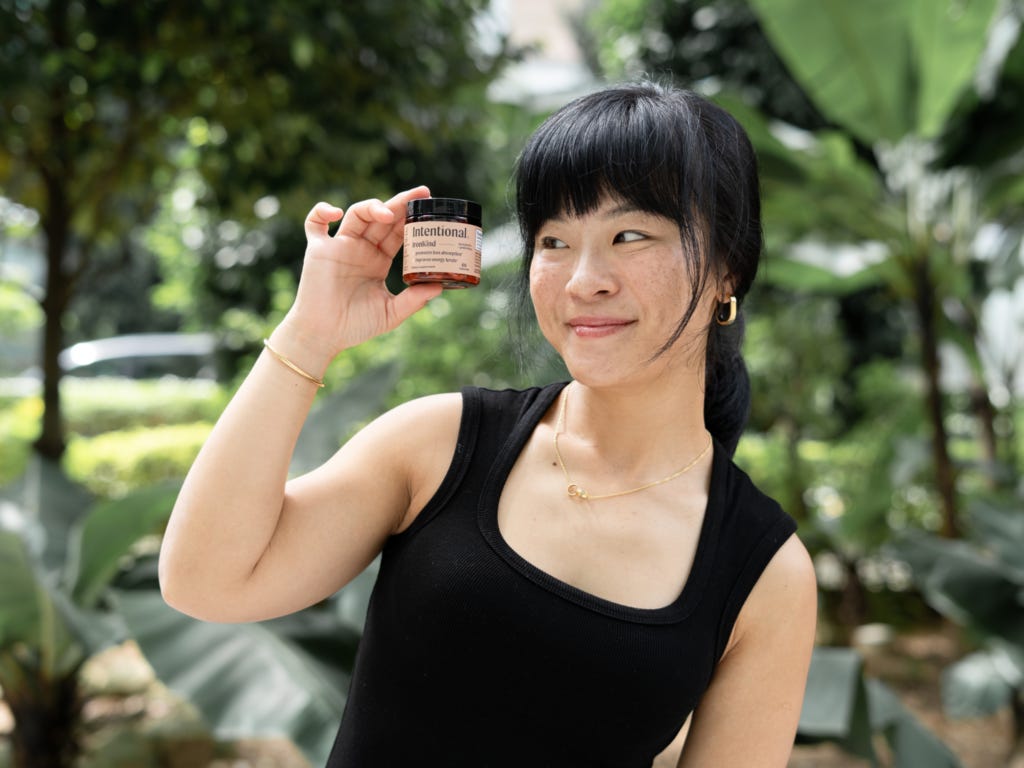
TurtleTree launched that brand, Intentional, in April 2025. The first product, IronKind, pairs LF+ with a yeast-derived prebiotic and sells for US$56 for 60 capsules.
It came out of Fengru’s own experience with conventional iron supplements, which she has said loaded her with more iron than she needed and left her bloated.
Why would an ingredient company do this? Because in adult nutrition, TurtleTree is building the category it wants to sell into.
With most lactoferrin going into infant formula, a supplement brand has no playbook for it. What claims to make, who to sell to and what draws a consumer in are all open.
Intentional is how TurtleTree finds that out. “We created our own brand, Intentional, to understand what consumers want, what draws them to lactoferrin,” Fengru said, “so we can pass on this knowledge to our B2B customers for them to better position lactoferrin. It’s category creation. We need to educate our B2B customers.”
On The Biotech Startups Podcast, she compared it to an ingredient brand that consumers recognise on someone else’s product, “a bit like Intel Inside.”
Lactoferrin’s uses run from women’s health to sports nutrition to functional foods, and the same molecule is doing a different job in each. Through Intentional, TurtleTree has found that the stickiest group so far is women between 35 and 55, in the healthy-ageing bracket.
That is where it is concentrating both its consumer research and its clinical work over the next one to two years.
When more companies can make lactoferrin, the data on your own molecule is what sells it
Precision-fermented lactoferrin has become a crowded target. Several companies now hold US GRAS positions for a bovine version of the protein, and others are making the human-identical one. So if making lactoferrin stops being scarce, where does the competition move to?
Fengru pointed to two things, and I (gently) suggested a third to her.
1. Clinical evidence on your own molecule
Most of what is known about lactoferrin comes from the protein pulled out of cow’s milk, and it rests on the iron-binding sites. Fengru describes three jobs:
For women who lose iron every month, it helps bring levels back up
For people who carry too much iron, more often men, she says it can bind the excess
In the gut, it takes iron away from the bacteria that need it to grow, which leaves the beneficial ones room to flourish
In her words, “all of these different benefits have been shown for decades in different clinical studies.” All of that work was done on the conventional protein. A supplement company wants to see what TurtleTree’s protein does in people.
Other companies may be running their own lactoferrin programmes, but “the supplement companies would want to see TurtleTree’s own results in our clinicals.”
2. Formulation stability
The proteins are not interchangeable in a formulation. TurtleTree says LF+ holds up better than conventional bovine lactoferrin under heat and across a wider pH range.
Supplements now come as capsules inside capsules and as ingredients in drinks. A protein that degrades on the way through processing is a protein a formulator will design around. LF+, as Fengru put it, is “more friendly for a formulation.”
3. The partnership
This is the one I suggested to her, and she agreed. Making the molecule is one thing. Having a manufacturing partner that a large buyer will accept as the supplier of record is another, and not every company in the category has one.
So the next stretch for TurtleTree is the adult market it kept for itself. “We have our next clinicals drawn up,” Fengru said, “and we’re excited to see how we can partner up globally, especially starting with the US market.”
Want to connect with Fengru?
Fengru wants to hear from supplement companies interested in adding lactoferrin to their range. TurtleTree has done the work on who the ideal customer is and can support on the commercial side. You can reach her at fengru@turtletree.com.
I’m Eshan. An operator-turned investor, backing companies in food, agri, nutrition, and health. I’ve been writing Better Bioeconomy since 2023, as a way to share my learnings and to connect with cool people like you. Thanks for reading!
If you found value in this newsletter, consider sharing it with a friend who might like it.
Or, if someone shared this with you, consider subscribing (it’s free!).
Made in APAC 🌏
This is part of a series of conversations with founders and operators across the APAC region doing industry-leading work that shapes how we produce food, nourish ourselves, and improve our health.
Check out my previous conversations:
How Physical AI Agents Automate Harvest Timing and Pollination - Polybee
How Coffee Made Without Coffee Became an Ingredient Business - Prefer
Stay tuned. More to come!
Unlock Asia’s trillion-dollar opportunity
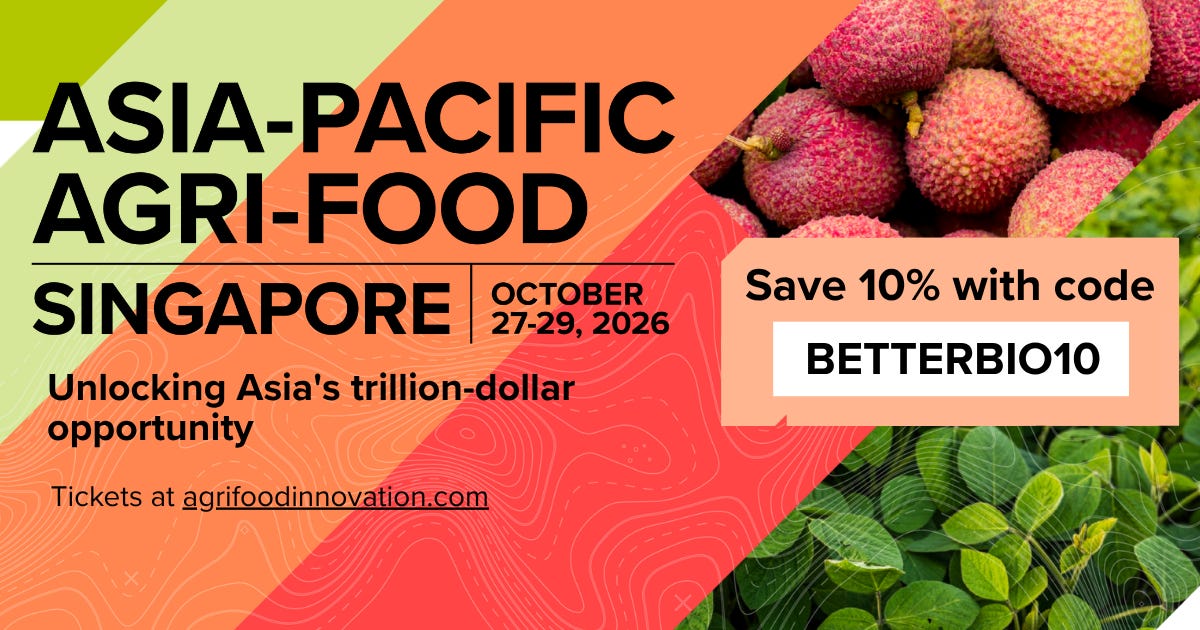
Don’t miss your chance to attend the Asia-Pacific Agri-Food Innovation Summit and get 10% OFF with my network code. Use my exclusive partner code for 10% OFF your pass: BETTERBIO10. See you there!
If you found value in this newsletter, consider sharing it with a friend who might benefit from it!
Or, if someone forwarded this to you, consider subscribing.
Disclaimer: The views and opinions expressed in this newsletter are my own and do not reflect those of my employer, affiliates, or any organisations I am associated with.