

Hey, it’s Eshan. Welcome to Issue #152 of Better Bioeconomy, insights on companies, capital, and ideas reshaping food, agriculture, and biomanufacturing for human and planetary health. Thanks for being here!
This week:
Stenon raised €18M Series B to scale its real-time nitrogen and soil data platform
Parima produced tonne-scale cultivated duck on Vow’s 22,000-litre line at a 99% lower cost
ProFuse raised $1.5M to turn its muscle-tissue platform into a discovery engine for the GLP-1 era
The Protein Brewery added €18M to its Series B to scale Fermotein and launch in the EU
Omni raised £11M to grow its vegan dog food and launch an Ozempic-style weight-loss supplement for dogs
Tropic acquired Rahan Meristem to become a fully integrated banana genetics company
And more…
Also, I joined Rhishi Pethe on his Software is Feeding the World newsletter to talk about what it takes to scale the bioeconomy, why Asia may decide its future, and how my read on agrifood tech has moved from a technology problem to an ecosystem problem over time. Check it out!
PS: If you are an investor or working at a corporate in food, agriculture, or biomanufacturing, do reach out. I would love to exchange notes on what I am seeing across the sectors. Reply to this email or drop me a message.
Below are the 10 most interesting ag and food tech stories I came across last week, paired with my thoughts on what they mean for where the industry is heading.
🦆 Parima proves tonne-scale cultivated duck at viable cost on Vow’s 22,000-litre line in Australia
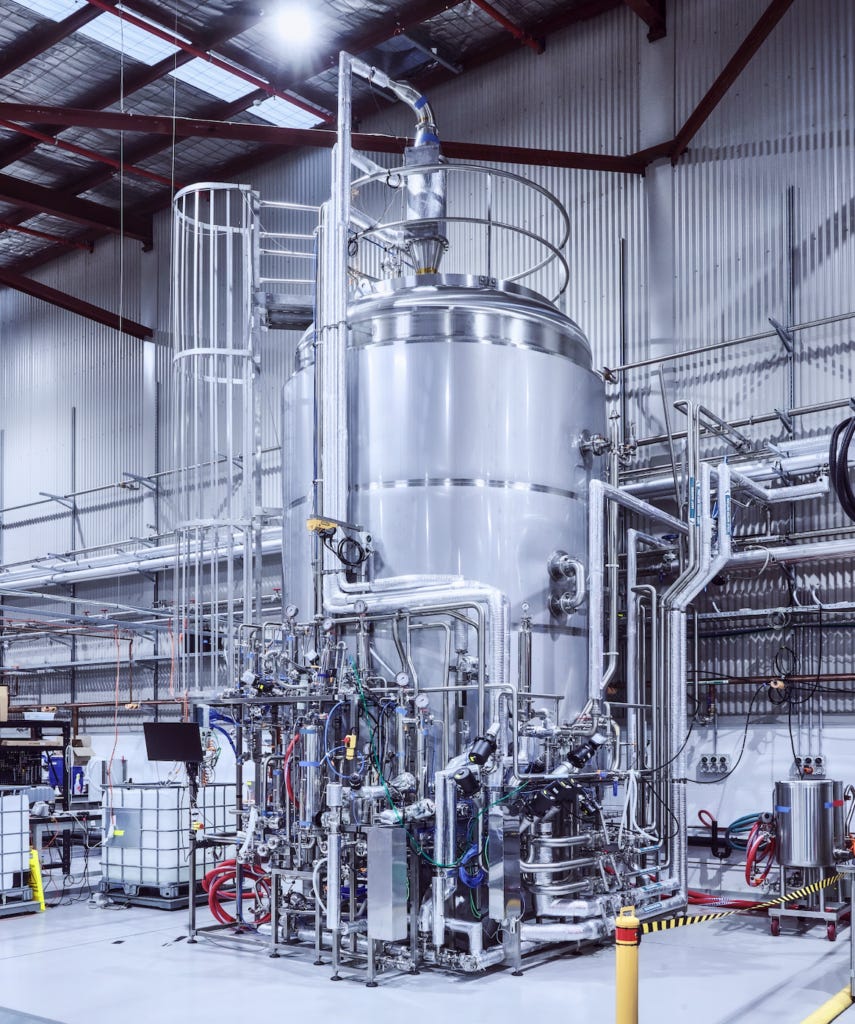
France’s Parima, the parent of Gourmey and Vital Meat, produced its cell-cultured duck at tonne-scale volume in a single run on Australian partner Vow’s 22,000-litre bioreactor, the largest food-grade cell culture vessel globally. The two companies began collaborating in 2025, and this first run took place this year.
Parima says it hit the milestone at a 99% lower cost than earlier runs. The startup credits successive gains in cell-culture yield, the removal of the most expensive inputs such as growth factors, albumin, and insulin, and the volume efficiencies of operating at scale.
The process ran at 22,000 litres on the first attempt with no performance loss versus smaller scales, according to Parima. The company frames the result as clearing the biological performance, process efficiency, and media-cost hurdles that have drawn scepticism. It says viable unit economics for cultivated meat are now proven rather than extrapolated from pilot runs.
Source: Green Queen
Thoughts 🤔
This is a big milestone for the sector. The line that I found most interesting is the ‘first attempt’ bit. Parima transferred its process onto Vow’s 22,000-litre line and hit tonne-scale with no performance loss versus bench, in a single run.
Tech transfer is one of the key areas where cultivated meat has historically struggled, because what works at 2,000L often falls apart an order of magnitude up. Clearing that gap on the first go is a real de-risking marker.
What also makes it interesting structurally is the split between biology and steel. Parima keeps control of cell lines, media, and process, and rents capacity from Vow, which has pivoted into a co-manufacturer with very large, food-grade reactors. That looks a lot like the division of labour that emerged in fermentation and pharma: specialised innovators on the biology side plugging into shared manufacturing platforms instead of owning the whole stack.
In a funding environment where few cultivated meat companies can finance end-to-end infrastructure, this model is a plausible path for the category to industrialise without over-building balance sheets.
🌱 Stenon raised €18M Series B to scale real-time nitrogen and soil data management platform as farmers face fertiliser price swings
The German company makes FarmLab, a portable soil-analysis device that pairs optical and electrical sensors with AI. It maps thousands of data points in seconds, including plant-available nitrogen, soil organic matter, temperature, and moisture. The software turns that into fertiliser guidance growers can act on immediately in the field, rather than waiting on lab results.
Stenon positions plant-level nitrogen measurement in the field as its core edge, allowing more frequent readings that account for soil variability within a single field. It claims 2-8% yield increases across corn, beans, cotton, sugarcane, coffee, and grains, plus a 20-40% average ROI on nitrogen fertiliser.
Stenon says the platform already runs across several million acres in Europe, Central Asia, Brazil, and the US. The round funds deeper expansion in existing markets, with Brazil a priority through a longstanding partnership with input retailer Lavoro Ag. Part of the capital goes to a new product (no specific details provided), developed over several years and set for release later this year.
Investors: Pymwymic, DeepTech & Climate Fonds (DTCF), Atlantic, Oyster Bay, Founders Fund, TIME Ventures, and Bernd Hoffmann (former VP at AGCO and Claas KGaA)
Source: AgFunder
Thoughts 🤔
I see FarmLab’s defensibility sitting downstream of the device, in the models that convert its optical and impedance readings into usable soil chemistry signals. Those models are trained against lab data across diverse soil types, and both Stenon and independent studies flag calibration as a key driver of accuracy and a current limitation when it is not well tuned.
Spectral and impedance-based soil sensing have a solid track record in controlled settings but often struggle as you move into new field conditions, especially when models are tuned for one soil class and then applied to very different ones. That is why the “several million acres” is important: if Stenon can systematically fold that breadth of data back into calibration, each new region increases the robustness of its models.
Each new soil environment is both a barrier and a potential asset. It takes real work to recalibrate for Brazilian oxisols, US prairie soils, or Central Asian conditions, but once Stenon has done that work, any competitor faces a similar calibration cost before they can match field performance. The hardware is replicable, but the loop from local data to proven accuracy is where defensibility stacks up.
💪 ProFuse raised $1.5M to advance its muscle health discovery platform for the GLP-1 era
The startup, known for media supplements that optimise muscle tissue formation in cultivated meat, is repositioning around a high-throughput platform screening supplements and therapeutics for muscle atrophy. Its lab-grown human skeletal muscle tissue screens 10,000+ molecules a week. Screening began in early 2026 and has already surfaced supplement combinations and early drug candidates.
It grows mature human muscle fibres in 3D between pillars, which it claims are more biologically relevant than the mouse cell lines and 2D systems drug companies typically use. Engineered reporters track muscle maturation, stress, wasting, and recovery in real time. Electronic pulses measure contractile force, testing whether growth translates into function, not just size.
The model runs on two tracks. On supplements, ProFuse is screening hundreds of GRAS molecules for food and nutrition partners that build muscle-preserving products for GLP-1 users. On pharma, it plans to develop candidates to the lead stage before handing off via R&D payments, milestones, and royalties.
Investors: Green Circle Foodtech Ventures, Siddhi Capital, Tempo Beverages
Source: AgFunderNews
Thoughts 🤔
The capability I find most interesting is that it measures muscle function at the discovery stage, not just growth. It grows human fibres in 3D, stimulates them with electric pulses, and reads how much contractile force they produce.
That lands on the open question hanging over the GLP‑1 muscle field. Many of the heavyweight muscle programmes, including work from Lilly, Regeneron and Scholar Rock, focus on the myostatin and activin/TGF‑β pathways, and a persistent doubt is whether the mass they add is truly functional muscle or mostly volume.
In a lot of these programmes, functional strength and quality‑of‑life endpoints are secondary and not always powered for clear readouts, and the most convincing gains tend to appear in patients starting with substantial deficits. As projects move from early screening into animal models, measuring muscle force with enough resolution becomes more complex and resource‑intensive than just tracking mass.
🍄 The Protein Brewery raised €18M Series B extension to scale its Fermotein mycoprotein and launch in the EU
The Dutch fermentation company makes Fermotein, a minimally processed mycelium ingredient that packs protein, fibre, and bioactives into a single building block. The Series B extension lands days after Fermotein became the first whole-food mycelium protein to secure EU novel food approval and follows the €30M Series B closed in September 2025.
The startup has sold out its entire 2026 capacity to US clients and expects its Breda facility to produce 600 tonnes in 2027 against confirmed commitments across the US, Singapore, and Europe. The new capital funds extra fermentation capacity, downstream de-bottlenecking, and hiring, targeting output beyond 2,000 tonnes by 2029.
The EU push centres on active nutrition, with first customers expected to launch in Q4 2026 using Fermotein in nutrient-dense, GLP-1-compliant all-in-one shakes. Funds will also pursue regulatory clearance in Canada, Australia, New Zealand, and India, and advance clinical research into the ingredient’s longevity benefits.
Investors: ABN AMRO Sustainable Impact Fund, Invest-NL, Novo Holdings, Madeli, and the Brabant Development Agency
Source: Green Queen
🐶 Omni raised £11M Series A to expand its vegan dog food and launch an Ozempic-style weight-loss supplement for dogs
The UK startup makes vet-formulated plant-based dog food and supplements, spanning dry foods, training treats, dental sticks, multivitamins, and pre- and probiotics, catered to pets with allergies, anxiety, and gut issues. The company says it has grown revenue 10-fold over 12 months, from £1M to close to £13M in annualised sales, and helped more than 300,000 dogs.
Part of the raise will fund LeanPaws, a GLP-1-style weight-loss supplement teased for a 2026 launch. The company says it uses fibres and resistant starches that mirror Ozempic-like effects, plus prebiotics and probiotics aimed at fat metabolism. An estimated 1-8% of British dogs suffer from some form of allergy, a gap Omni is also targeting with novel allergen-free proteins.
The funds will push Omni into major UK supermarkets, test the US market, expand the team, and fund clinical research to validate its products. The raise lands amid a wider boom in low-carbon pet food across Europe, as owners increasingly weigh the climate footprint of conventional meat-based diets.
Investors: IW Capital, Redrice Ventures, RootBridge Capital, Digitalis Ventures, Lever VC, Deborah Meaden
Source: Green Queen
Thoughts 🤔
Omni grew revenue 10-fold by selling vet-formulated health outcomes: gut health, allergen management, weight, skin. The recipes happen to be plant-based, but the pitch is what the food does for the dog, and that framing is what gets a product onto a supermarket shelf and reaches owners beyond the plant-based base.
LeanPaws takes that further. A weight-management supplement that mirrors GLP-1 effects, with a placebo-controlled trial behind it, attaches the most talked-about human health trend of the moment to a daily dog product. Canine obesity is large and underserved, and the Ozempic wave has done the consumer education for free, so owners already grasp what a satiety product is meant to do.
It’s a good example of how plant-based pet food goes mainstream: lead with the dog’s health, let the sustainability sit underneath. The fit between a real health need and a cultural moment that needs no explaining is hard to argue with.
🍌 Tropic acquired global plant propagation company Rahan Meristem to become a fully integrated banana genetics company
Tropic develops improved banana varieties through gene-editing and breeding, keeping the Cavendish’s agronomic and consumer qualities while adding disease resistance, reduced browning, longer shelf life, and higher yields. Rahan Meristem, with operations across Latin America, Asia, and the Middle East, gives it large-scale production and distribution across the major banana-exporting regions.
The deal makes Tropic the first company to span variety development, propagation, and grower supply in one platform. Rahan’s existing grower relationships hand it direct routes to market, pairing its gene-editing pipeline with proven propagation capacity at commercial scale.
Bananas are one of the world’s most exported crops at over 20M tonnes annually, yet production relies almost entirely on the Cavendish, leaving growers exposed to Panama disease TR4. Following its recent $105M Series C and the first commercially viable new varieties in over 75 years, Tropic is now scaling global production and grower adoption.
Source: Tropic
Thoughts 🤔
Tropic’s first two banana varieties launched in 2025, and the company says demand already exceeds supply. That points to where a real constraint sits: scaling clean planting material. Commercial Cavendish are seedless and propagated vegetatively, so a new variety starts from zero plant stock and must be multiplied through tissue culture before it can occupy meaningful acreage.
So the only way to scale at commercial speed is laboratory micropropagation. The edit can be finished and agronomically proven, but the variety scales no faster than tissue-culture labs can produce disease-free plantlets and channel them to growers. Even with a $105M Series C, building that footprint across Latin America, Asia, and the Middle East from scratch would take years.
So buying Rahan removes the dominant bottleneck on Tropic’s early revenue, handing over ready-made propagation capacity, mother plantations, agronomy know-how, and grower access in the regions that matter for export bananas.
🦠 Myota raised $4.5M Series A to scale its prebiotic fibre blends and build a B2B ingredients business
The London-based startup makes patented multi-fibre blends designed to improve gut and metabolic health. Its UK D2C business tripled last year to over 60,000 customers. The round funds a dedicated B2B sales operation across Europe and the US, a faster D2C scale-up, and further clinical research.
The startup says most fibre supplements lean on 1 or 2 commodity fibres, and the same fibre behaves differently in each person because individual microbiomes ferment it into varying amounts of short-chain fatty acids. Myota claims its blends work across diverse microbiomes to maximise short-chain fatty acid output while cutting the GI discomfort common to high-fibre products.
The startup positions the platform as a rare combination: clinical-trial efficacy plus usability at meaningful doses in everyday food and drink. Its gut blend cut bloating and diarrhoea in 80% of users over 4 weeks, and its metabolic blend improved insulin sensitivity in 61%. It already supplies Joe & The Juice and a coffee alternative brand, with dairy and bakery products in development.
Investors: PeakBridge
Source: Green Queen
Thoughts 🤔
Myota sells commodity fibre. The guar gum, oat and wheat fibre, inulin, FOS and GOS in its blends are inputs anyone can buy, none of them patentable. What it has built is a randomised-controlled-trial dataset showing the blends move insulin sensitivity, blood sugar, inflammation and mood, plus the formulation logic to make that work across varied microbiomes.
That distinction matters more now than it would have two years ago. The GLP-1 wave has pulled every fibre supplier toward the same pitch, and “GLP-1-friendly” claims have gone up. When the input is undifferentiated and the tailwind is shared, the one thing a B2B buyer cannot source more cheaply elsewhere is a defensible, claimable health outcome. PeakBridge seems to be betting on that layer, the same evidence-first logic it used backing clinically validated functional mushrooms.
My read is the durable value sits in the trial data and the claims it unlocks, not the blend. If the RCTs hold across cohorts and the claims survive regulatory scrutiny in each market, evidence is the moat.
🫚 Herbalife and IIT Madras open a plant cell fermentation centre to scale biomanufacturing of herbal biomass and phytochemicals
Billed as India’s first facility dedicated to translational research in this category, the Chennai centre takes lab discoveries to pilot-scale production using customised plant cell bioreactors, aimed at startups, entrepreneurs, and industry researchers.
The Chennai hub uses plant cell fermentation to produce herbal biomass, enriched extracts, and high-value phytochemicals at scale, pairing upstream bioreactor cultivation with downstream processing and metabolomics platforms.
The partners frame the centre as a move to cut import dependence through domestic, sustainable production, generate IP, and build a skilled biomanufacturing workforce, reinforcing India’s wider push to become a global biomanufacturing hub.
Source: Green Queen
🧬 ChemT Biotechnology raised $4M seed round to build the intelligence layer for biomanufacturing
The Singapore-based startup builds AI directly into the biomanufacturing process rather than into drug discovery or lab automation. Its goal is to fix the long timelines, unpredictable yields, and high costs that slow biologics production, all of which trace back to the lack of precise, tunable ways to control cells.
At the core is CelMo, a Virtual Cell platform trained on billions to trillions of proprietary sequencing reads and lab-validated. It simulates how cells respond to manufacturing conditions, genetic changes, and stress, then maps which biological processes are switched on, suppressed, or rewired.
In CHO cells, ChemT says the platform delivered a 50% increase in antibody output and a 40% cut in production timelines. Flagship small-molecule Chemplify applies the same method to T-cell manufacturing for cancer therapies, with the company claiming 50% faster development, 3x scalability, 60% lower costs, and 10x higher cell expansion yield.
Investors: Wavemaker Ventures, SEEDS (SG Growth Capital), Draper University Ventures, Temasek Life Sciences Accelerator
Source: PR Newswire
Thoughts 🤔
Most of the money going into AI virtual cells right now points at drug discovery. They are all trying to predict how a cell responds to a perturbation so you can find a molecule that works in a patient. ChemT trains the same class of model on a narrower target: how cells behave inside a bioreactor, and what raises titre or shortens a cell run.
That manufacturing‑first framing may prove more defensible because of the data it can lean on. ChemT is training CelMo on process datasets from real or representative production runs, not just on omics readouts tied to preclinical or clinical response. For a buyer, the metric is straightforward (yield per batch, run time, and cost per dose) and the feedback loop is a fermentation or cell‑therapy manufacturing run rather than a multi‑year clinical trial.
By contrast, discovery‑facing virtual cells are fighting for advantage against heavily funded discovery platforms and pharma R&D groups on a long‑cycle question: whether a candidate works safely in humans. Even with good modeling, proving that edge can take years, and the link from virtual cell predictions to clinical benefit is harder to make concrete for buyers.
🧫 Jellatech partners with South Korea’s Hugel to develop and commercialise cell-based human collagen
The US-based startup’s deal with Hugel gives the Korean medical aesthetics firm exclusive global rights to its bioidentical human collagen for select aesthetic uses, marking Jellatech’s first major commercial milestone. The collaboration centres on next-generation collagen injectables and cosmetics, starting with skin-boosting applications.
The platform produces full-length, triple-helical human collagen from cells cultured in bioreactors, bypassing animal sources, peptides, and non-native recombinant methods. Its portfolio spans a Type I atelocollagen (telopeptides removed for lower immunogenicity) and a Type I telocollagen (telopeptides intact for stronger fibrillogenesis), giving formulators complementary aesthetic and regenerative options.
Conventional collagen comes mostly from cattle, pigs, and fish, with cattle farming tied to Amazon deforestation, and animal-derived versions struggle to replicate native human collagen’s structure, a gap Jellatech’s platform is built to close.
Source: Green Queen
CAPITAL & CONVICTION

The sharpest thinking in agrifood tech often happens off the record. My interview series brings it on the record:
Ag and Climate Tech Don’t Have a Capital Problem, They Have a Capital Stack Problem - Renaissance Philanthropy’s Joshua Elliott
Why 2026 Is the Great Shakeout Year for Food and Ag Tech - EcoTech Capital’s Adam Bergman
Agtech’s Real Bottleneck Is the Translational Layer, Not the Technology - Beanstalk AgTech’s Justin Ahmed
What It Takes to Build a Fundable Food Company After “Peak Stupid” - Siddhi Capital’s Steven Finn
Engineering the Exit: How to Get Acquired in Deep Tech - SOSV’s Cyril Ebersweiler
Browse the full archive. More conversations dropping soon. Stay tuned!
Thanks for reading!
If you found value in this newsletter, consider sharing it with a friend who might benefit! Or, if someone forwarded this to you, consider subscribing.
Disclaimer: The views and opinions expressed in this newsletter are my own and do not necessarily reflect those of my employer, affiliates, or any organisations I am associated with.
Thanks for sharing your thoughts!
Strong issue, and the biology-and-steel framing on Parima is the part that will age well.
Something your bullets set up nicely: they moved on both axes in the same run, taking the vessel to 22,000 litres while pulling growth factors, albumin, and insulin out of the media. Steel is buyable, so if that holds, the media work is the part nobody can copy off a spec sheet. The tonne figure gets the headline, but the reformulation might be the more durable asset.