

Hey, it’s Eshan. Welcome to Issue #154 of Better Bioeconomy, insights on companies and capital using biology to shape how we eat, grow food, and nourish ourselves. Thanks for being here!
Below are the 10 most interesting I came across last week, paired with my thoughts on what they mean for where the industry is heading.
PS: If you are an investor or working at a corporate in food, agriculture, or biomanufacturing, do reach out. I would love to exchange notes on what I am seeing across the sectors. Reply to this email or drop me a message.
Let’s dig in.
🧈 Savor raised $32M to scale its carbon-derived fats, partnering with AAK on dairy and bakery applications
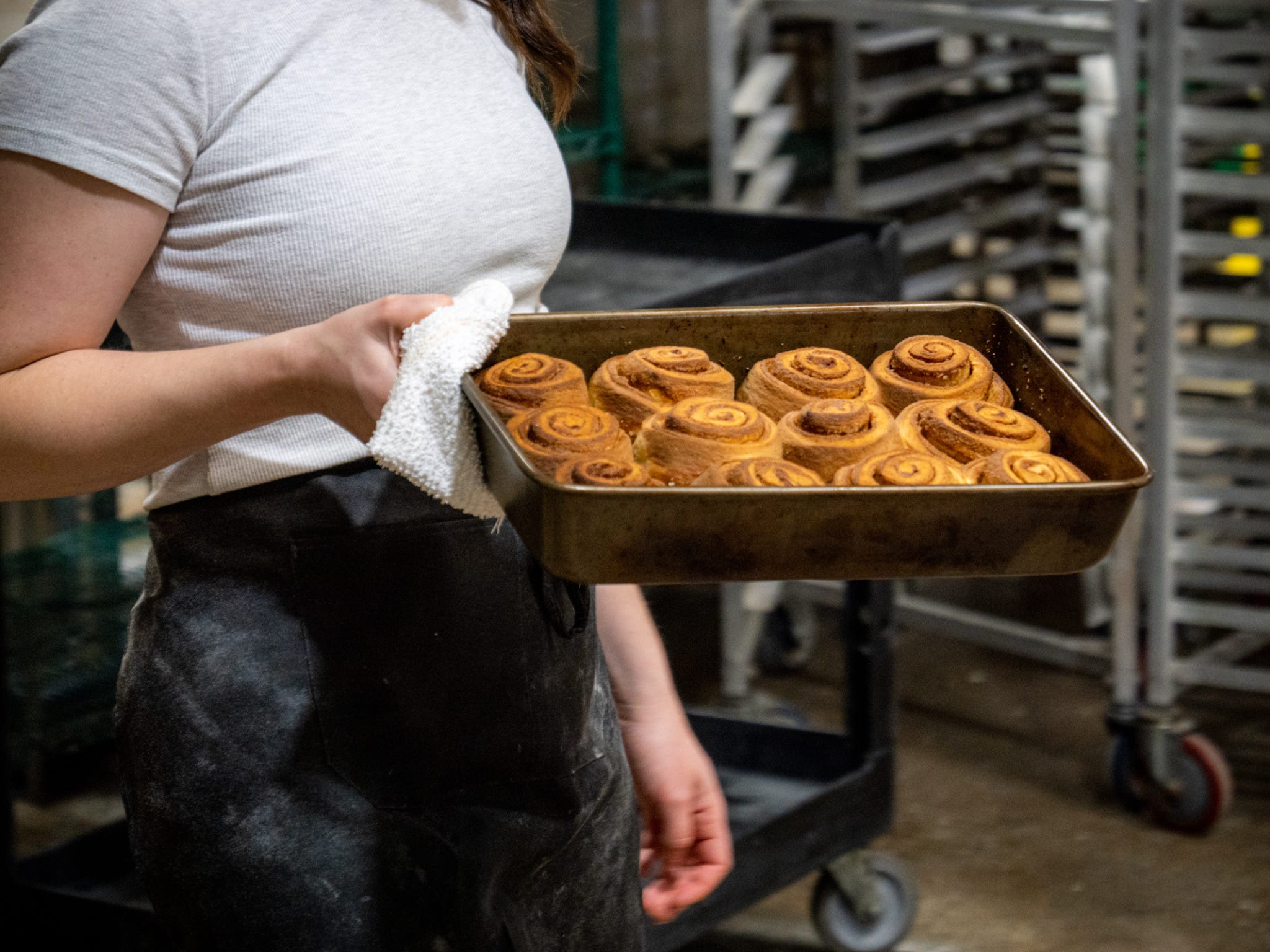
California-based startup uses a thermochemical process to convert point-captured carbon, green hydrogen and methane into agriculture-free fats that replace butter and palm oil. It has already commercialised its CO2 butter in San Francisco, where it appears in chocolate truffles at Michelin-starred One65 and baked goods at Jane the Bakery.
Savor’s Carbon Crafted platform turns gases into carbon chains called alkanes, then into fatty acids through controlled temperature and pressure, producing short-, medium- and long-chain triglycerides that the company says are chemically identical to conventional fats. It needs no fertile land, fertilisers or freshwater, and Savor claims the fats cut carbon emissions by 98% and require 1,000 times less land than conventional counterparts.
The round takes Savor from a few tonnes of product a year to a couple hundred tonnes, ahead of a planned Series B to build a 10,000-tonne facility. A two-year joint development agreement pairs Savor’s conversion technology with Swedish speciality fats leader AAK’s formulation expertise and commercial infrastructure, targeting dairy alternatives and baked goods across the US and European markets.
Investors: AAK
Source: Green Queen
Thoughts 🤔
AAK’s involvement fits a broader pattern. It has been building exposure across multiple next-generation fat platforms, with partnerships already in place with Checkerspot on microalgae-derived oils and Arzeda on computationally designed ingredients.
Thermochemical, algal, and fermentation-enabled are different technical routes to producing fats without traditional agriculture, and AAK now holds a position in each. Each carries different technical and capital risks. So AAK is placing modest, structured bets (equity in Savor plus JDAs elsewhere) that give it a close view into each platform’s progress.
In return, it supplies what these companies typically lack: mature formulation capability, regulatory and quality infrastructure, and access to food manufacturers who already buy specialty fats.
This effectively positions AAK at the integration layer. However fats get produced upstream, they still have to be functional, consistent, and integrated into existing food systems, and by sitting at that interface AAK keeps the early-stage R&D risk with the startups.
🌾 Rize raised $31M series B to scale low-emission rice farming across Southeast Asia
The Singapore-based startup runs an agronomy platform that helps smallholders adopt alternative wetting and drying (AWD), a method of cycling paddies between wet and dry phases rather than keeping them flooded. Over the past 2 years it has grown tenfold, reaching 17,000 farmers across 50,000 hectares in Vietnam and Indonesia and shipping 1,500 tonnes of low-emission rice to Europe, Canada, Australia, and Singapore.
Rize champions AWD by buying seeds, fertilisers, and other inputs in bulk and reselling them to farmers, and it ensures the rice meets the Maximum Residue Limit standards that premium export markets require. The startup says its approach cuts emissions in half and water use by up to 30%, while raising farmer incomes by 30% without reducing yield.
The round splits into $20M of equity and $11M of debt. The capital will scale AWD into new markets, advance carbon certification, and build AI tools for farmers and field teams. Rize aims to reach more than 150,000 farmers across 300,000 hectares by the end of the decade and to eliminate 500M tonnes of CO2e by 2040.
Investors: BNP Paribas Asset Management, the Rockefeller Foundation, Temasek, and Breakthrough Energy Ventures
Source: Green Queen
Thoughts 🤔
Rize buys inputs in bulk, handles market linkage, and ships verified low-emission rice into premium export markets. Switching farmers to AWD takes upfront capital, and Rize appears to be carrying a good part of that cost itself.
That is a working-capital-heavy model, which is why the round pairs $20M of equity with $11M of debt. Lenders lend against cashflows and assets. Impact and climate investors buy the upside.
That mix tells you what kind of business this is. One of the hardest barriers to smallholder practice change is financing. Someone has to bridge the gap between paying for inputs now and earning the low-emission return later.
Rize seems to be absorbing a chunk of that gap, and as the network scales toward 150,000 farmers, the capital it ties up should grow with it. That is the kind of cost debt is built to carry.
🥛 TurtleTree signed an exclusive deal with Novonesis to scale its precision-fermented lactoferrin and raised funding
The Singapore-based startup makes LF+, a recombinant bovine lactoferrin produced through precision fermentation. The ingredient suits sports nutrition, women’s health, adult and elderly nutrition, and functional foods. Lactoferrin regulates iron, supports immunity, and aids gut health, and has long been supply-constrained as a scarce dairy-derived protein.
Under the agreement, Danish biosolutions leader Novonesis will scale, manufacture, and commercialise the protein through its Human Health division, using its US production facility. Novonesis is targeting the early-life nutrition market while securing selected commercial rights for dietary supplements. The company also made a minor equity investment in TurtleTree alongside the deal.
TurtleTree has already commercialised LF+ through its consumer brand Intentional, whose first supplement, IronKind, pairs lactoferrin with prebiotics for iron regulation, energy, and gut health. The ingredient features in Cadence Performance Coffee espresso shots and a partnership with animal-free dairy firm Strive Nutrition.
Investors: Novonesis, 21Catalyst Ventures (the VC arm of Mitsui Chemicals)
Source: Green Queen
Thoughts 🤔
TurtleTree spent years building its lactoferrin strain, regulatory dossier and early brand. Handing exclusive early-life nutrition scale-up and commercialisation to Novonesis is a clear choice about which layer of the stack it wants to own.
It keeps the strain and the pioneering GRAS win, and effectively rents an incumbent’s industrial fermentation footprint and customer relationships instead of trying to build both off a venture-backed balance sheet. In a tough funding market, this looks like the pragmatic version of a broader shift in biomanufacturing away from owning every step of the value chain.
The equity piece is the part that stands out. Novonesis is taking a minority stake in the startup whose molecule it will exclusively manufacture and sell into early-life nutrition, with Mitsui’s venture arm alongside.
For a large ingredients incumbent, that is a way to buy optionality on a leading precision-fermented lactoferrin candidate in a competitive field, cheaper and faster than building a strain from scratch or acquiring the company outright. Of course, an eventual acquisition sits in the background as one potential outcome if the partnership delivers the performance Novonesis wants.
As the production side of precision fermentation gets more crowded and making the molecule becomes table stakes, getting it into early-life nutrition brands and formulations is the harder, more valuable part.
🥚 The Every Company teams up with ADM to scale up US production of its animal-free egg protein
The animal-free egg protein maker will produce its OvoPro ingredient at ADM’s Iowa facility at commercial scale, with the plant set to come online next year. Every says it marks the first US site with precision fermentation capacity at this scale.
OvoPro is a recombinant ovalbumin that replicates the functionality of egg whites, working as both a binding agent and a protein-boosting ingredient across baked goods, bars, snacks, confectionery, and pasta. It has FDA clearance for sale.
The deal comes weeks after Every quadrupled its European output through Huvepharma, producing OvoPro at a 9M-litre fermentation site in Bulgaria that runs the same feedstock and process. Every favours co-manufacturing because wholly owned plants can exceed $200M in CAPEX and carry multi-year lead times.
Source: Green Queen
Thoughts 🤔
Every is building something closer to a distributed manufacturing model than a single-site biotech operation. With Huvepharma in Bulgaria and ADM in Iowa, it is replicating the same organism, feedstock, and process across partners in two regions.
That is significant because formulators adopt OvoPro to reduce exposure to a concentrated, volatile egg supply chain and a single production site would reintroduce that risk. Multi-site capacity starts to address it, even if true interchangeability takes time as facilities are qualified.
ADM’s role adds another layer. OvoPro is landing inside an existing biomanufacturing and fermentation services business that already converts commodity inputs into tailored proteins and bio‑based materials at industrial scale. ADM has signaled that precision fermentation is part of how it plans to serve future protein demand across food and feed, not just a sustainability add-on.
This deal is a good example of a scaling model where startups standardize biology and process, and incumbents provide manufacturing infrastructure. It is a practical path for bringing precision-fermented ingredients into mainstream supply chains.
🍄 Syngenta and Groundwork BioAg partner to bring biologicals and soil carbon solutions to farmers
The partnership has Syngenta commercialising mycorrhiza-based products and soil carbon solutions under its own brand, starting with corn, soy, cereals, and sunflower across Latin America and Europe. Groundwork BioAg takes on manufacturing, supply, digital tooling, and the full carbon program development.
Mycorrhizal fungi form symbiotic relationships with crop roots, improving nutrient and water uptake while catalysing durable mineral-associated organic matter in the soil. That organic matter is what locks carbon away over the long term, so the same input that improves yields also builds a measurable sequestration asset.
Farmers get two returns from one application: higher, more resilient yields and a new revenue stream from carbon credits sold under Syngenta’s label. For a leading biological crop protection company, the deal pushes biologicals further toward the centre of its portfolio and pairs them with a carbon program most input suppliers cannot yet offer.
Source: Syngenta
💪🏾 dsm-firmenich teams up with Nous to launch a caffeine-free botanical energy ingredient globally
The ingredient, called Koncentra, is a caffeine-free botanical blend of ashwagandha, ginkgo biloba, holy basil, and oats. Nous makes it using a proprietary natural extraction process it says preserves the bioactive compounds while keeping quality consistent and scalable. It targets energy, focus, and mood.
dsm-firmenich is positioning Koncentra as an alternative to caffeine, offering sustained performance without the jitters, anxiety, and crashes consumers associate with stimulants. In powder form it is soluble and works at a low effective dose, which the company says lets formulators drop it into food and drinks with minimal impact on taste, colour, or turbidity.
dsm-firmenich recently invested in Nous through its ventures arm and will now fund the ingredient’s development, claims substantiation, and market validation. It plans to design clinical trials to back Koncentra’s energy and cognitive and physical performance claims, moving it from clinical development to commercialisation.
Source: Nutrition Insight
Thoughts 🤔
The Koncentra blend is familiar botanicals. Ashwagandha, ginkgo, holy basil, and oats are off-patent and buildable by many formulators. The scarce inputs are clinical substantiation, multi-market regulatory clearance, and global distribution, and those are what dsm-firmenich is contributing rather than Nous.
This is a classic dsm-firmenich Ventures-style play: take an early stake, then plug the asset into the parent company’s clinical, regulatory, and market-development machinery. The ingredient majors are increasingly buying optionality on external innovation once the science looks promising, rather than trying to invent every ingredient in-house.
The sequencing is key here. dsm-firmenich says it will now help design the clinical trials needed to support Koncentra’s energy, cognitive, and physical-performance claims, which means the commercial story is still ahead of the proof package. In a category where a competitor like Nektium’s Zynamite already carries nine human trials, that gap matters.
If the eventual data only matches what better-known botanicals already deliver, Koncentra’s edge may come down to formulation convenience and extraction know-how more than a truly new efficacy story.
⚙️ Tetra Pak launches its first industrial bioreactor for fermentation-derived food ingredients
The Bioreactor RF targets producers using yeast, bacteria, and fungi to convert raw materials into food ingredients and is built to hold stable conditions from pilot validation through to full-scale manufacturing. It comes in sizes from 10 to 50,000 litres, with larger vessels on request, and follows Tetra Pak’s recent acquisition of Bioreactors.net.
At the centre is a patented magnetic agitation system that removes mechanical seals, a common source of contamination risk and instability in conventional designs. Tetra Pak says it maintains power and oxygen transfer across the full size range, addressing a scale-up limitation in traditional magnetic agitators and lowering the risk of batch loss.
It says the preassembled, factory-tested unit can cut operating costs by up to 12% and investment costs by up to 8% vs conventional industrial bioreactors. Every unit shares the same design platform, control logic, and operating philosophy, letting producers standardise operations as they scale across sites.
Source: Food Ingredients First
Thoughts 🤔
Scaling fermentation cleanly from lab to commercial is still one of the category’s hardest problems. Process conditions shift as vessels get bigger, and contamination or seal failures can still wipe out batches.
That is what makes Tetra Pak’s Bioreactor RF notable. What it offers is standardization: the same control logic, operating philosophy, and magnetic agitation platform from 10 litres to 50,000 litres, with claims of faster commissioning and lower cost.
The real value is continuity between stages. If the system transfers performance across scales, it could cut re-validation pain and process risk for producers moving from pilot to industrial production.
🥔 Aardaia raised €5M seed round to breed wild plants into new crops, starting with a protein-rich tuber
The Netherlands-based startup invents crops from first principles rather than re-engineering commodity species. It identifies wild plants already carrying useful traits and breeds them into viable crops, using no genetic modification or gene editing. Its flagship, the aardaker, is a protein-rich tuber that pairs the productivity of a root crop with the nitrogen-fixing biology of a legume.
Aardaia builds large genomic datasets and combines whole-genome sequencing with detailed phenotyping to predict in silico which genetics will perform before anything is planted. The startup claims the aardaker needs no synthetic nitrogen fertiliser and could produce up to 5x more protein per hectare than any current crop, a target it is still working toward.
This year Aardaia is screening 750,000 unique aardaker genotypes, and it aims to push toward 2 million next year with the new funding. The company notes that ~95% of global calories come from just 30 species, despite more than 400,000 plant species on Earth, most never domesticated for food.
Investors: Point Nine, Astanor, Grey Silo, FoodLabs, and angel investors
Source: EU-Startups
🧠 MeNow’s AI uncovers functional ingredients from waste with two bioactives revealed as potential disruptors in the GLP-1 arena
The startup scans the molecular makeup of botanicals and their by-products to predict the bioavailability, safety, and health benefits of compounds, drawing on a library of 60,000 organisms and more than 2 million natural molecules built over the company’s first year.
Commercial traction is already there. A collaboration with Colgate identified an optimal plant combination for treating gingivitis and cut development time by 75%. The platform has since surfaced a compound from discarded sorghum crop residue predicted to activate SIRT1, one of the most sought-after targets in longevity science for its links to anti-ageing and cellular protection.
The founders see the greatest weight management potential in a brown seaweed byproduct, which activates the CCK1 receptor, a satiety regulator they claim the pharma industry could never stabilise as a drug. MeNow says it acts faster and stronger than the GLP-1 pathway while boosting nutrient absorption.
Source: NutraIngredients
Thoughts 🤔
For an ingredient startup, the molecule is often not the hardest part. Novel-food approval is, and in the EU that route now averages ~2.5 years to a safety opinion, sometimes over five, before anything reaches a shelf.
That is the lens I would read MeNow’s news through: its standout candidate is a GLP-1 agonist the company says is already cleared for food use, so it starts far closer to market than a novel molecule would, even if a new use still needs signing off.
That changes what the AI is for. As the discovery layer gets more crowded, with other companies mining botanicals and side streams on the same premise, scoring candidates for regulatory readiness goes after the part of the funnel that gates revenue. Surfacing an active molecule is not novel, but doing it with a compound that starts far closer to market, from a near-free waste stream, can help it stand out.
💰 Japan’s draft $2.3T public-private investment roadmap earmarks $6.2B for new foods within a $60B food tech push
The Japanese government has released a draft public-private investment roadmap projecting ¥370T ($2.29T) in cumulative financing across 17 strategic sectors through 2040. Four of these verticals are food tech, together accounting for ¥9.7T ($60B), with ¥1T ($6.2B) ringfenced for new foods.
The new foods vertical, covering animal-free proteins and functional nutrition, is the smallest of the four allocations. Indoor farming leads at ¥4.6T ($28.4B), followed by land-based aquaculture at ¥2.9T ($17.9B) and food machinery at ¥1.2T ($7.4B). The plan places strong emphasis on Japan’s existing strengths in fermentation, seasoning technologies, rice flour products, and marine ingredients.
Japan is targeting ¥3T in new food sales across domestic and export markets by 2040, first courting health- and climate-conscious consumers in Europe and the US before expanding into Asia. The roadmap follows an earlier $8B biomanufacturing fund and the country’s stated goal of becoming the most advanced bioeconomy society by 2030.
Source: Green Queen
What else I’m reading and listening

David Beckham’s IM8 longevity supplement brand secures US$1B in funding (Nutrition Insight)
Fuel for active nutrition: AI and tech power personalized product innovations (Nutrition Insight)
China’s Bioeconomy Is Brewing Its Biggest Wave Yet (Cam Watson)
NutraCast: How biotechnology is powering the lifemaxxing movement (NutraIngredients)

Don’t miss your chance to attend the Asia-Pacific Agri-Food Innovation Summit and get 10% OFF with my network code. Use my exclusive partner code for 10% OFF your pass: BETTERBIO10
Learn more
Better conversations

The sharpest thinking in agrifood tech often happens off the record. My interview series brings it on the record:
How a $2B Agtech Unicorn Builds Product - Halter’s Toby Hurley
Ag and Climate Tech Don’t Have a Capital Problem, They Have a Capital Stack Problem - Renaissance Philanthropy’s Joshua Elliott
Why 2026 Is the Great Shakeout Year for Food and Ag Tech - EcoTech Capital’s Adam Bergman
Agtech’s Real Bottleneck Is the Translational Layer, Not the Technology - Beanstalk AgTech’s Justin Ahmed
Engineering the Exit: How to Get Acquired in Deep Tech - SOSV’s Cyril Ebersweiler
Browse the full archive. More conversations dropping soon. Stay tuned!
Thanks for reading!
If you found value in this newsletter, consider sharing it with a friend who might benefit! Or, if someone forwarded this to you, consider subscribing.
Disclaimer: The views and opinions expressed in this newsletter are my own and do not necessarily reflect those of my employer, affiliates, or any organisations I am associated with.