

Hey there!
Welcome to Issue #148 of Better Bioeconomy, insights on startups, capital, and ideas reshaping food and agriculture for better human and planetary health. Thanks for being here.
Below, I have curated the 10 most interesting ag and food tech stories I came across last week, paired with my thoughts on what they mean for where the industry is heading.
This week covers Nestlé’s bet on precision-fermented lactoferrin for baby formula, a plant immunity biofungicide for Asian rice, wave-form AI that measures how materials behave, illuminated fermentation as a plant cell culture platform, dairy’s inversion into high-value ingredients, €300M underwriting seeds as sovereign infrastructure, and where AI cuts food waste.
🍼 Nestlé teams up with Helaina to develop infant formula using precision-fermented lactoferrin
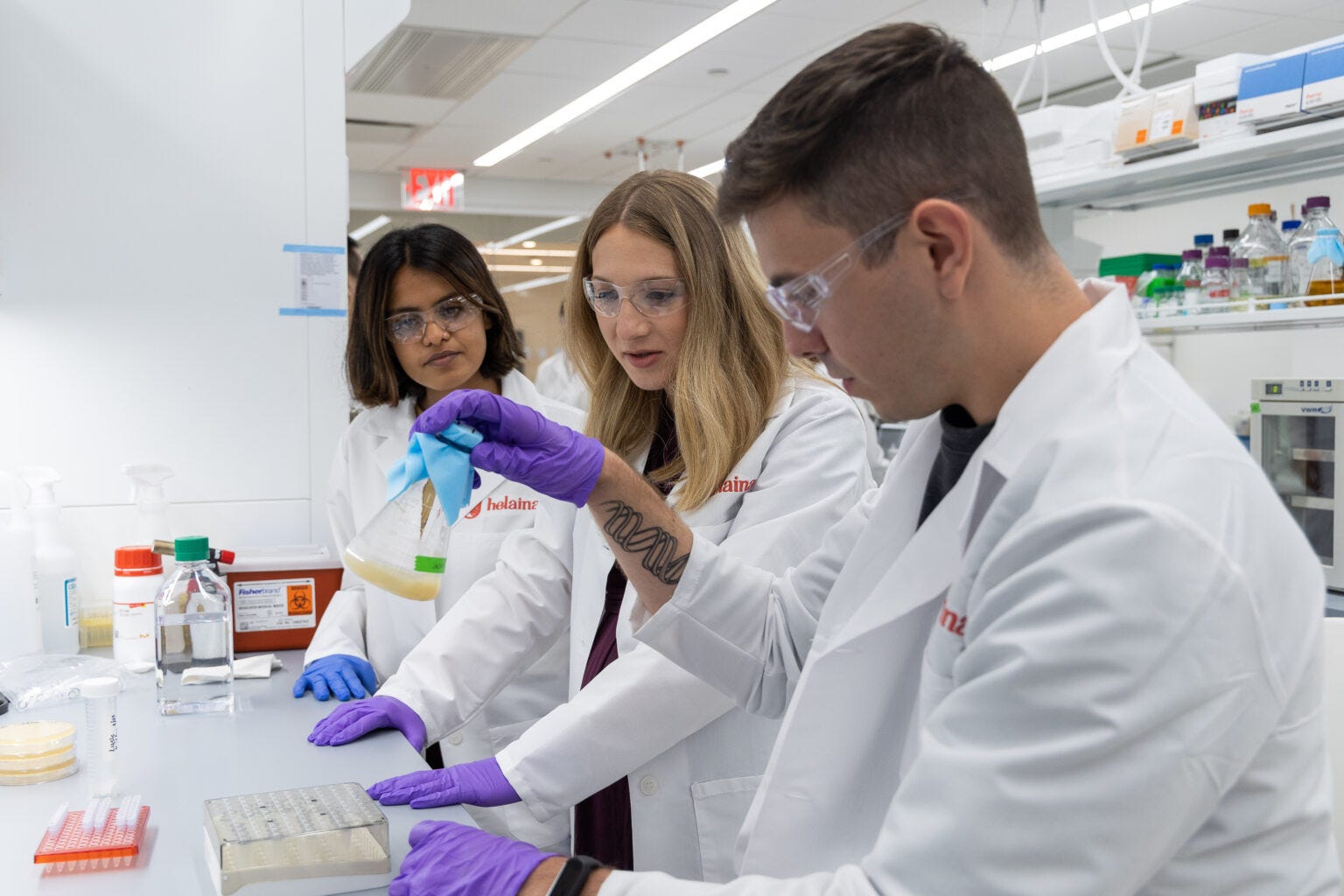
Nestlé has begun a multi-year collaboration with Helaina, the New York-based startup behind effera, a precision-fermented human-identical lactoferrin. The two companies will explore new bioactive proteins in early-life nutrition and co-develop infant formula products using effera as a core ingredient.
Effera is bioidentical to the lactoferrin found in breast milk. The partnership gives Nestlé access to a consistent, scalable supply of a protein that the company says can help bridge the gap between formula and breast milk, addressing one of the category’s longest-standing limitations.
For Nestlé, this builds on more than 30 years of research in human milk bioactives. For Helaina, it is validation at the highest level of the infant nutrition category, accelerating the path from fermentation platform to mainstream product and clinical credibility.
Source: Green Queen
Thoughts 🤔
The parity story is the headline, but the timing points at supply security. A single ARA oil supplier failure in late 2025 cascaded across Nestlé, Danone and Lactalis at once, exposing how much of the industry’s risk sits in shared, concentrated inputs rather than any one company’s quality systems. Against that, a precision-fermented protein with a dedicated, auditable supply chain is a hedge as much as an upgrade.
Purified lactoferrin is already supply-constrained and expensive at hundreds to thousands of dollars per kg, because colostrum carries so little of it. Fermentation gives Nestlé batch reproducibility and contamination control on a single-source input, in a category where a recall costs far more in regulatory exposure and brand damage than the ingredient margin returns.
My read is that the durable value is in the process reliability as much as the molecule. If effera clears formula-grade QC consistently across runs and sites, the supply-security case carries the deal. If not, this reverts to a nutritional bet competitors with their own lactoferrin can match. The first co-development milestones are where that gets tested.
🧠 Apoha emerged from stealth with $36M to build AI models for materials discovery using a new class of liquid wave-form data
The London- and San Francisco-based startup captures the wave patterns a material generates when suspended in liquid and subjected to controlled physical stress. A single run yields over 1,000 numerical descriptors in minutes rather than the days conventional lab tests require. The startup calls this readout VIBE (Variations in Inter-facial Behaviour Under Excitation).
Apoha converts each reading into a “behavioural embedding,” a numerical fingerprint AI models can learn from. The company argues existing AI is trained on text and images, not on how matter tastes, smells, or dissolves, and that this data layer is what unlocks reliable materials design. One early customer used VIBE to find a plant-based vegan chicken substitute within two weeks after a supplier collapsed.
The $36M includes a 2024 seed and an unlettered round closed this spring. Apoha’s Fortune 500 customers already span pharma, food and beverage, and materials. Series A funds will scale the custom hardware and platform to handle more sample types.
Investors: Singular, Draper Associates, Redalpine, Seedcamp, Wilbe, Nucleus; grant from Innovate UK
Source: Fortune
Thoughts 🤔
AI for molecules has matured along two axes: sequence and structure. Both sit on large existing datasets, which is why language models and AlphaFold-style prediction work as well as they do. Behaviour, how a substance dissolves, aggregates, holds flavour, or wears, has no equivalent dataset at scale, so models infer it indirectly.
Apoha is generating behaviour as a directly measured data type. The physics underneath is established. What interests me is industrialising it into a standard, machine-readable embedding.
This is a big deal because the binding constraint in molecular ML right now is data, not model architecture. The developability literature openly concedes models lag for lack of large physical training sets. When the bottleneck is the missing variable rather than the algorithm, owning a proprietary measurement of that variable is a different position from fine-tuning on public sequence data.
💰 Limagrain secured €300M EIB loan to accelerate plant genetics R&D for more resilient crops to support European agricultural independence
The French agricultural cooperative is the world’s 4th-largest seed company. The financing channels through its listed subsidiary Vilmorin & Cie to fund a research programme developing innovative plant genetics aimed at major agricultural and food challenges. The loan ranks among the EIB’s largest agricultural financing operations in Europe.
Research targets agronomic gains: higher yield, resistance to diseases and pests, drought tolerance, climate and regional adaptation, and optimised nutrient use, alongside nutritional and environmental quality. The aim is to put more resilient seed in farmers’ hands as climate pressures mount.
The loan flows through the EIB’s TechEU programme under the European Commission’s InvestEU guarantee, positioning seeds as a strategic lever for European food sovereignty. This marks EIB’s 2nd loan to Limagrain, following a €170M facility in 2020 to adapt seeds to climate change.
Source: European Investment Bank
Thoughts 🤔
EIB routed this loan through TechEU, the same sovereignty platform it uses for semiconductors, broadband, and defence, and tagged it “agricultural independence.” The instrument is ordinary corporate R&D debt. What is new is the category: seed genetics is being underwritten as strategic infrastructure rather than agribusiness lending, sitting behind the €3B agriculture-and-bioeconomy package and the near-€15B EIB deployed across 2024-25.
The framing matters because it unlocks a funding rail that matches the asset. A breeding cycle runs 7-10 years and does not fit quarterly public markets, which is part of why Limagrain took Vilmorin private in 2023. Sovereign-guaranteed term debt at development-bank terms is structurally better matched to that horizon than the equity it walked away from. Once seeds sit in the same political bucket as chips, the test shifts from “is this bankable” to “can Europe afford not to fund it.”
🤝 Syngenta teams up with Ascribe Bioscience to bring new biofungicide to rice farmers in Southeast Asia
Ascribe’s Phytalix is a biofungicide that mimics plants’ natural resistance processes. It enables crops like rice, soybeans, corn, and wheat to defend against a broad spectrum of fungal, bacterial, and viral pathogens throughout the growing season.
Syngenta ran four years of trials before signing, with results including measurable yield gains and efficacy against Bacterial Leaf Blight, one of the most economically significant rice diseases in Asia. Phytalix offers high stability and low application rates, viable for farms of all sizes.
Under the agreement, Syngenta gets exclusive commercial access to Phytalix for rice and other major crops in Southeast Asia, with potential expansion to other regions. The companies are now advancing registration, with first commercial launches in Asia planned for 2029.
Source: AgroPages
Thoughts 🤔
Ascribe now has its two biggest strategic investors both signing commercial deals on the same technology, carved cleanly by geography and use. Corteva Catalyst co-led the $12M Series A and is developing a Phytalix seed treatment. Syngenta Group Ventures backed that round and has now signed exclusive supply for rice across Southeast Asia. Two competing input majors, both on the cap table, each taking a non-overlapping slice.
A small-molecule biological would find it tough to fund global registration and distribution itself, and Phytalix needs separate filings across fragmented Asian regulators on top of the EPA. Splitting by crop, geography, and use lets Ascribe ride multiple incumbents’ regulatory and distribution rails without handing any one the whole asset. The equity-to-offtake path also gives each major a look inside before committing channel.
My thinking is the value accrues to Ascribe keeping these carve-outs non-exclusive rather than going deep with one. That holds only if the slices stay clean. If Corteva or Syngenta pushes for a broader lock-up once field data lands, the optionality compresses.
🥕 Ingredion acquired prebiotic fibre made from upcycled carrot pomace to expand its functional fibre portfolio
Ingredion bought Benicaros, a patented prebiotic fibre made from upcycled carrot pomace, from Dutch innovator NutriLeads. The deal is an asset purchase covering all IP, trademarks, clinical trials, and manufacturing know-how.
Benicaros is positioned as a “precision prebiotic” that selectively feeds beneficial gut microbes while interacting with the immune system. Ingredion says its rhamnogalacturonan-I (RG-I) structure differentiates it from inulin or FOS, working at a daily dose as low as 300mg with less gas.
Launched in the US as an immune-health ingredient in 2021, Benicaros secured FDA GRAS no-objection in 2022 and now features in dozens of supplements worldwide. It holds approvals across Asia-Pacific and Brazil’s ANVISA, and awaits final novel food approval from EFSA.
Source: NutraIngredients
Thoughts 🤔
This Benicaros pickup landed the same week Ingredion agreed a $3.6B all-cash takeover of Tate & Lyle. Same buyer, two deals, three orders of magnitude apart. One buys platform scale by absorbing a rival. The other buys a single molecule the platform cannot make itself, through a carve-out that took the IP, trademarks, clinical file, and manufacturing know-how and left NutriLeads the company behind.
What interests me is what that smaller deal says about how a startup like NutriLeads realistically exits. It raised modestly, a €4.5M Series C in late 2023, and did the legible work: GRAS, EFSA, and ANVISA clearance, a published clinical file. What it could not fund with VC cheques was global distribution to manufacturers across 120-plus countries, which needs a sales force and balance sheet that take a decade to build.
That capital intensity sits downstream of where VC is comfortable, so the natural handoff is to a strategic that already owns the rails. The open question for founders is whether that makes a single-ingredient company a clean, fundable asset-sale story, or whether building only a transferable dossier caps your leverage when the one buyer who needs it comes calling.
🧫 Ayana Bio and Brevel received a $1.25M grant to combine plant cell culture with illuminated fermentation for bioactive ingredients
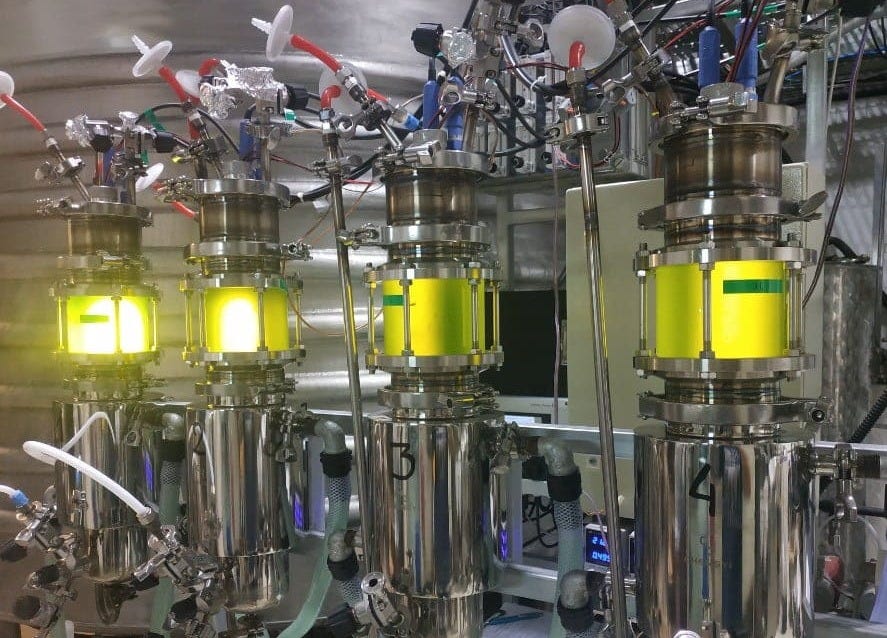
Ayana Bio, a Boston-based Ginkgo Bioworks spinoff, uses plant cell culture to produce bioactives identical to (or more potent than) those in nature. The $1.25M grant from the Binational Industrial Research and Development (BIRD) Foundation is part of a larger $7.5M pool the foundation says has leveraged private funding into a combined $20M investment.
Brevel’s illuminated fermentation platform runs microalgae bioreactors with both sugar and light. The joint development agreement will test whether Brevel’s process can advance Ayana Bio’s plant cell culture pipeline for use in food and wellness ingredients.
The partnership targets a structural problem in botanical supply: climate change, shifting agricultural conditions, and contamination risks are degrading the quality and availability of plant-derived ingredients. A combined indoor platform would offer a predictable, scalable alternative for CPG, supplements, and functional food.
Source: Green Queen
Thoughts 🤔
Brevel built illuminated fermentation to make its own chlorella protein, and now appears to be expanding into a platform provider for the plant cell culture category. The product is no longer just biomass, it is the lighted tank itself, sold new-build or retrofit to companies that bring their own cell lines.
Cocoa and coffee wins are already in hand, more partners are signing, and a category full of startups with cell lines but no path to commercial-scale tanks is the gap Brevel appears to be selling into.
What makes this more than a capacity play is what light does to the product. For commodity microalgae protein, light improves yield per litre. For Ayana, the secondary metabolite is the entire product. If light reliably upregulates those pathways, it stops being a growth input and becomes a potency lever, and the value of a potency lever scales with the value of the molecule.
The bet I find more interesting is that Brevel may end up owning the one variable nobody else in plant cell culture has industrialised at scale. Everyone can buy stainless steel. Lighted tanks that work across unrelated cell lines are a narrower thing to control, and if the cocoa, coffee, and Ayana results converge, the leverage sits with the company selling the light.
🧬 Converge Bio received $2.5M Gates Foundation grant to extend its AI drug-discovery platform into crop genomics
Converge Bio builds generative AI models for life sciences, until now focused on drug discovery. The 37-month grant funds its first move into agriculture, adapting the platform to identify causal genetic variants behind crop traits like yield and climate resilience.
The company is developing a multimodal, long-context foundation model that treats the crop genome as one interconnected system, analysing millions of base pairs at once and ranking the genes or mutations most likely driving a target outcome.
An interpretability layer surfaces which parts of the genome led to each prediction, helping scientists prioritise candidates for validation. Converge Bio says this can cut breeding cycles needed for climate-resilient varieties, shortening time to market.
Source: iGrow News
🌾 Pandawa Agri targets fertiliser crisis with microbial-friendly soil ameliorant for Indonesian smallholders
The Indonesian ag tech company known for its pesticide reductants has built Balance Solution, a soil ameliorant built to complement or partly replace conventional fertiliser. It gives rice and coffee farmers more flexibility when subsidies arrive late or supply chains break down.
Rather than introducing new microbial strains, the product creates a physical and biological “home” for the beneficial microbes already in the soil. Once those native microbes reactivate, plants take up nutrients previously locked away, sidestepping the common failure mode of inoculants that don’t establish in existing soil ecosystems.
The company says coffee farmers cut NPK use by ~30% while raising yields 30-40%, and rice farmers cut fertiliser 10% for a ~10% productivity gain. Pandawa is scaling coffee trials from 20 to ~600 hectares in Lampung and South Sumatra, expanding rice to ~100 hectares, and extending palm oil and forestry tests beyond Indonesia.
Source: AgTechNavigator
Thoughts 🤔
The interesting detail is Pandawa’s distribution. Balance Solution is the second product line going through a farmer ecosystem the company already built around its pesticide reductants, complete with bundled agronomy support and downstream offtake to multinational F&B buyers.
That matters because smallholder input products almost always stall on distribution and trust. Reaching fragmented farmers is the expensive part, and most agri-input startups can’t get past it. Pandawa already paid that cost once, so the marginal cost of pushing a second input through the same channel is far lower than a standalone soil-amendment startup faces.
The durable asset is the ecosystem. If the product performs even moderately, the bundled channel could let it scale faster than a better product sold cold. The risk is the same channel concentrating reputational exposure across both lines if field results disappoint.
🥛 GERBER-RAUTH exits dairy commodities trading to focus on advanced dairy ingredients
The Milan-based private investment company has sold Italian dairy commodities broker L’Interform to food sourcing firm Atlante, a deliberate retreat from commodity cheese trading. The deal reflects a view that synergies between traditional dairy trading and next-generation ingredient tech had largely disappeared by 2024.
The firm has been building a precision-fermentation and advanced plant-based portfolio since before 2020, with stakes in Perfect Day, New Culture, and Change Foods. Its thesis now centres on dairy proteins, fats, and oleosomes as higher-value categories for specialty nutrition rather than commodity markets.
According to Chairman Christian Pichler whey demand has grown so fast that “cheese is becoming the byproduct.” He argues that as food-grade fermentation capacity scales, the unit economics of biomanufactured whey will converge with, and potentially match, conventional whey protein plants.
Source: AgFunderNews
Thoughts 🤔
The part that stuck with me was the role reversal: animal dairy moving up into high-value applications, while biomanufactured and plant-based ingredients serve the commodity base. Today, fermentation is pitched premium-first, and rightly so given the cost curve. What Pichler describes is the long-term end state, the opposite of where the category starts.
A cow cannot turn supply on and off, and Europe’s milk pool is flat with farm succession failing. Biomanufacturing can match supply to demand, site production near consumption, and store it. That scale-and-storability edge is why the inversion can eventually be true.
You can already see the first step inside animal dairy itself: with US whey isolate around $11/lb on GLP-1-driven demand, cheese is becoming the byproduct of whey-making.
My read is this stays directionally right only if food-grade fermentation keeps coming online at lower-grade economics. If scale-up stalls, the argument falls back into the premium-niche story, and animal dairy just stays where it is.
📊 Report: How AI is reducing food waste across the US food system, and where the hype outpaces the evidence
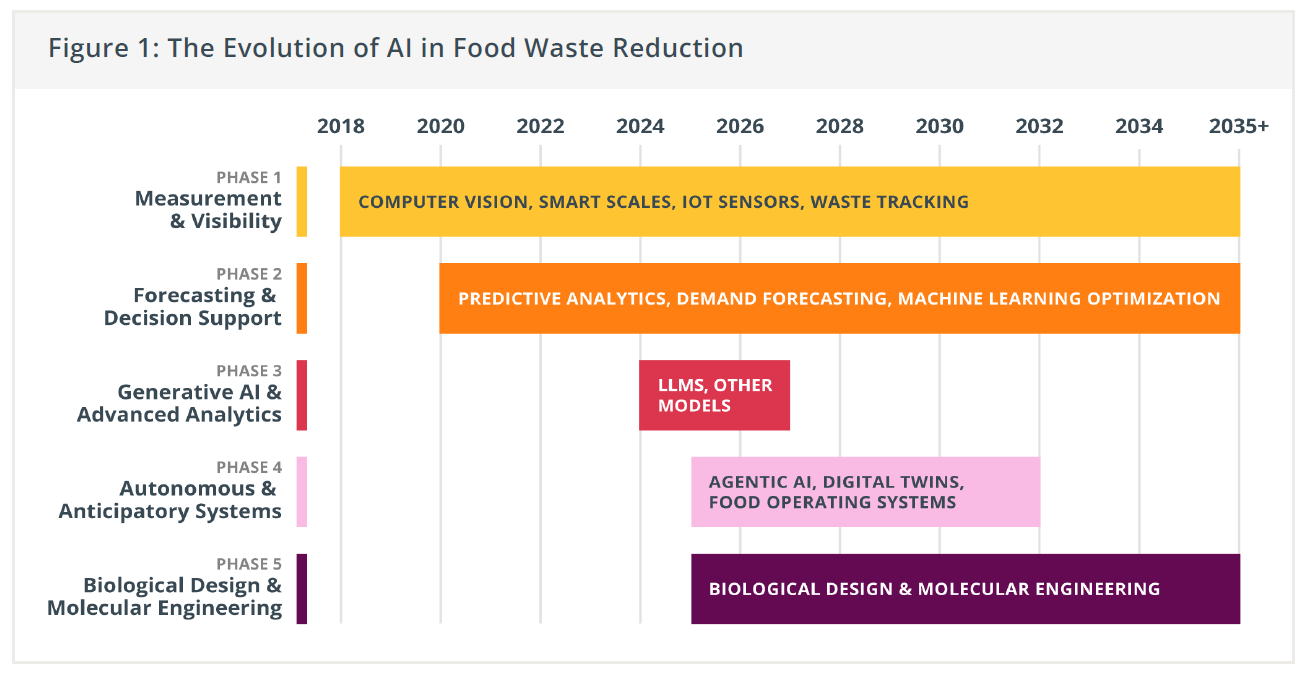
Nearly a third of the US food supply goes unsold or uneaten every year, and surplus food still hit ~70M tons in 2024 despite a 2.2% decline. ReFED and The Spoon drew on 40+ interviews plus academic research and pilot data to map where AI is moving the needle.
The strongest results come from foodservice, retail fresh categories, and parts of food production, where measurement and forecasting tools have run for years. Companies reported waste cuts of up to 53% in commercial foodservice and manufacturing. AI demand forecasting reportedly prevented ~200M pounds of loss across 26 countries, and storage monitoring saved ~20M pounds of apples across 1,500+ storage rooms.
AI’s most consistent contribution is visibility, shifting decisions upstream where prevention is still possible. One Afresh pilot with a US value grocer projected $2.7M in annual savings from lower shrinkage and less ordering time, and foodservice pilots showed waste cost reductions of up to 39% per meal.
The impact is uneven because it depends on behaviour change and aligned incentives. AI recommendations are frequently overridden by store managers regardless of accuracy, since acting on them requires workflow and labour changes most organisations aren’t structured for. Generative AI and LLMs draw heavy interest but remain mostly at proof-of-concept.
The headline message: AI is not a silver bullet, but it works where data is clean and connected, incentives reward reduction, and teams have authority to act. ReFED’s advice to operators is to fix the data before buying the AI, measure waste reduction rather than model accuracy, and align manager metrics so they stop over-ordering.
Source: ReFED and The Spoon
CAPITAL & CONVICTION
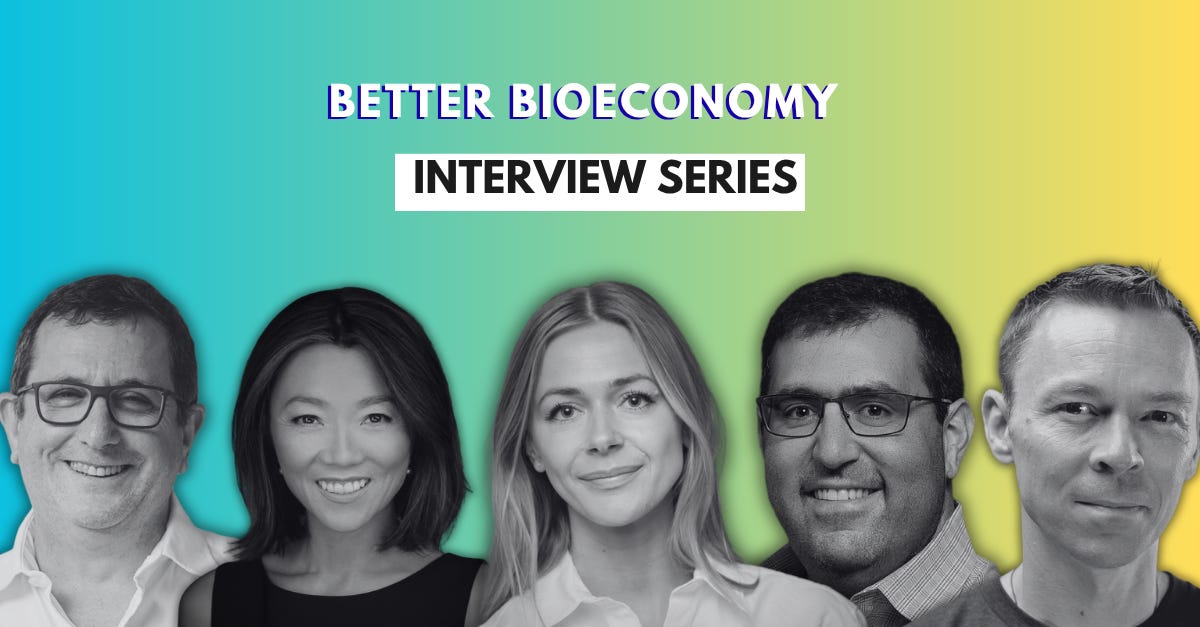
The sharpest thinking in agrifood tech often happens off the record. My interview series brings it on the record:
Why 2026 Is the Great Shakeout Year for Food and Ag Tech - EcoTech Capital’s Adam Bergman
What It Takes to Build a Fundable Food Company After “Peak Stupid” - Siddhi Capital’s Steven Finn
Engineering the Exit: How to Get Acquired in Deep Tech - SOSV’s Cyril Ebersweiler
Turning the Industrial Biomanufacturing Graveyard Into a Winning Playbook - First Bight Ventures’ Veronica Breckenridge
How Agrifood Tech Investing Is Shifting and Where Value Will Be Created - PeakBridge’s Yoni Glickman
Browse the full archive. More conversations dropping soon. Stay tuned!
Thanks for reading!
Let me know your thoughts in the comments or by replying to this email. If you want to connect with me on LinkedIn, you can find me here.
If you found value in this newsletter, consider sharing it with a friend who might benefit! Or, if someone forwarded this to you, consider subscribing.
Disclaimer: The views and opinions expressed in this newsletter are my own and do not necessarily reflect those of my employer, affiliates, or any organisations I am associated with.